In Valheim, you can not only build a stylish house, but also set up your own fields. Each new biome introduces new crops that you can plant yourself and harvest later. They are important for many recipes, not only for cooking but also for other crafts. Farming itself isn’t hard, but every plant has its own conditions it needs in order to grow. This includes the biome, spacing, and later even climbing supports. You also unlock some aspects of farming later in the game, so don’t lose sight of it! We’ll take a closer look at every point of agriculture in Valheim, how you can gain more XP, and how to improve your skill.
Valheim field cultivation guide: Cultivator, seeds, and sickle
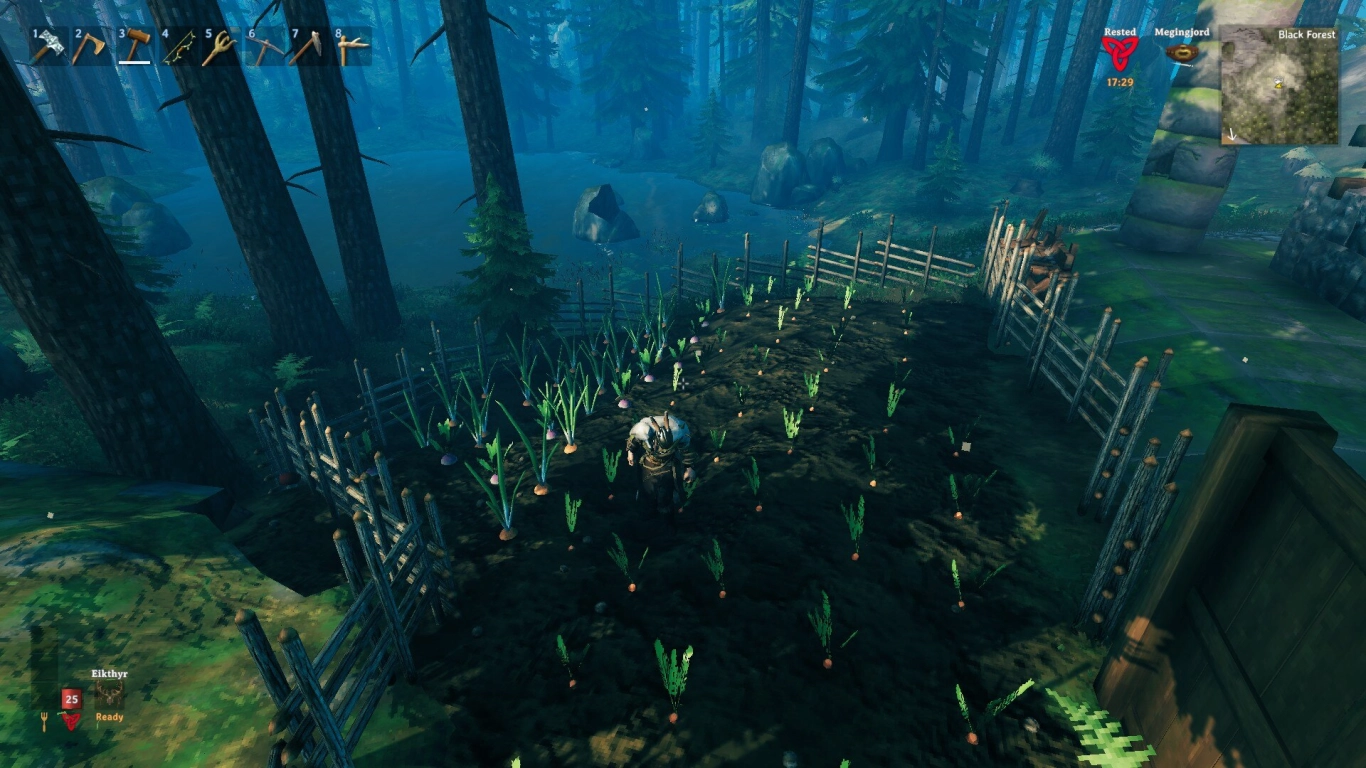
The basic tool for establishing fields is the Cultivator. You can craft it at the Forge with 5x Core wood and 5x Bronze, so you must at least have reached the Black Forest and made it through the Meadows to be able to craft it. You get Core wood from Pines, and Bronze is made by combining Copper and Tin. Upgrades are possible with more materials and higher forge levels.
Besides the Cultivator, you only need a free patch of soil and the appropriate seeds to plant. Equip the Cultivator and use it to till the soil to make it fertile. Then select your seed and plant it.
Your plants need no water to grow, and most of them can be harvested after two to three in-game days. At first you have to do this by hand; later you can unlock a sickle. To do so, you must reach the Swamp and buy the sickle handle from the Witch after you have defeated Moder. You will then need Silver from the Mountains. Only then can you craft this handy tool. By renting a Valheim server and farming together you and your friends can work towards this goal and set up fields for every crop!
Level up the Valheim farming skill: benefits and tips
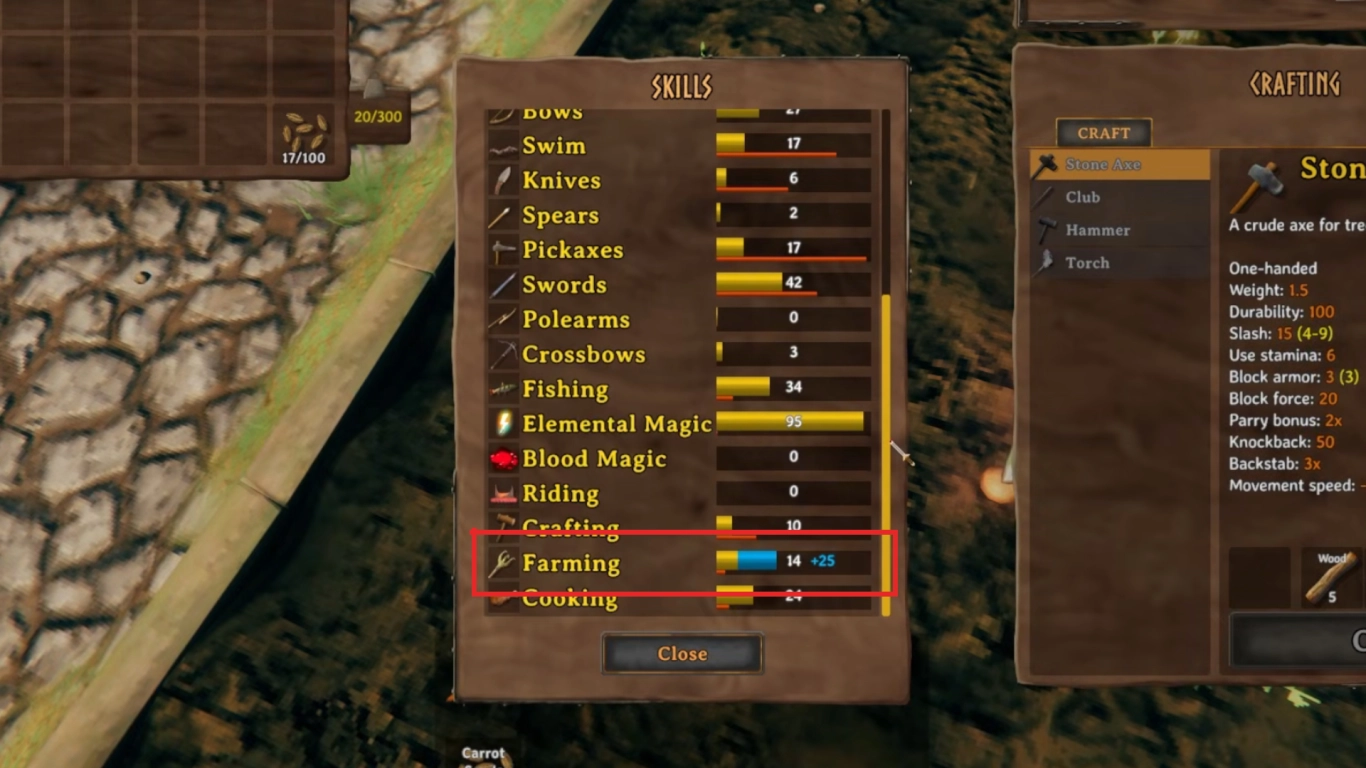
Almost every activity in Valheim can be levelled—farming included. Different actions count towards it, such as planting and harvesting, as well as simply using the Cultivator and collecting wild plants like berries or mushrooms. The easiest way to gain XP is to keep working grass with the Cultivator.
The higher your skill, the:
- less stamina the Cultivator and sickle consume
- longer the durability of Cultivator and sickle
- larger the harvest range of the sickle
- higher the chance of a double yield
If you want an instant +25 level boost, you should adjust your outfit. Combine the Harvest Dress, Harvest Tunic, and Straw Hat to create a great set for fieldwork. You can buy these items after you search for Hildir and complete her questline by finding her chests.
Valheim crops guide: where to find them, how to grow them, and what they’re for
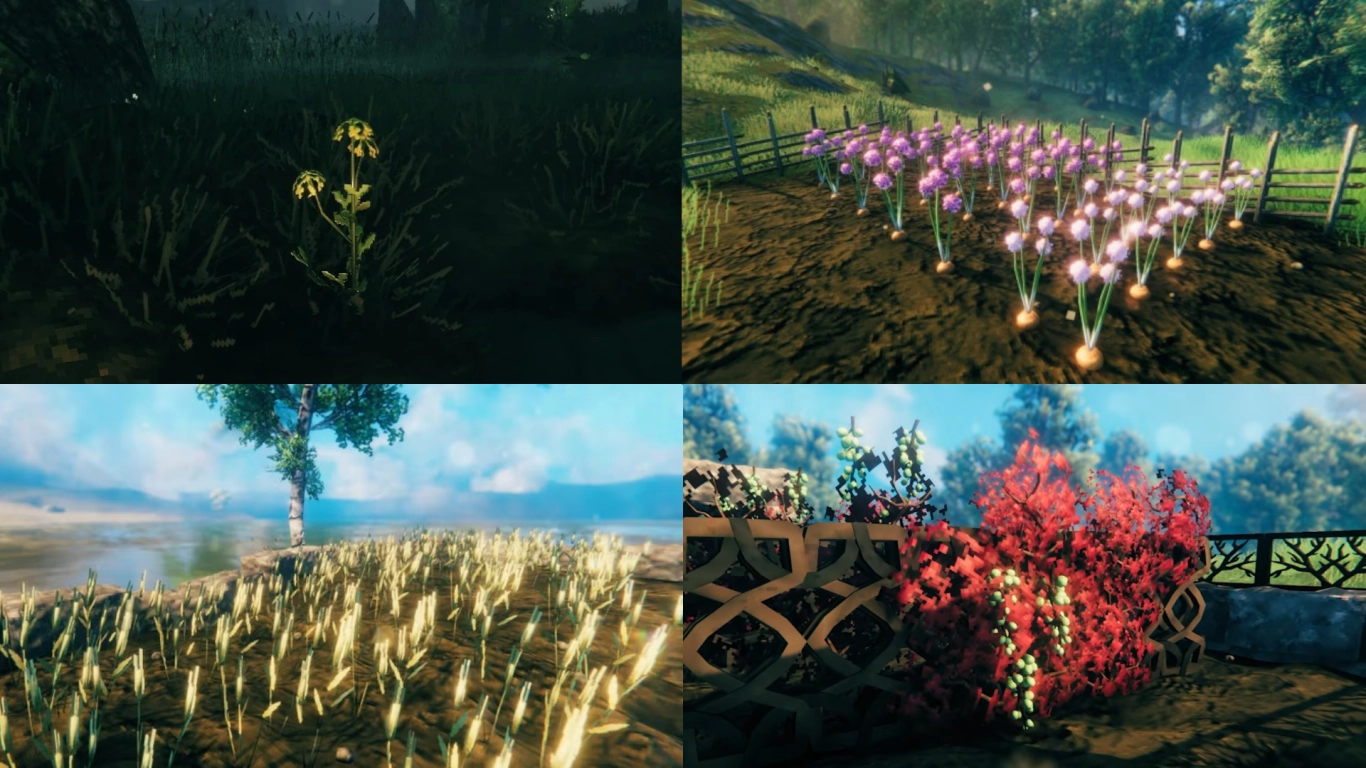
Currently, you can find eight different crops in Valheim, each serving different purposes that you’ll definitely want to track down. However, you cannot grow them all in a single biome—we’ll get to that in the overview. In the Mountains and the Deep North, nothing grows. All crops need at least one metre of space around them and must receive direct sunlight. We also recommend building a fence around your field to keep wild animals and monsters out.
Carrots: The first vegetable you can find. They appear in the Black Forest, recognisable by their white flowers. They grow in the Black Forest, Meadows, and the Plains. Plant the seeds to get a carrot; if you plant the carrot, you’ll get three carrot seeds. This way you can increase your yield. Carrots are needed for many cooking recipes, so always keep plenty on hand. You can also tame boars with them.
Turnips: Found in the Swamp—look for yellowish flowers on the ground. They can grow in the Swamp, Black Forest, Meadows, Plains, and Mistlands. As with carrots, one turnip yields three seeds. Use turnips to cook Black Soup, Turnip Stew, or an uncooked magically infused Mushroom.
Onions: You’ll find onion seeds in mountain regions, and you can then cultivate them in the Meadows, Black Forest, or the Plains. Make tasty Onion Soup, Wolf Skewers, or a salad. From one onion you can again obtain three seeds.
Barley: The first of two grains that you can find on the Plains, and it can only be grown there. From one plant you get two barley, allowing you to multiply it. Barley can be processed in different ways. Turn it into straw, mill it in the Windmill to Barley Flour, or use it to tame Lox and hens.
Flax: The second grain, also only found and cultivated on the Plains. It is also used for straw and for taming Lox, but can be processed in the Spinning Wheel into linen thread. This thread is important for later weapons, tools, and clothing.
Jotun-puffs: These peculiar plants are only found and grown in the Mistlands. They don’t require seeds and give you 3 per harvest. You can eat them directly or process them into other dishes. They are also a base for several mead bases.
Magecaps: Also found in the Mistlands, these blue-glowing caps work like Jotun-puffs and are needed in several later recipes. Most of those recipes focus on Eitr.
Vineberries: Finally, you can find vineberries in the Ashlands. They grow differently from the previous plants, as they must be able to climb something. Plant them next to a climbing support that is higher than 1.8 metres. You get only one berry per harvest and multiple seeds, but the bush remains. They also grow in every biome (except the cold ones). Many late-game recipes require vineberries as a base ingredient.
Since not all plants can grow in one biome, we recommend building a base on the border between the Plains and the Mistlands. This way you can cover all aspects and won’t have to scatter your fields across Valheim.
Valheim farming conclusion: your own fields for better recipes
Farming is an important aspect of Valheim that stays engaging from start to finish. In every biome you’ll find one or two new plants you can cultivate. They unlock new recipes, including cooking recipes and other crafting items. So always keep an eye out. Grow your crops correctly, ideally between the Plains and the Mistlands, for maximum profit. Mind the spacing between plants and make sure they have an open sky above them. Keep part of your harvest to multiply it, and gather XP for even greater yields.