In Valheim, the deep building system lets you create fantastic bases. As you progress, it absolutely pays off to make full use of this feature and carve out a cozy place in Valheim’s world. Many functions can live under one roof, from crafting and storage to animal breeding. While small, temporary shelters have their uses, we strongly recommend building a large, comprehensive base by the endgame. There you can take care of everything important, rest between adventures, and expand your home with new features and systems. Today we’ll look at everything that goes into an ultimate base.
Valheim base location: Choosing the best spot
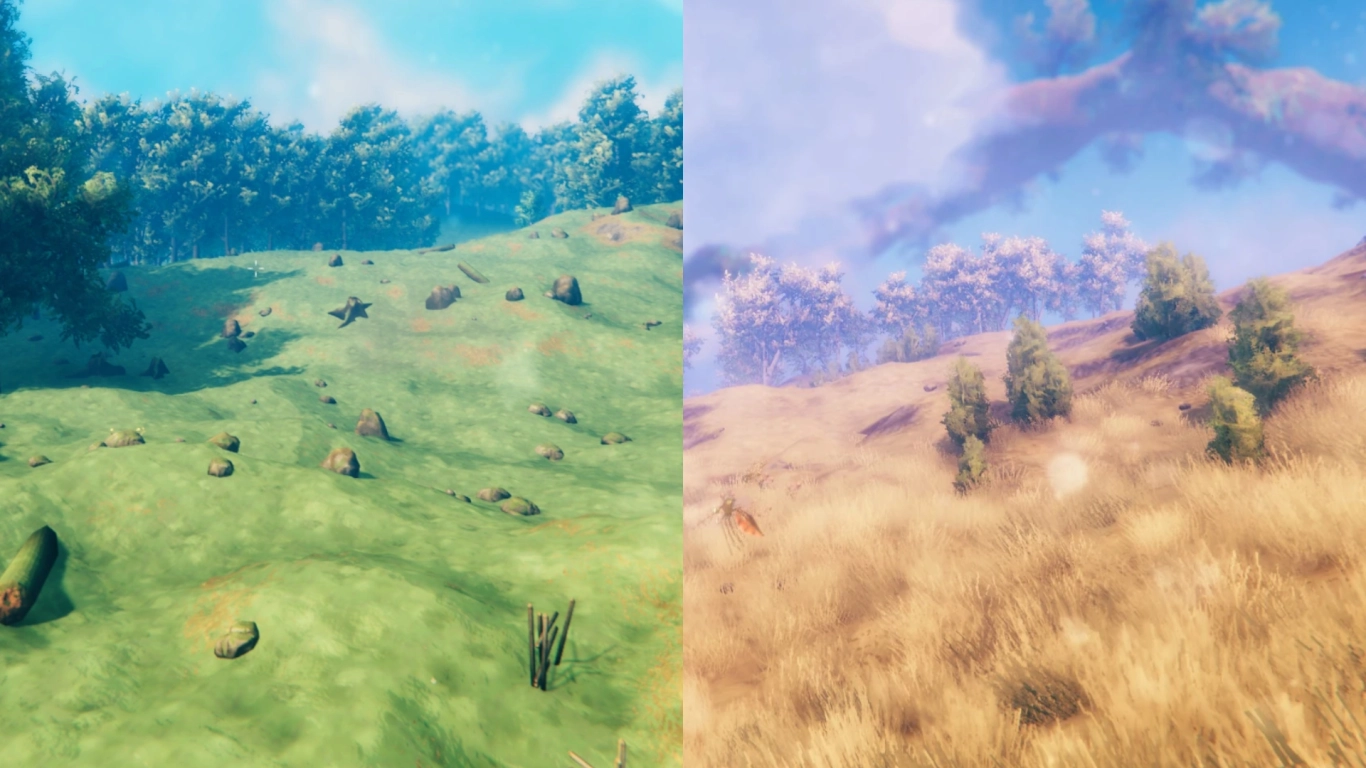
Before you start building, you need the perfect location. In the end, it’s your call where to settle, but we recommend either the starting biome, the Meadows, or the wide-open Plains you’ll reach later. Both are well-suited for homesteads thanks to their layout, though the Meadows are significantly more peaceful. That’s especially helpful for a stable multiplayer setup if you want to rent your own Valheim server: rent a Valheim server. If needed, you can also use multiple spots at once and connect them.
You can build in other biomes, but they’re not always ideal—many are uneven, have harsh weather, or feature tougher enemies. Smaller outposts tied to your main base are usually a much better fit there, which we’ll cover later. If you need an intro to the building system, check out our article (Valheim House Building: Building System, Stability, and Materials) .
Valheim base materials: Wood, stone, and roofs
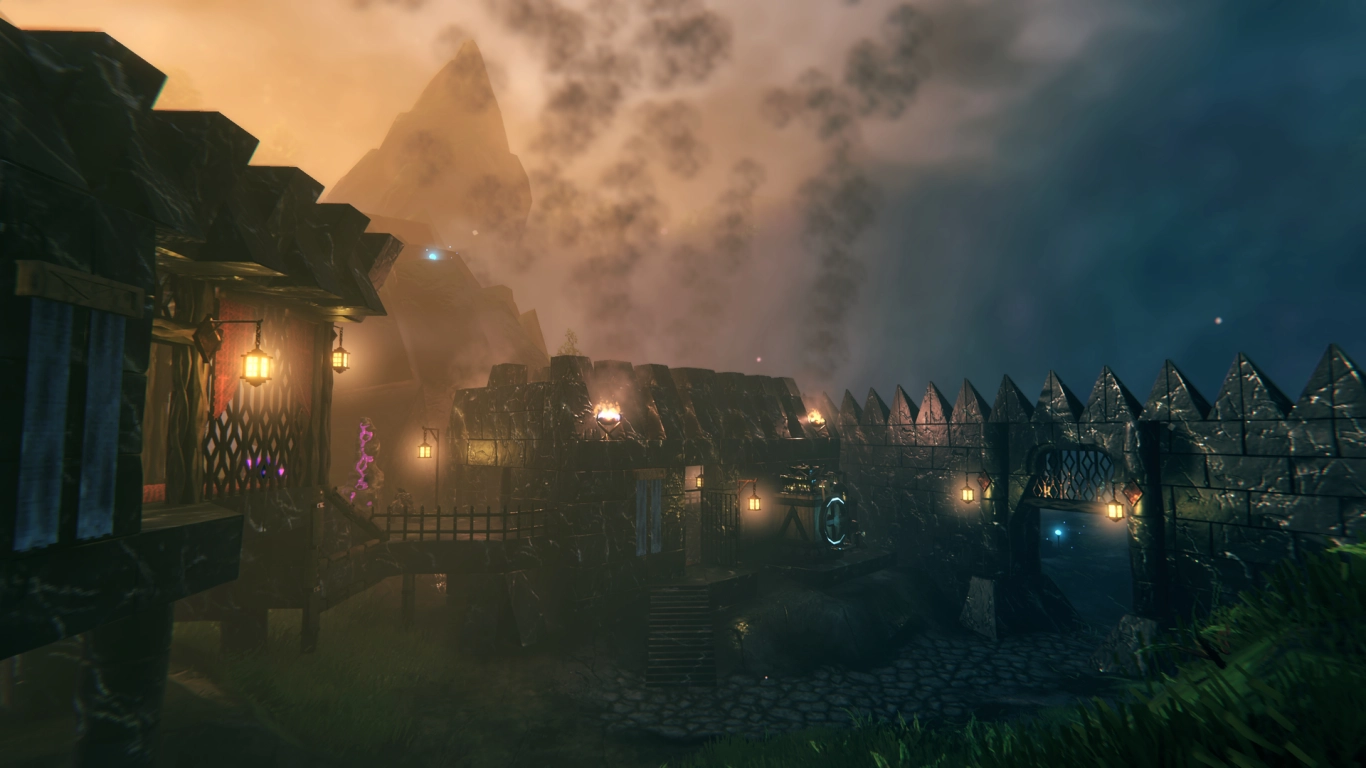
By the time you reach the Ashlands, you’ll have access to a wide range of materials. You can mix and match as you like—some are sturdier than others—but in the end, materials are largely an aesthetic choice, and the sky’s the limit.
You can build with the following:
- Wood: wood, core wood, darkwood, Dvergr wood, ash wood
- Stone: stone, wood-iron, cages, black marble, Grausten, Flametal
- Roofs: thatch roofs, shingle roofs, Grausten roofs
Increasing comfort in Valheim: Buffs, fire, bed, and decor
Comfort is another key part of your base, as it grants strong rested buffs for your upcoming journeys. A good home protects you from the elements and keeps you well-rested. The duration of your rested buff depends on your base’s comfort level. At a minimum you need a fire, a roof over your head, and a bed. Extra decorations like rugs, tables, chairs, and banners raise the level even further. You can even build your own hot tub.
Setting up your Valheim workshop: Crafting stations and upgrades
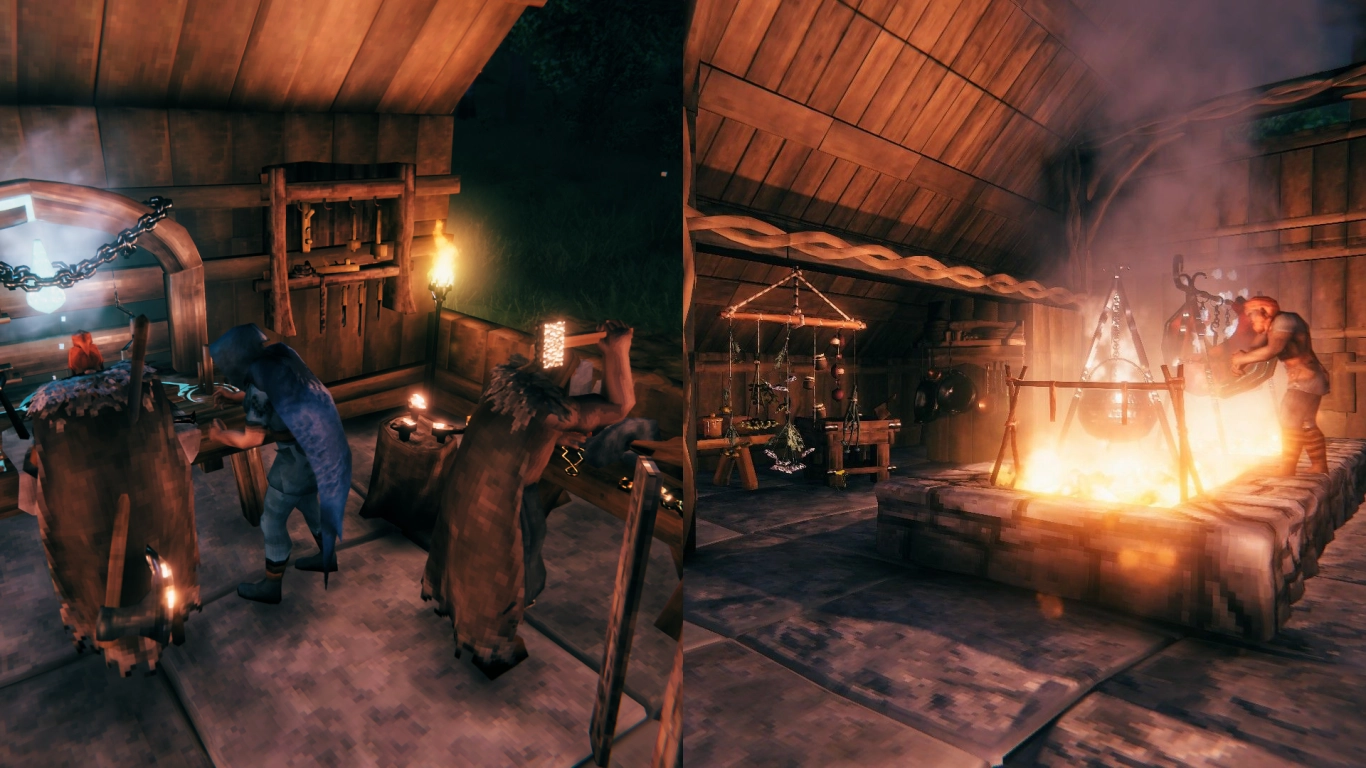
Crafting is a core pillar of Valheim. On one hand you have various stations to create items, armor, weapons, and other useful gear. On the other, many stations can be upgraded with add-ons to unlock improvements and new recipes. That all takes space, so we recommend organizing benches by theme.
At the very least, set up a general work area, a forge, and a kitchen. This keeps things separate and gives you three rooms you can decorate individually. A work area can be inside the house, as the workbench sets the build/repair radius and defines your base’s protected area. Forges are often placed on the edge of a building with direct outdoor access. Your kitchen should connect to a field and include a proper smoke vent.
Valheim storage: Chests, sorting, and efficiency
You should also build comprehensive storage to properly sort all the items you find. As you progress, you’ll unlock larger chests for more capacity. The best options are reinforced chests (24 slots) and black metal chests (32 slots). We strongly suggest keeping everything in one place instead of spreading countless chests across the world—you’ll never find anything again. Use signs for better sorting, or get inspired by the community online.
Securing food in Valheim: Fields, farming, and animal breeding
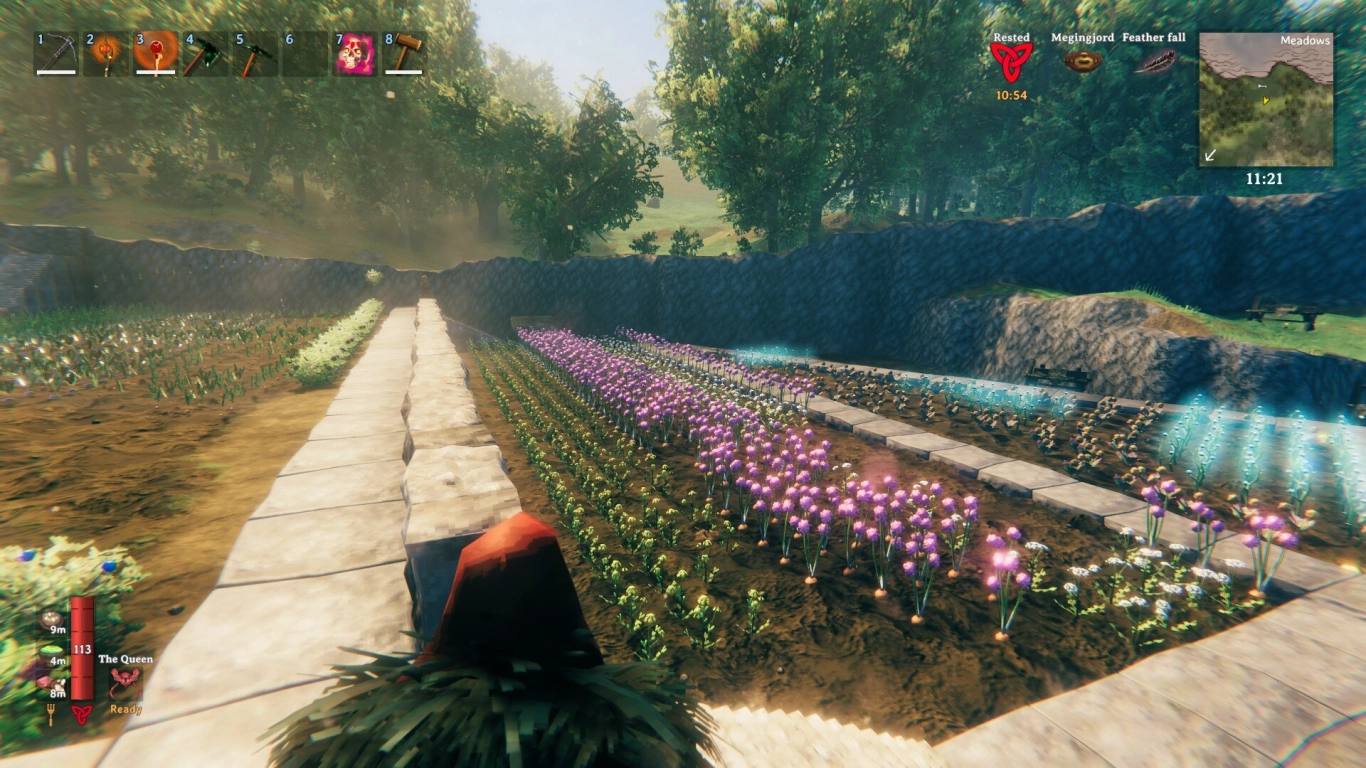
To ensure a steady food supply, set up renewable farms. On the one hand, you can grow various crops to cook with vegetables and mushrooms. The main catch: you can’t grow every plant in every biome. Some only grow in specific environments, which is why outposts linked to your main base are so important. Learn more about agriculture in our dedicated guide (Valheim Farming Guide: Fields, Crops & Cultivation) .
On the other hand, you can tame animals and breed them for slaughter to harvest their drops—primarily meat, another key cooking ingredient. You can also use the Lox and Asksvin as mounts, so they deserve a spot in your base as well. We’ve covered animal breeding in detail here (Valheim animal taming: Guide to breeding, mounts, and resources) .
Valheim transport: Portals, boats, and mounts to link bases
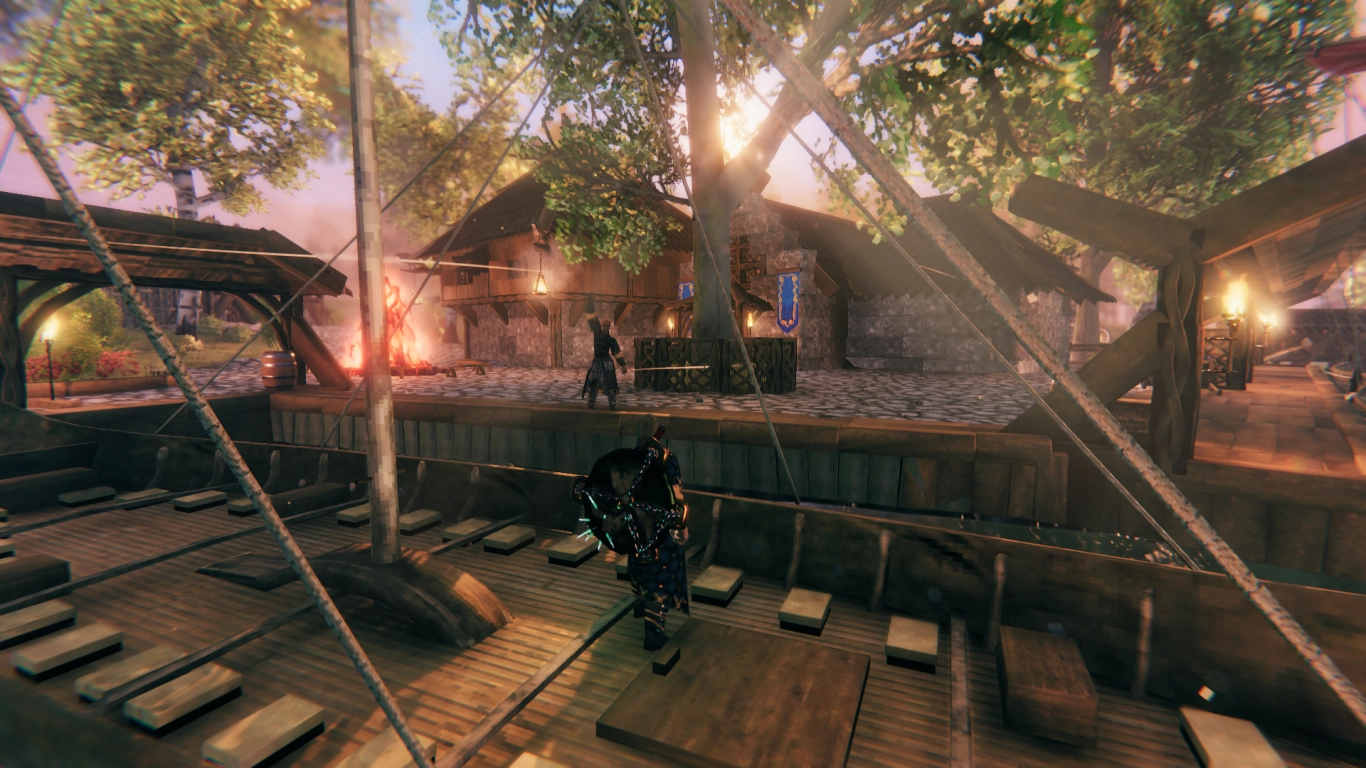
Speaking of mounts, your base should also support transportation. As mentioned, you can ride animals, but there are other ways to get around. Boats are the second big option, so it can be worth building your base near open ocean. There you can build a dock and store your ships.
Portals are likely the best way to move quickly and effortlessly from place to place. You can build them as early as the Black Forest and link different bases or outposts. That also solves the problem of crops that only grow in certain biomes. Keep in mind that some materials can’t pass through portals—this includes nearly all ores and metals, as well as the chests used in Hildir’s questline.
Conclusion: Build and expand your perfect Valheim base
Valheim doesn’t just have a sophisticated building system; many mechanics tie directly into it. It’s no accident that several workstations only function under a roof. The game is designed for you to build a comprehensive base and handle all your tasks there. From rest and storage to animal husbandry and farming, a true endgame base offers everything you need. Plus, you can keep expanding its functionality as you progress—whether with new building materials, fresh crops, or additional crafting stations.