In Valheim, you don’t just explore the world, defeat bosses, and uncover secrets—you also build your own home. The building system isn’t quite like what you might be used to. Instead of stacking pieces anywhere you want, you have to consider your structure’s stability. That adds a layer not many other survival games have. It gets you thinking and being creative to improve your build’s structural integrity. You can also choose from different building materials to make your house as beautiful as you like. We’ll cover all of that and more in this guide.
Valheim house building: basics of the building system
A house in Valheim is more than just a nice-looking structure. It’s your safe shelter, and it’s also required to use most of your crafting stations. Even your basic workbench needs a roof to function. The same applies to all the crafting stations that follow. A house is very important in Valheim!
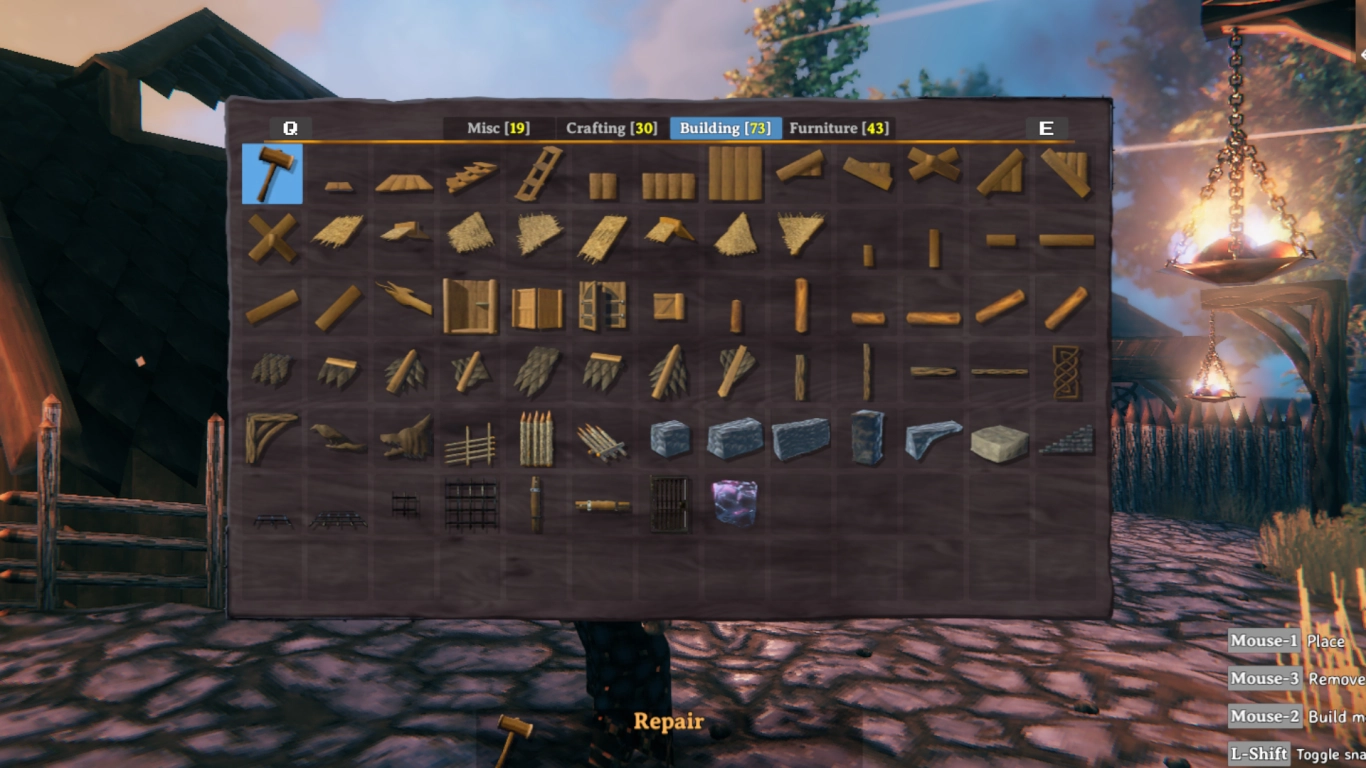
To build, you need a workbench and a hammer, which you can craft right from your own crafting menu. Equip the hammer on your hotbar and stay near the workbench to start building.
Equip the hammer and then open the build menu with the right mouse button (right-click). Early on, we recommend using an existing structure in the Meadows biome. You can tuck your workbench in there and use the existing frame as a template. Of course, nothing stops you from building entirely from scratch. If you want to build with friends, you can rent your own Valheim server with us and team up on a grand longhouse right away. Valheim gives you plenty of freedom here.
Furnishing your Valheim house: essential furniture and stations
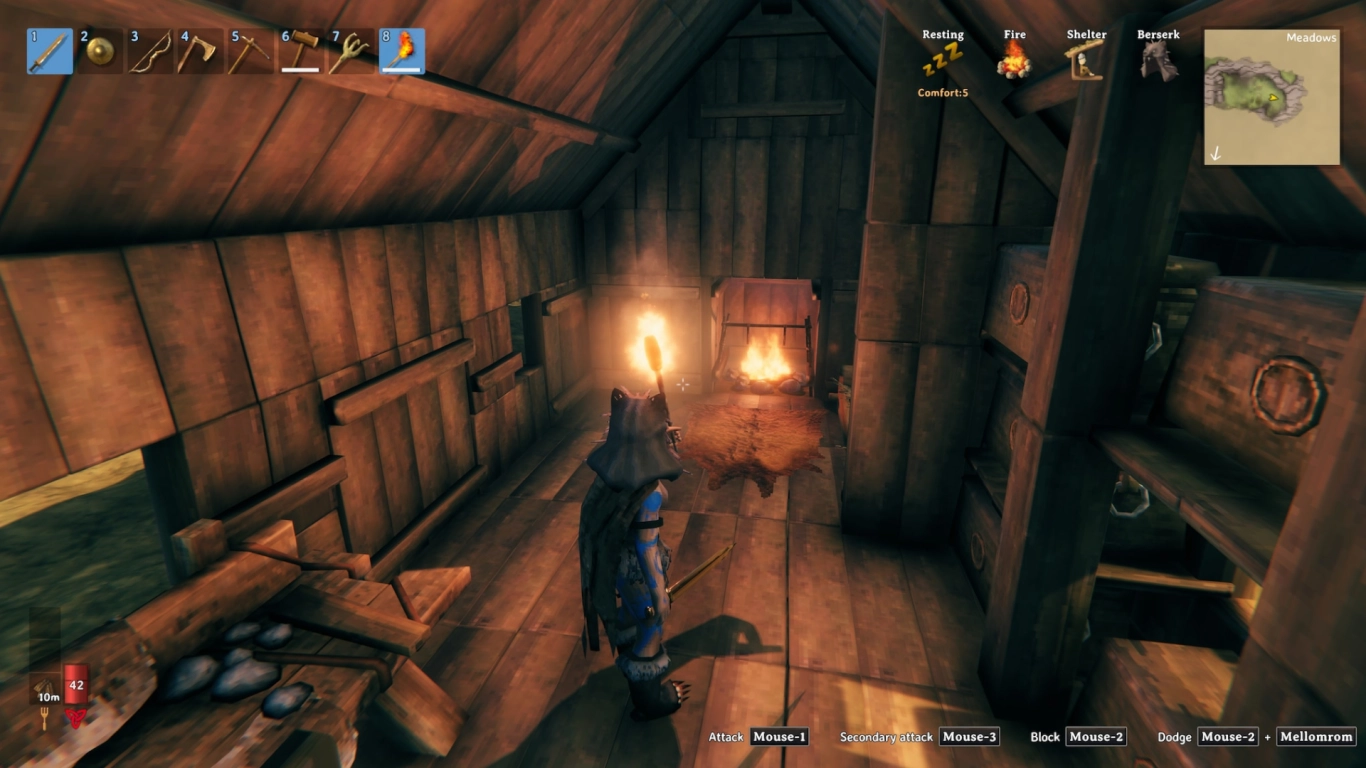
Your house should include a few essential pieces of furniture and other necessities. It’s your home base and a place you’ll keep returning to.
- Bed: Requires 80% roof coverage, lets you skip the night, and sets your spawn point.
- Storage: Stash excess items to free up your inventory.
- Campfire: Provides warmth and is great for cooking. Just make sure you manage the smoke.
Valheim indoor campfire: smoke ventilation, chimney, and warmth
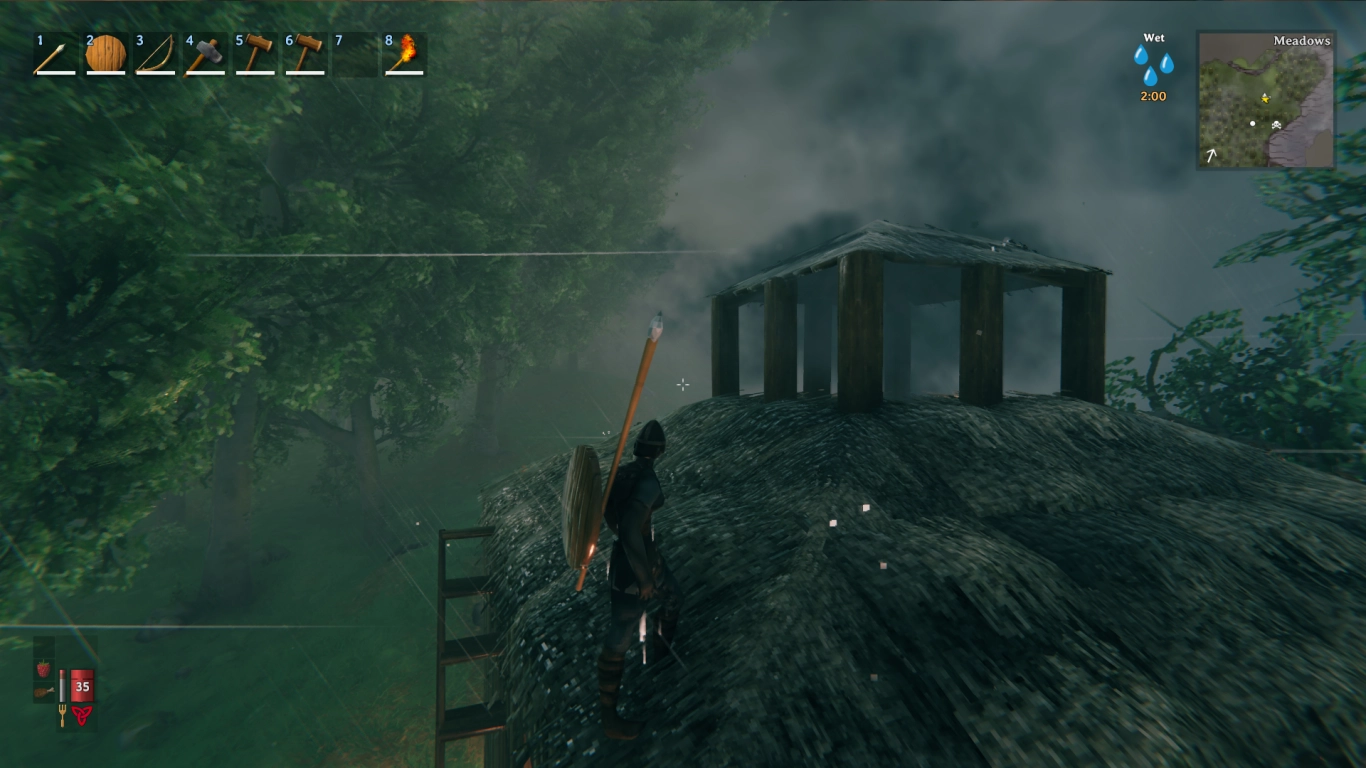
Speaking of the campfire—this is where you need to be extra careful. It keeps you warm and is a key part of any home, but it can also kill you. Living in a smoke-filled house isn’t exactly healthy. Smoke inhalation can slowly take you out. Still, the campfire has to be part of your home because a bed requires a nearby fire.
So how do you handle it? First, the campfire must be placed on solid ground, so leave a hole in your floor. You also need a smoke vent so the smoke can escape through the roof. We recommend building a chimney and directing the smoke out with sloped roof pieces. This applies to any mechanic that produces smoke.
Understanding Valheim stability: structural integrity, pillars, and materials
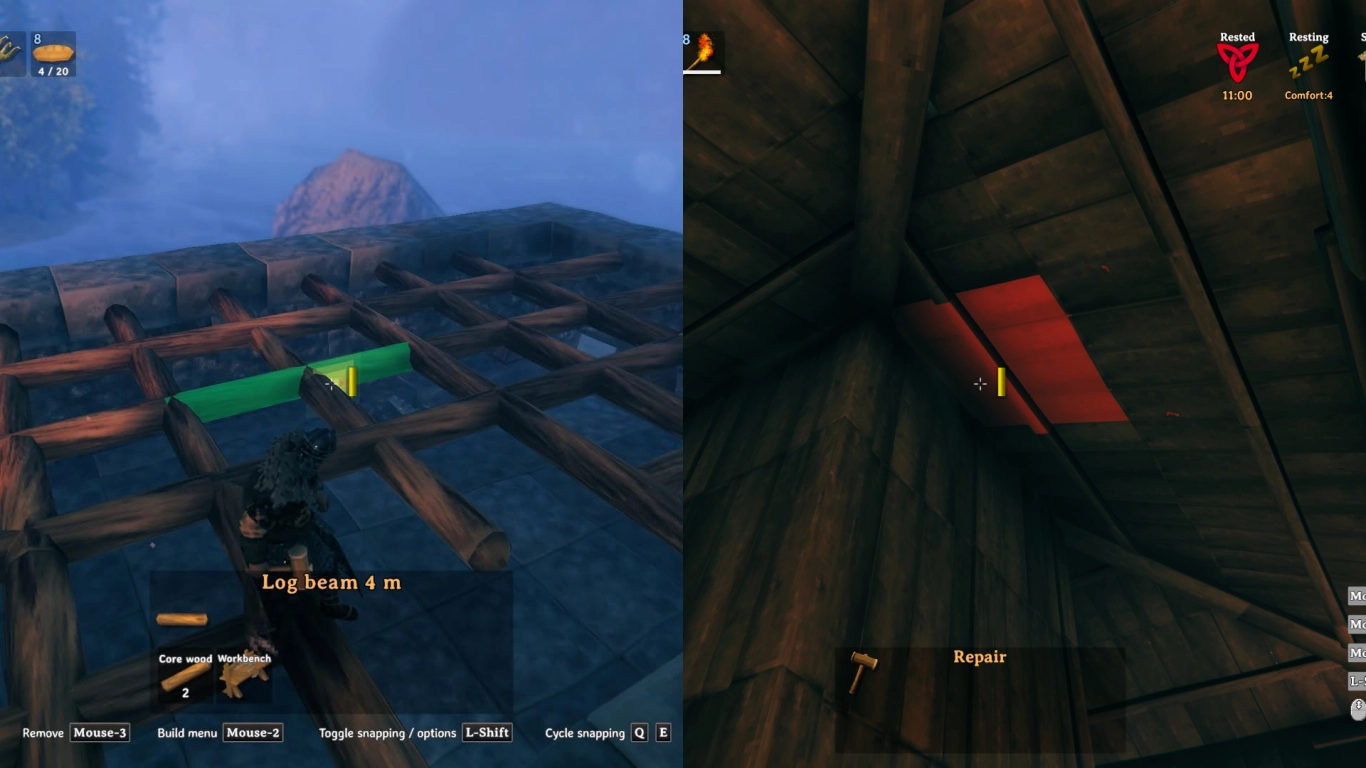
Beyond these basics, you also have to make sure your house is stable. You can’t just build upward without structural balance. Valheim uses a strict system where every piece must be supported by another. If not, you won’t be able to span large areas. Build pieces display a color scale from green to red that indicates how close they are to failing.
Key tips for stable builds:
- Start by leveling the ground with a hoe. That gives you a solid foundation for your structure.
- Lay your floor next and make sure pieces appear blue. That indicates they’re grounded.
- Before you put up walls, place vertical posts as support pillars. They carry walls better.
- Use snapping so all pieces connect cleanly and support each other.
- Different materials behave differently. Some are stronger and more durable than others.
- Repair your house regularly with the hammer to maintain its integrity.
Valheim building elements: decor, storage, and workshops
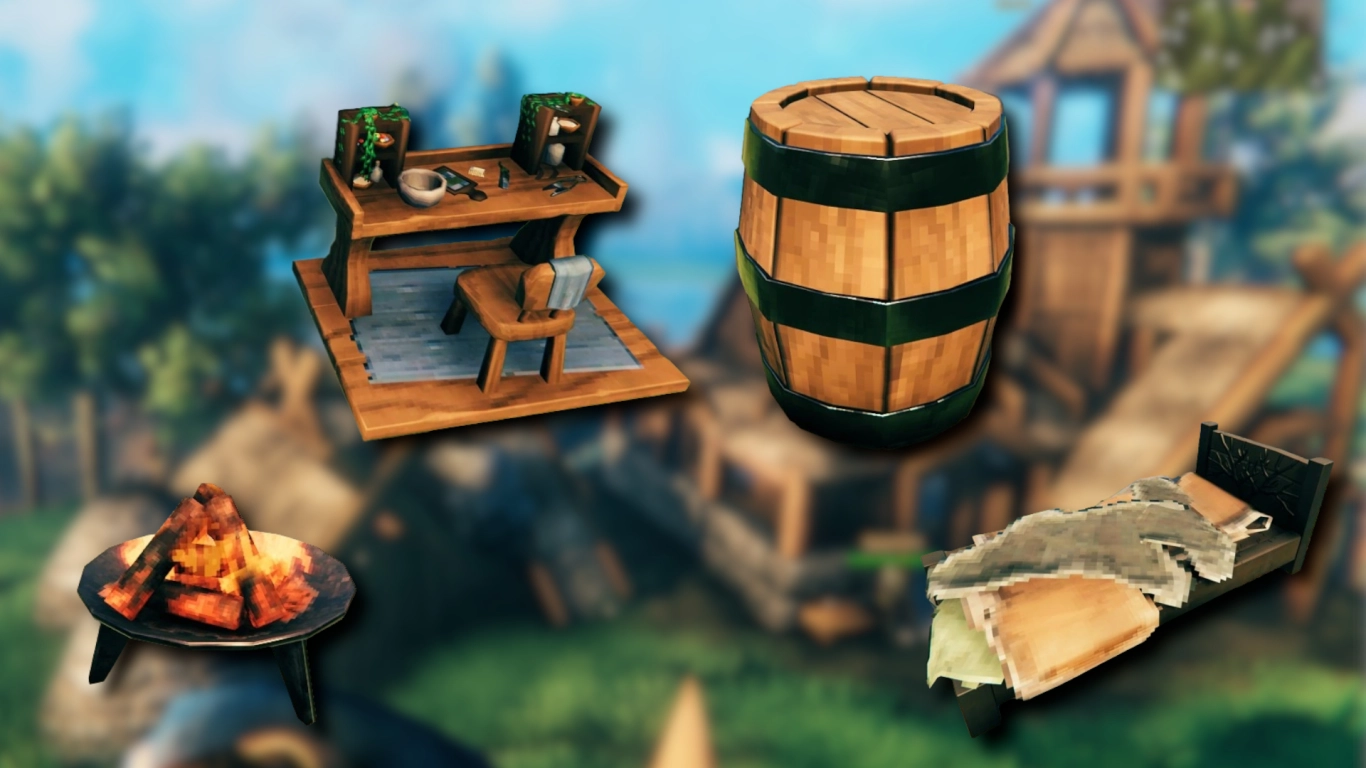
Your home has many more elements, and the further you progress in Valheim, the more you can build. Your base evolves from a humble hut into a grand hall worthy of a Viking. Make it cozy and build your dream home.
Later you can add:
- New hearths and cooking stations that provide light and warmth.
- Various light sources for walls and ceilings, including torches and chandeliers.
- More storage options, larger chests, and armor stands.
- Additional crafting stations, such as a barber’s table or a cartography table.
- Different furniture like tables, chairs, and beds.
- Banners and rugs for extra comfort.
- Defenses, walls, and traps to keep your base safer.
Expanding Valheim materials: darkwood, iron, and black marble
Early on, you’ll mainly work with wood and stone. But you can unlock more materials as you progress. Later, you can expand the availability of build pieces with the forge, stonecutter, and artisan table, and even extend their build radius.
You can refine wooden structures with darkwood from tar in the Plains, build with Yggdrasil wood, or use ashwood. With iron, you can reinforce wooden elements to build higher and more stable. Eventually you’ll unlock black marble in the Mistlands, as well as Flametal and Grausten in the Ashlands. You can also upgrade roofs, both with shingles and with Grausten.
Conclusion on the Valheim building system: build houses that are sturdy and beautiful
Valheim’s unique building system enables creative homes and plenty of exciting possibilities. You have to watch several factors, whether it’s the roof over your workbenches or the smoke ventilation of a cooking area. You can’t always just slap pieces together—you need to think strategically. On top of that, your structure must be stable, or it will collapse. These layered mechanics set Valheim apart from many of its peers and encourage creativity and originality in your builds.