Villages are one of the most important structures in Minecraft. You’ll find residents there who are friendly toward you and eager to trade. Today, though, we’re focusing on the village itself, because there’s a lot to discover! Every village is laid out differently. Depending on how many buildings there are, you can walk away with plenty. From simple carrots and potatoes to valuable diamonds, village chests can be richly stocked. You can also pick up great blocks you won’t have to craft yourself. Villages also change by biome, which we’ll look at as well.
What is a Minecraft village? Generation, updates, and villagers
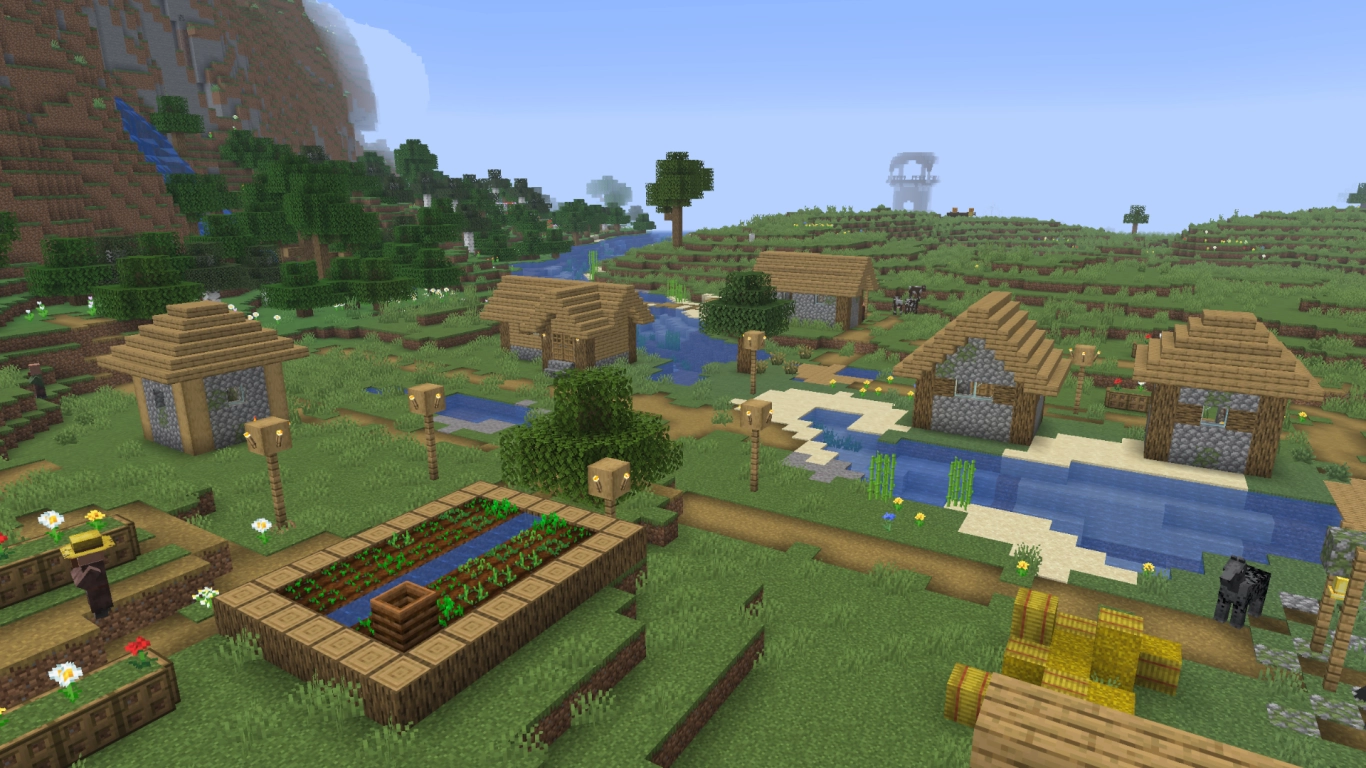
A village is one of many pre-generated structures that appear in Minecraft and are determined by world generation. They’re also among the oldest features of this kind and were added in Beta 1.8 back in 2011. Over the years they’ve received many updates, big and small, most notably with the major “Village & Pillage” update, version 1.14. Since then, villages have been largely as we know them today.
Villages are one of the few places in Minecraft where you encounter peaceful and even helpful creatures. The villagers have made their home here and go about various jobs. In this article we won’t dive deep into villagers themselves—we already have several guides if you need help! You’ll especially want to visit them for trading and to put them to good use. Or rent a Minecraft server with friends and build a bustling trading hub together.
All in all, villages are mostly peaceful places where you can find other inhabitants of the world and trade with them. Their houses are also interesting, as they’re always randomly generated. Some villages are just two or three houses; others are full neighborhoods with many villagers. And that’s not the only way they differ!
Minecraft village animals: cats, horses, livestock, and golems
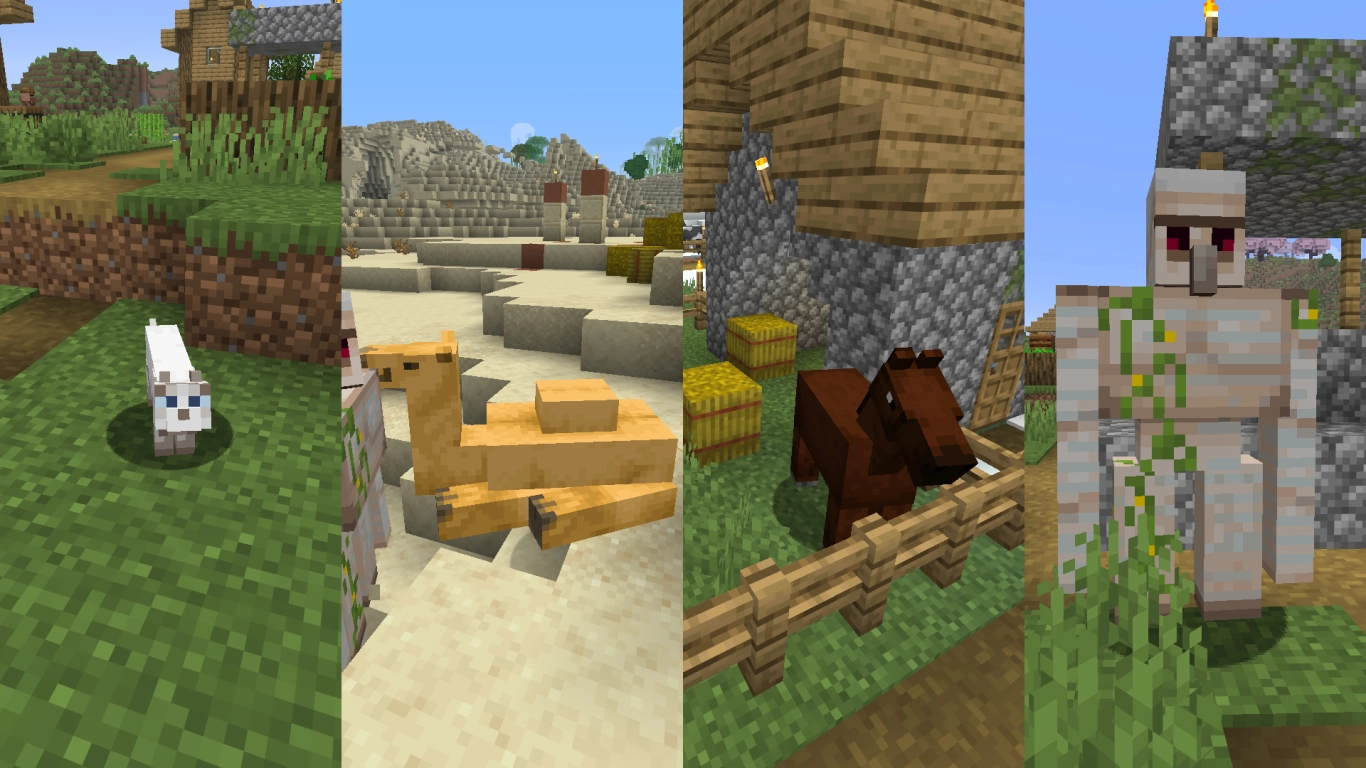
Villages aren’t just home to villagers—they’re lively places. You’ll also find a range of animals here, some even exclusive. It’s worth checking villages regularly and claiming a few for yourself.
- Cats: These fluffy companions are a strong reason to seek out villages. Since ocelots no longer turn into cats, cats were added as a separate species and spawn in villages. Lure them with raw fish and tame them.
- Horses: Some villages have stables where you can find horses.
- Livestock: Villagers also keep common farm animals like sheep, cows, and pigs. These can vary by biome.
- Camels: In deserts, you’ll find large camels that spawn as part of the village.
- Iron Golems: Iron golems are a village’s defense mechanism. Villagers can spawn them, and the golem fights hostile mobs. They can be spawned again after they die, which can be used for iron farms.
All Minecraft village variants by biome: differences and loot
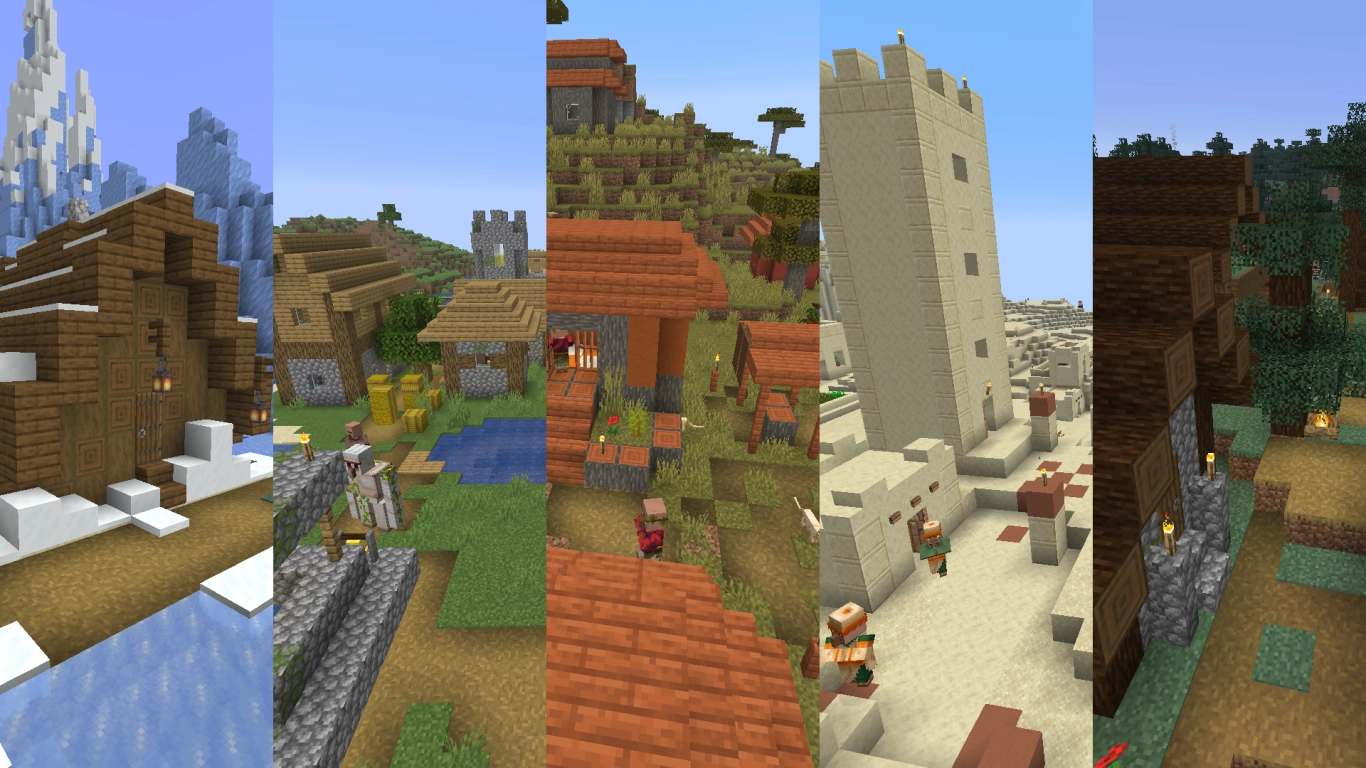
There isn’t just one type of village—there are six. Five of them vary by biome, while the last type is generated at random. It’s worth exploring all biomes and visiting every type at least once. They differ not only in appearance but also in their loot.
- Plains: Typical villages made of wood, cobblestone, and sometimes light terracotta. Found on treeless plains and in meadows.
- Desert: Houses are built from sandstone and red terracotta. They’re adorned with cacti and are quite open in design.
- Savanna: Houses are made from local acacia wood, creating a striking gray–orange contrast, often with yellow and red terracotta mixed in.
- Taiga: Found in taiga biomes without snow. Houses use cobblestone with roofs made from spruce logs.
- Snowy: Found on snowy plains. Houses have large roofs and are built from spruce wood and stripped logs.
- Abandoned: With a 2% chance, a village can be abandoned. Doors and torches are missing, there are no residents, moss grows, and cobwebs hang from houses. Villagers are replaced by zombie villagers. You can still find cats.
Minecraft village structures and loot: professions and biomes
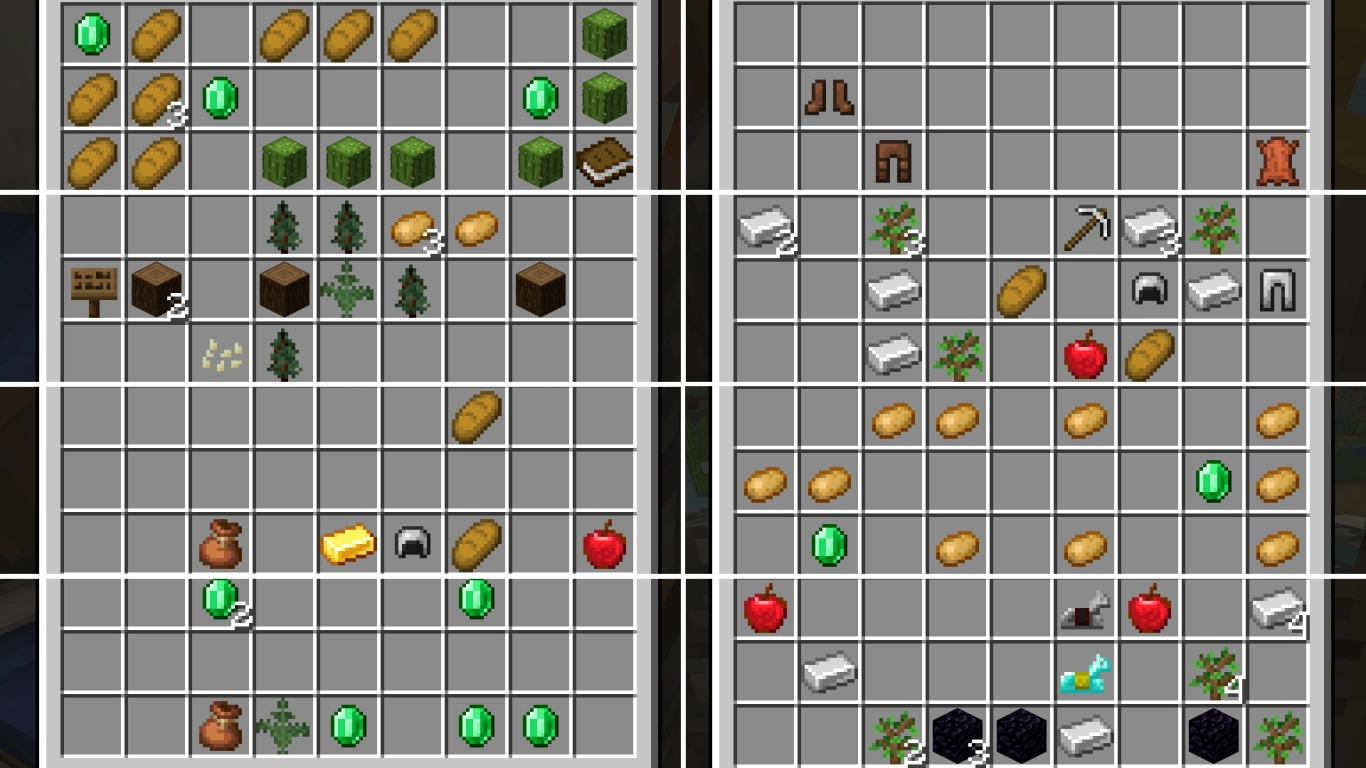
Loot varies by biome and can differ quite a bit. In addition, each villager profession has its own buildings that can also contain chests and items. Be sure to check every house to see what you can find. Alongside emeralds, there are often other treasures. You’ll also frequently find the corresponding workstations, which you can take with you.
Loot in houses by profession:
- Fields: A good source of wheat, potatoes, carrots, and beetroot. Sometimes there are melons and pumpkins.
- Armorer: Often has bread, but also iron ingots and emeralds.
- Butcher: Grab meat, coal, wheat, and emeralds from the chests.
- Cartographer: Chests often contain paper, some bread, and empty maps. Less commonly, bundles and a compass.
- Fisherman’s hut: A mix of wheat seeds, raw fish, and coal, plus barrels, and occasionally emeralds.
- Fletcher: You can pick up feathers, flint, and sticks here.
- Mason: Besides bread, you’ll find bricks and clay, emeralds, flower pots, and yellow dye.
- Shepherd: Contains various wool colors, shears, and emeralds.
- Leatherworker: Lots of leather goods, including leather armor and bundles.
- Cleric: A particularly good chest with redstone, lapis lazuli, and gold ingots.
- Toolsmith: With some luck, alongside iron tools you can also find diamonds, gold, and obsidian.
- Weaponsmith: The most variable chest. Can contain anything from horse armor and iron armor to weapons, gold, and obsidian.
Loot by biome:
- Plains: Plenty of food, but also bundles, flowers, and feathers.
- Desert: Often includes cacti and dead bushes, plus books, green dye, and clay.
- Savanna: Collect tufts of grass, acacia saplings, gold nuggets, and bundles.
- Taiga: Alongside ferns, pumpkin seeds, and sweet berries, you’ll also find pumpkin pie and iron nuggets.
- Snowy: Chests with beetroot and borscht, as well as blue ice, snow blocks, coal, and furnaces.
Conclusion: find Minecraft villages and make the most of the loot
Villages are worth visiting not only for their residents—the many buildings and chests also contain key resources you should definitely grab. We recommend checking every chest and taking some of the goodies with you. Especially valuable are metals, books, obsidian, and the occasional emerald for trading. You can also harvest fields and take other resources. Or tame a few cats, which you’ll only find in villages!