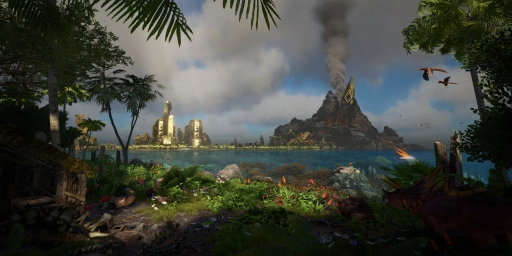
On July 15, 2025, ARK: Aquatica arrived as the most ambitious chapter yet in the long history of ARK: Survival Evolved. After years of conquering islands, deserts, caves, and alien worlds, the game finally took the plunge—into a realm where the ocean is no longer just a backdrop but the beating heart of the adventure.
Aquatica is more than a new DLC. It is a shift in perspective. While earlier expansions explored land, mountains, and sky as habitats, Aquatica turns the gaze downward—into the dark, uncharted vastness of the ocean, where light barely penetrates and every movement can mean danger.
This chapter pushes survival into a dimension that had only been hinted at until now: the relentless, otherworldly, and majestic world beneath the surface.
ARK Aquatica underwater map: deep-sea biomes & exploration
The sea has always been a place of mystery in ARK—dangerous, vast, often avoided. With Aquatica, it finally becomes what it was always meant to be: a self-contained world full of life, structures, and secrets.
The map is gigantic. Only about a quarter of its area lies above sea level—small island chains, atolls, and basalt cliffs that serve as staging grounds. The rest lies underwater, where colossal mountain ranges, sunken cities, and bioluminescent abysses await discovery.
The deep-sea zones are vertically layered. Players start in shallow coastal waters before venturing into increasingly darker regions—from coral fields to manta caverns to lightless trenches where the game’s largest creatures dwell.
The atmosphere is unlike any map before. Sunlight fades in the water, sounds echo muffled, and every shadow could be something moving. Survival here means learning to embrace the unknown.
New ARK Aquatica creatures: underwater and amphibious fauna
Aquatica adds over two dozen new creatures—many fully aquatic, others amphibious. The wildlife is diverse, beautiful, and deadly in equal measure.
A standout is the Thalassodon, a massive marine mammal that feels like a blend of whale and Mosasaurus. Peaceful unless provoked, it can transport entire groups across great distances.
Equally striking is the Skalaris, a bioluminescent fish that absorbs ambient energy. It can serve as a mobile light source and reacts to currents—an essential aid in the darkness of the deep.
For combat, creatures like the Carcharovore, a predator with a serrated jaw and lightning-fast strikes, and the Bathynectis, a gigantic, tentacled behemoth, take center stage.
Aquatica also introduces the concept of symbiotic creatures. Some smaller lifeforms, such as the Neon Crab or the Aqualisk, can attach to larger creatures and grant them special abilities—faster swimming, improved oxygen regeneration, or biological armor.
This system adds a tactical layer to taming and training. You create not just a mount, but a bond—a living network that decides victory or defeat beneath the waves.
Survival mechanics in the deep: oxygen, pressure, currents
Surviving in Aquatica means adapting to entirely new environmental physics. Oxygen, pressure, and light are critical factors.
Players must use breathing gear and pressure suits powered by energy cells. This equipment degrades over time, forcing regular returns to surface stations or the construction of underwater bases.
Currents play a major role. In some regions the pull is so strong it will drag you off course. Only specialized tools like the Hydro-Propulsor give you reliable control over movement and direction.
Temperature is vital as well. The deepest zones are frigid and require special insulation, while volcanic areas pose the opposite threat: scalding water that can melt equipment.
These environmental mechanics ensure Aquatica is not just another biome, but a fundamentally different way to play.
Exploring Abyssal City: sunken metropolis & sci-fi lore
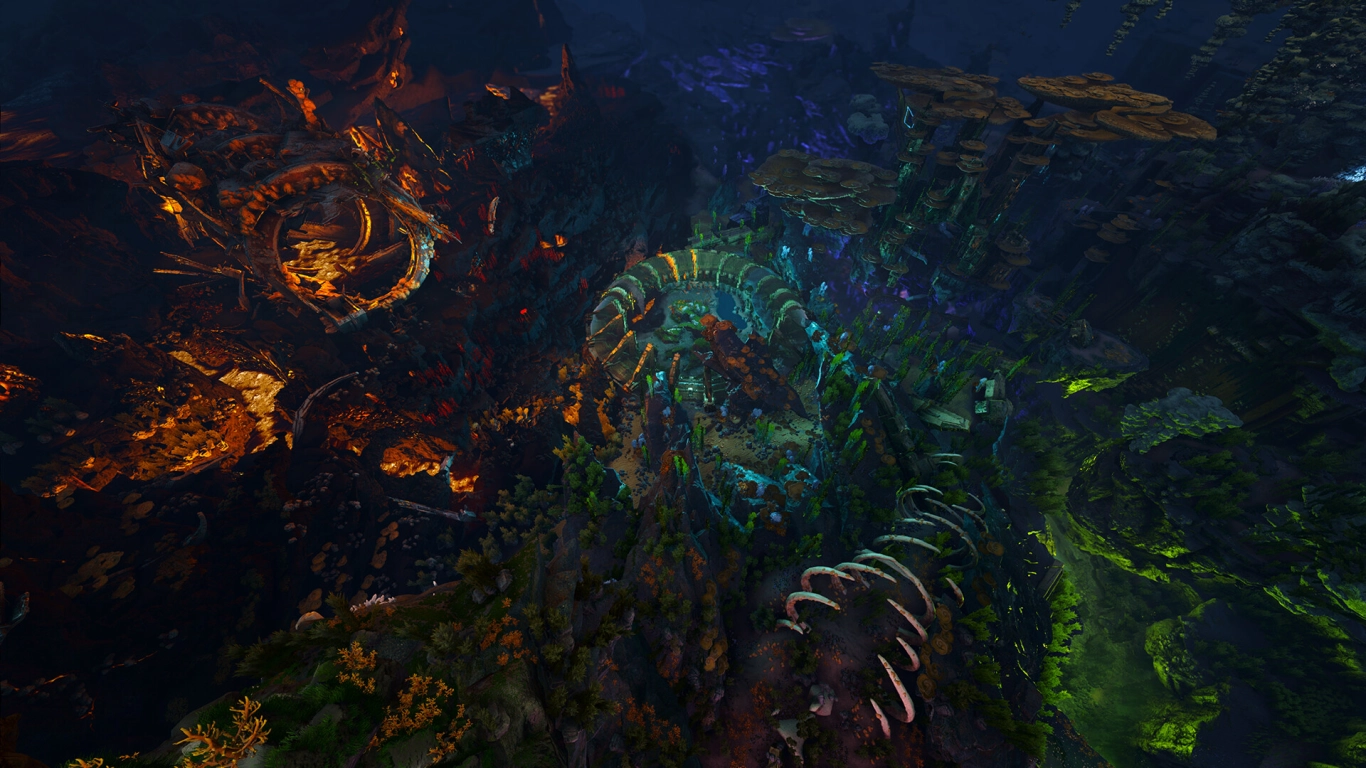
The heart of Aquatica is Abyssal City—a vast, partially intact underwater metropolis from before humanity’s fall. Huge domes, shattered glass walls, and glowing ruins create a scene of beauty and tragedy.
The city is not just a place to explore; it is a key to the story. Terminals and data cores reveal details about the final phase of human civilization—their flight below the surface, their genetic experiments, and their ultimate downfall.
Traces of this lost world are everywhere: machines still running with no one to tend them, gardens of glowing plants once used to produce oxygen, and creatures mutated in the shadow of technology.
Exploring these places is hypnotic. You glide through corridors where silence and history intertwine, and it’s clear ARK is leaning deeper into its science-fiction roots.
Underwater base-building in ARK Aquatica: materials & ecosystems
Aquatica introduces a new building system based on hydrostatic pressure and energy distribution. Structures must withstand pressure and be supplied with oxygen systems.
Players can construct entire domed settlements, linked by tubes and airlocks. Glass structures offer panoramic views of the ocean—an experience as soothing as it is ominous.
New building materials like Aqua-Titanium and Bio-Glass are required to survive deep-sea pressure. They must be refined from rare minerals found only in dangerous zones.
Cultivation gains new importance, too. Underwater-grown algae, fungi, and corals provide food and resources. Your base becomes not just a shelter but a functioning ecosystem.
Boss fights in ARK Aquatica: Leviathan Prime & more
As in Extinction, Aquatica features titanic creatures—this time in the form of ancient ocean dwellers.
One of them is Leviathan Prime, a truly colossal being guarding the map’s abyssal trench. Its body pulses with bluish patterns, and its call echoes for kilometers through the water. The fight is both physical and visual—an encounter with the ocean’s embodiment.
Another boss, the Abyssal Matriarch, is a massive, mutated jellyfish drawing energy from its surroundings. Its attacks rely on electrical discharges and pulses capable of shutting down entire bases.
The final boss, the Architect of Depths, is a relic of the old world—a biomechanical intelligence, half machine, half creature. It guards the central power core of Abyssal City and stands as the ultimate symbol of humanity’s urge to play creator, even in the depths.
Atmosphere, sound design, and visuals: bioluminescence & silence
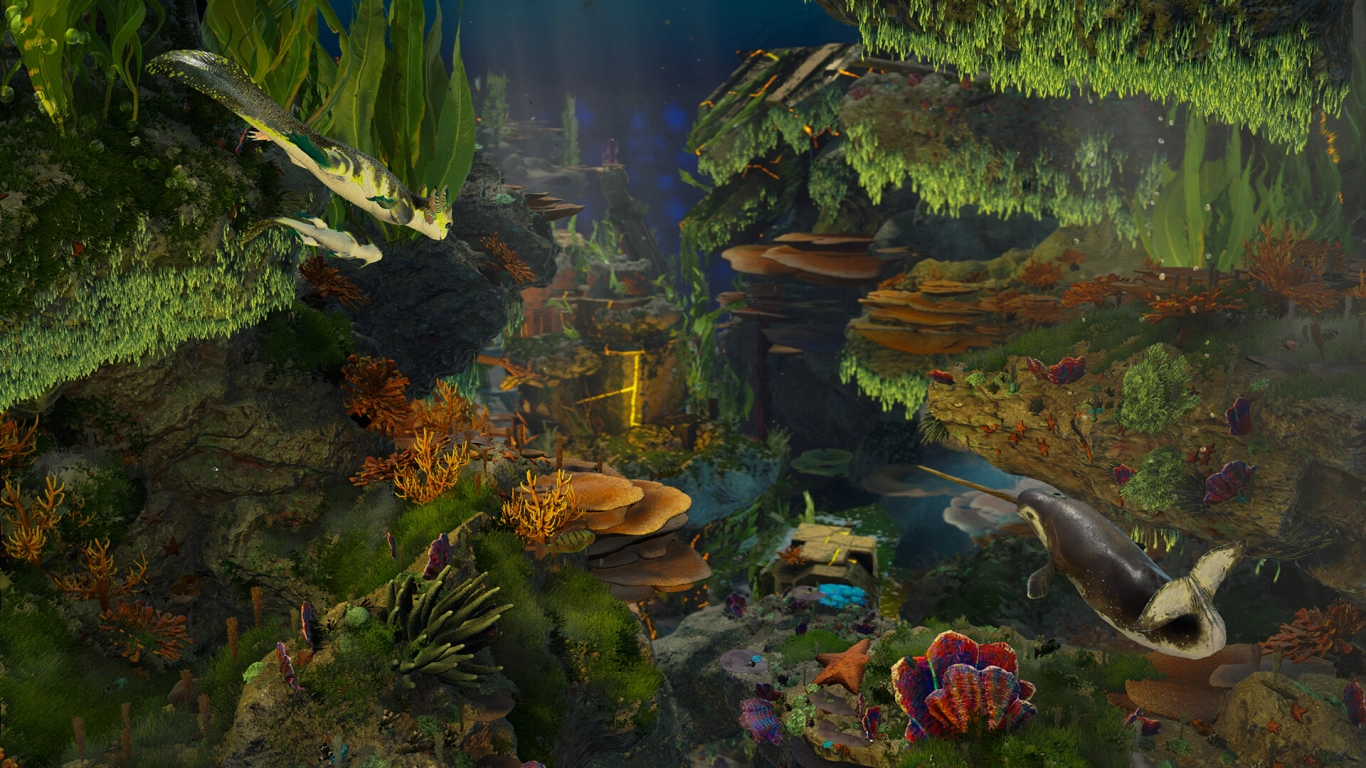
Aquatica’s atmosphere is unmatched. Instead of constant music, there is often silence—just the hum of the water, the echo of distant cries, and the soft crackling of corals. This restraint builds tension and respect for the depths.
When music does appear, it is subtle and ethereal: synthesizers blend with underwater tones, and distant choral layers remind you you’re in a realm that is both alien and ancient.
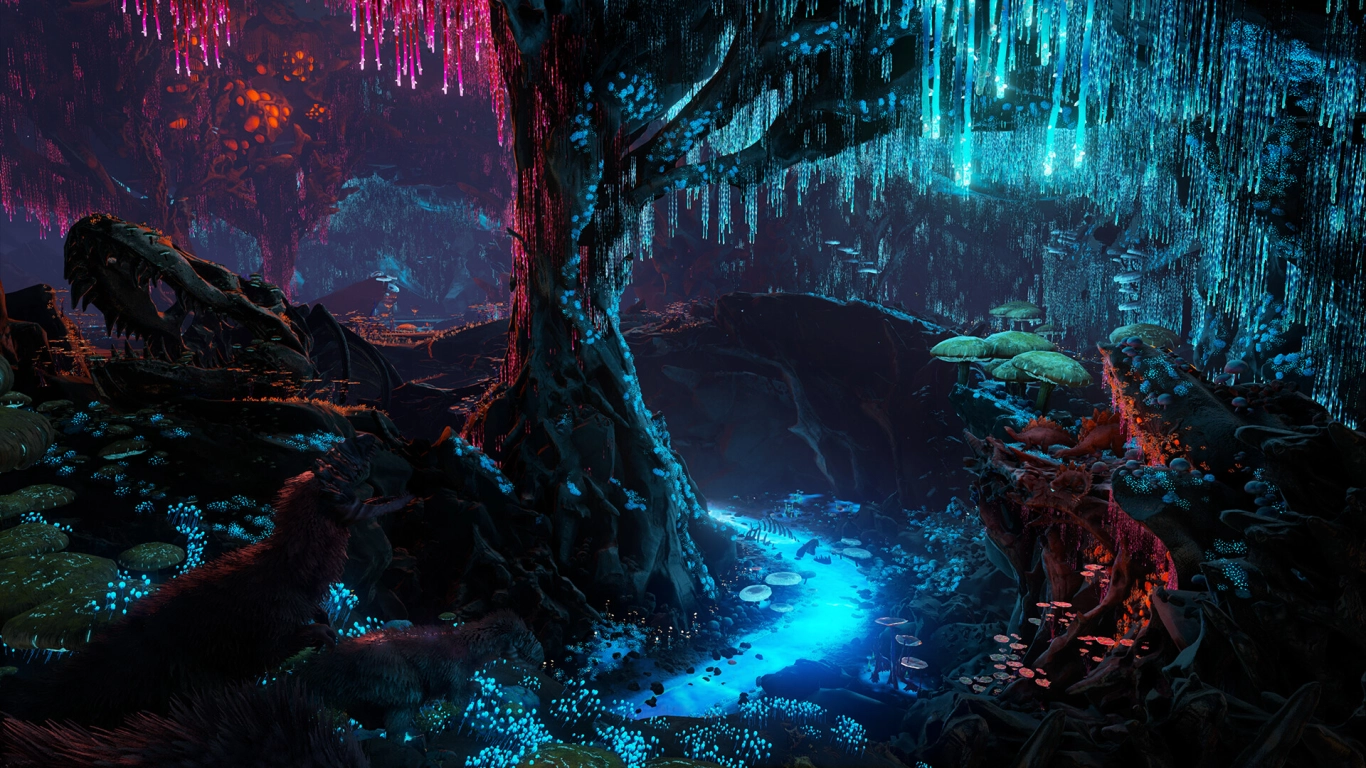
Visually, Aquatica is a triumph. Bioluminescent flora, drifting particles, refracted light, and flowing currents create an almost hypnotic effect. Each region has its own rhythm—sometimes calming, sometimes menacing.
Lore of ARK Aquatica: humanity, genetics, and the ocean
Aquatica symbolically closes the story of ARK: Survival Evolved. While earlier chapters explored expansion into space or digital realms, this DLC returns to the origin: the ocean, the cradle of life.
Data recovered in Abyssal City shows that humanity sought refuge in the seas after the surface became uninhabitable. Their genetic adaptations gave rise to many aquatic species—a final attempt to secure survival at depth.
But even this world broke apart. Aquatica is not just a new map—it is an epilogue, the end of a cycle where life, technology, and nature become one again.
Conclusion on ARK Aquatica: deep-sea adventures on servers
ARK: Aquatica is a masterpiece of atmosphere and innovation. It transforms the sea from a fringe zone into a living, complex world. It forces players to rethink movement, danger, and the relationship between humanity and nature.
With its new mechanics, creatures, biomes, and narrative depth, Aquatica is the most mature chapter in ARK’s history. It blends beauty and terror, calm and chaos, science and myth into an experience that lingers.
On a dedicated ARK server from 4Netplayers, Aquatica truly shines. Build underwater bases, venture into the abyss, and uncover the secrets of the sunken world together. With stable performance, customizable settings, and secure management, Aquatica becomes the perfect stage for those brave enough to dive where the light no longer reaches—and discover that even in the deepest darkness, life endures.