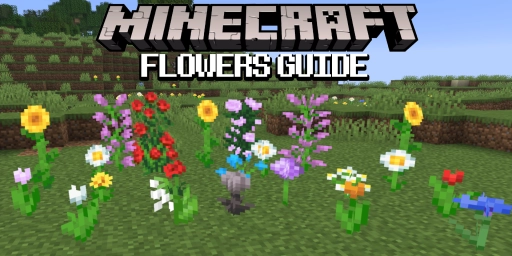
Flowers brighten up any build in Minecraft! They are mainly a decorative block you can display either in a flower bed or in a flower pot. You can also use them to attract bees and produce honey. But sometimes there’s more to these good-looking, sweet-smelling blooms. Some can be used to cook Suspicious Stew with unknown effects. If you want to farm flowers efficiently, check out our guide to an automatic farm: (Minecraft Flower Farm Guide: How to Build an Automatic Flower Farm for Dyes and Bees) . In this post, you’ll learn where to find each flower naturally and what you can use them for.
Small flowers in Minecraft: biomes, dyes, and Suspicious Stew
Dandelion in Minecraft: locations, yellow dye, and stew
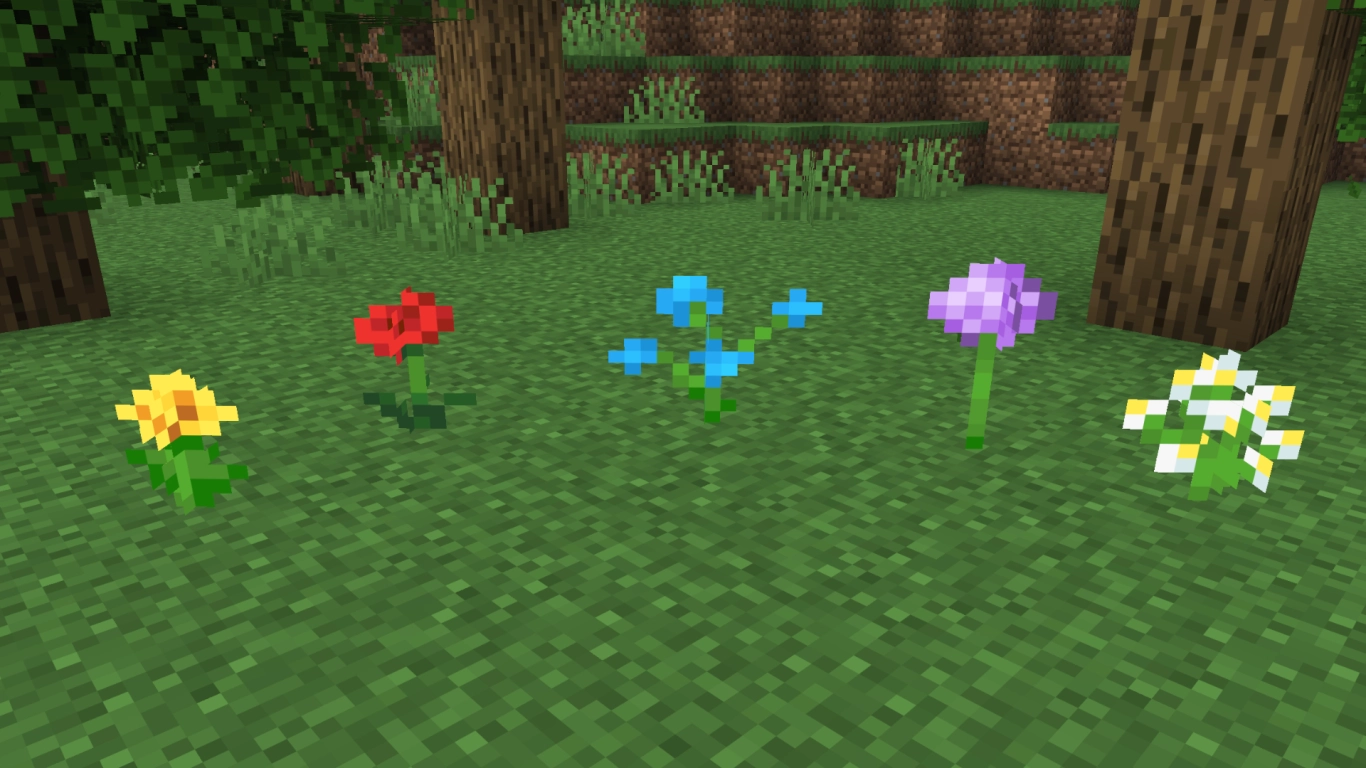
Dandelion is the oldest still-existing flower in Minecraft. Its texture has changed over time, but the flower itself remains. You can find it in almost every green biome, including forests and plains. It does not grow in swamps or the Badlands.
You can craft yellow dye from dandelions. Alongside carrots, they’re also the only other item you can use to breed rabbits. Suspicious Stew made with a dandelion briefly grants the positive Saturation effect. A fairly new feature is the Golden Dandelion, which lets you keep animals as babies permanently. Surround a dandelion with gold nuggets to craft it. Want to breed animals and play with friends? Rent an affordable Minecraft server now and try out the Golden Dandelion. That way they stay young forever.
Poppy in Minecraft: biomes, red dye, and night vision
Poppies have effectively been around since the Classic era, though the flower used to be known as the Rose. With version 1.7 it was renamed to Poppy and given a new texture. Today, poppies are also found in all green biomes, just like dandelions. Sometimes an Iron Golem will drop a poppy as a nod to the Studio Ghibli film “Castle in the Sky.” You can craft red dye from poppies, and Suspicious Stew made with one grants Night Vision.
Blue Orchid in Minecraft: swamp biome and light blue dye
The Blue Orchid is one of the prettiest flowers with bright blue blossoms. It stands out immediately in its natural biome. You’ll only find it in swamps. Craft light blue dye from it, which you otherwise have to mix from white and blue dye. Suspicious Stew made with a Blue Orchid also grants Saturation.
Allium in Minecraft: Flower Forest, magenta dye, and fire resistance
Allium grows in Flower Forests and Meadows. It can also sometimes be found in Woodland Mansions in a special flower room. It’s recognizable by its purple globular bloom, which yields magenta dye. Stew made with Allium briefly grants Fire Resistance.
Azure Bluet in Minecraft: plains, light gray dye, and blindness
The Azure Bluet is a small flower with many delicate blossoms. You can pick it across wide plains, in Flower Forests, and Meadows. It’s also a natural source of light gray dye. In Suspicious Stew, it causes the Blindness effect.
Tulips in Minecraft: variants, dyes, and weakness
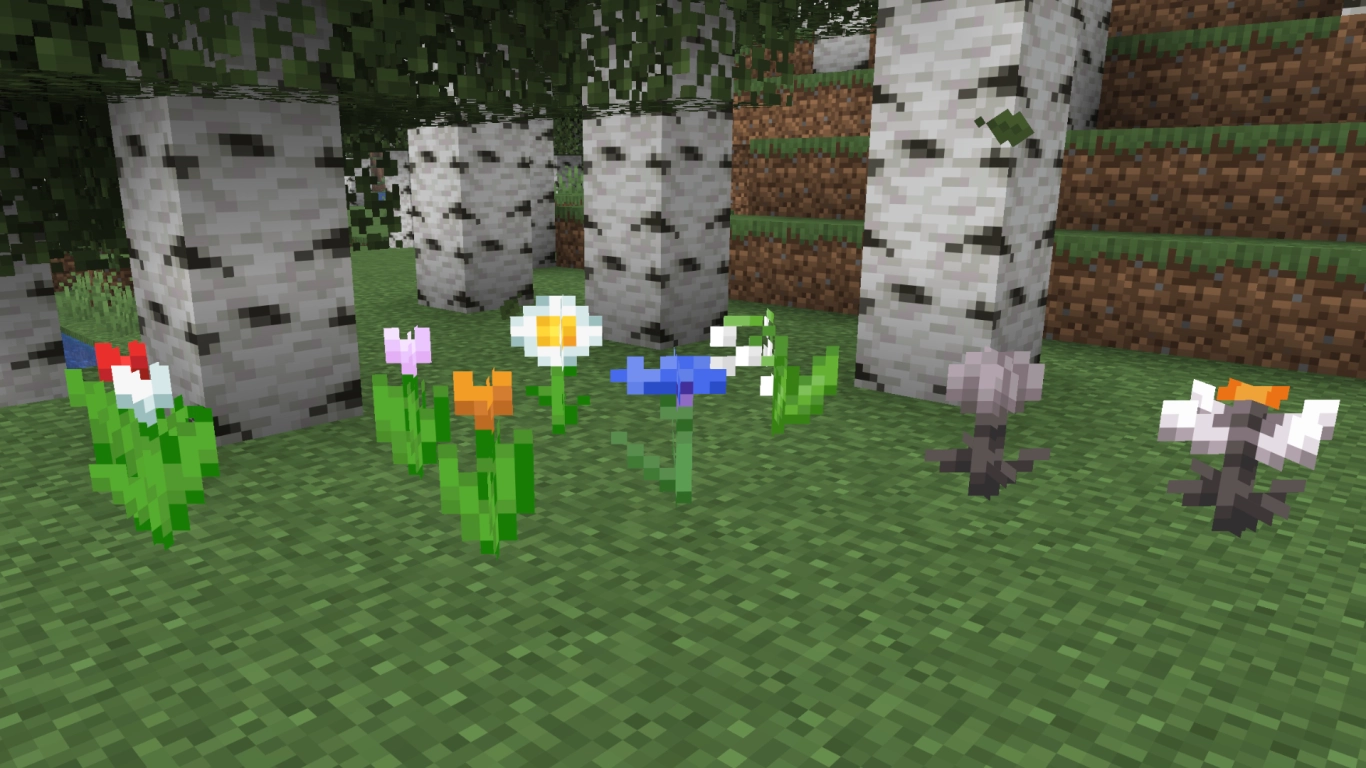
Tulips come in four variants: red, orange, white, and pink. Accordingly, you can craft four dyes that match their blossom colors. You’ll find them on plains and in Flower Forests, often in a predefined pattern. Their range of colors looks especially nice as a tulip garden. As an ingredient in Suspicious Stew, tulips apply the Weakness debuff.
Oxeye Daisy in Minecraft: locations, light gray dye, and regeneration
The Oxeye Daisy stands out thanks to its white-and-yellow blossom and can be spotted easily on plains, in Flower Forests, or on mountain meadows. Like Azure Bluets and white tulips, it also yields light gray dye. In stew, it grants Regeneration. The Oxeye Daisy also serves as a banner pattern. The motif looks like a flower, but can also be used as a sun.
Cornflower in Minecraft: blue dye and jump boost
Blue Cornflowers can be found and regrown in Meadows, plains, and Flower Forests. Their intense blue color is great for dye when you don’t want to use lapis lazuli. Suspicious Stew also grants Jump Boost, letting you jump higher.
Lily of the Valley in Minecraft: white dye and poison
Alongside bone meal, Lily of the Valley is the only source of white dye. It’s a bit rarer and can only be farmed renewably in Flower Forests. You can also pick it in other forests. Avoid using it for stew, as it will poison you briefly.
Eye Flower in Minecraft: Pale Garden, dyes, and effects
The Eye Flower is only found in Pale Gardens, a sub-biome of the Dark Forest. Its blossoms close during the day and open at night to reveal an orange bloom. The resulting dye changes accordingly. Closed, it yields gray dye; open, it yields orange dye. The Suspicious Stew effect also differs. An open blossom causes Blindness, while a closed one causes Nausea.
Large flowers in Minecraft: locations, dyes, and tips
Sunflower in Minecraft: Sunflower Plains, yellow dye, and orientation
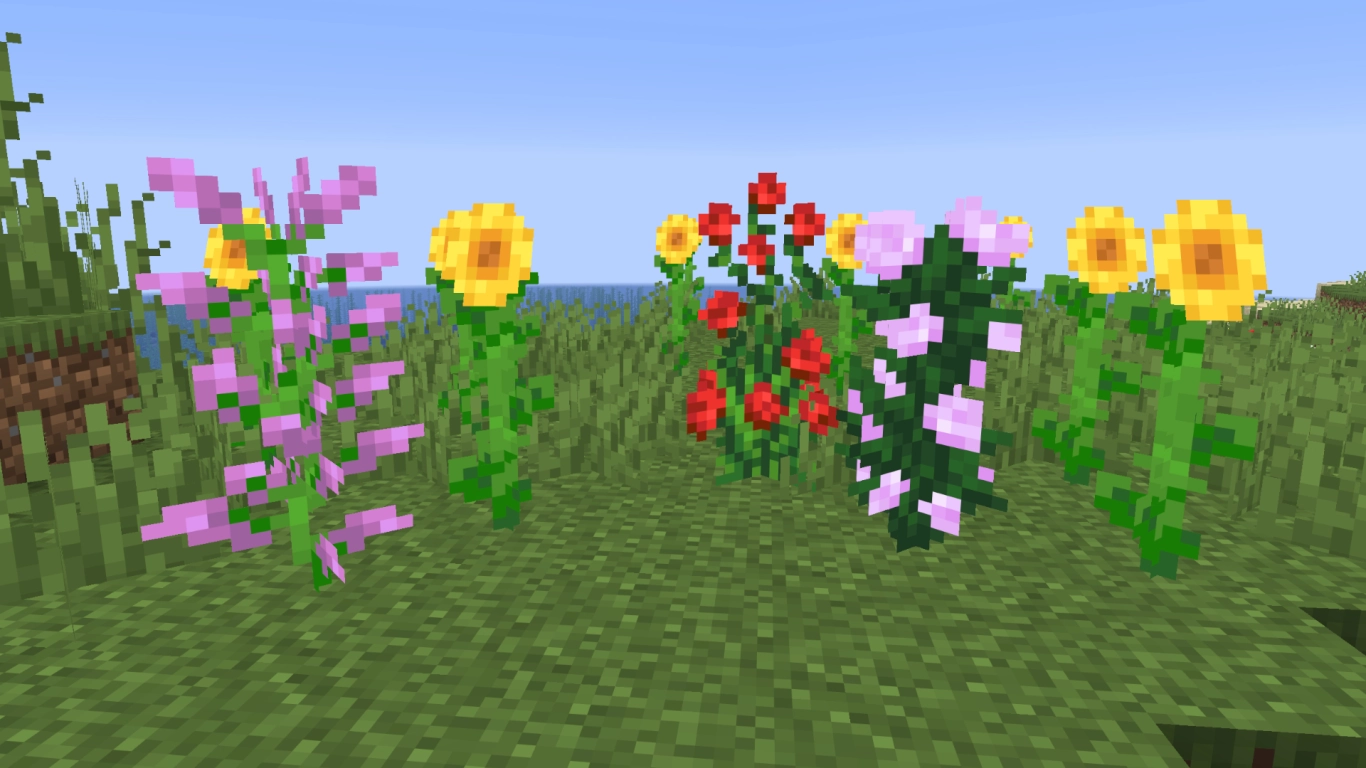
Sunflowers are two blocks tall and can only be found in the Sunflower Plains biome. Their large blossoms always face east, which you can use for navigation. You can craft yellow dye from them. Sunflowers make lovely decor, but as large flowers they can’t be placed in pots.
Lilac in Minecraft: magenta dye and bone meal duplication
Lilac is also a large flower and can be found in various forests. It yields magenta dye. Use bone meal directly on the plant to duplicate it. Each flower even gives you two dye.
Rose Bush in Minecraft: red dye and duplication
As mentioned with the poppy, it replaced the old rose item. Fans can still find a large Rose Bush in forests and take it with them. Like all large flowers, you can duplicate it with bone meal applied directly and get two red dye.
Peony in Minecraft: pink dye and hedge tip
The last flower you can find naturally in forests is the bushy Peony. Its pink blossoms give you two pink dye. Again, use bone meal to duplicate the plant. Unlike the other shrubs, the Peony is especially opaque and works well as a hedge.
Conclusion: Find every Minecraft flower, dye, and use them smartly
Flowers are far more than just decoration in Minecraft, even though they excel at it. Their variety lets you create a colorful flower garden, while also letting you use those colors as dyes for many items. Most flowers can also be turned into Suspicious Stew, whose effect remains hidden to the uninitiated. Some flowers have special use cases, such as the Golden Dandelion, or the Wither Rose, which inflicts Wither and can be crafted into black dye.