Over more than 15 years of development, it’s no surprise that a few things in Minecraft have changed. That includes not just a range of features, but also several crafting recipes you use at the crafting table to assemble items. Some of these were adjusted early on, while others stayed the same for years and were only tweaked later. There are even a few recipes that changed multiple times. If you’re a returning player who hasn’t played Minecraft in a while, our list of 8 crafting recipes could be especially helpful. Fortunately, the recipe book in your inventory now makes it easy to learn these new formulas.
Minecraft: Crafting smooth stone slabs – every recipe change
Smooth stone slabs are great building blocks. With their light gray surface and dark gray edge, they’re perfect for modern builds. In fact, they’re among the oldest blocks in Minecraft and were the first slabs ever introduced, dating back to the game’s Classic version.
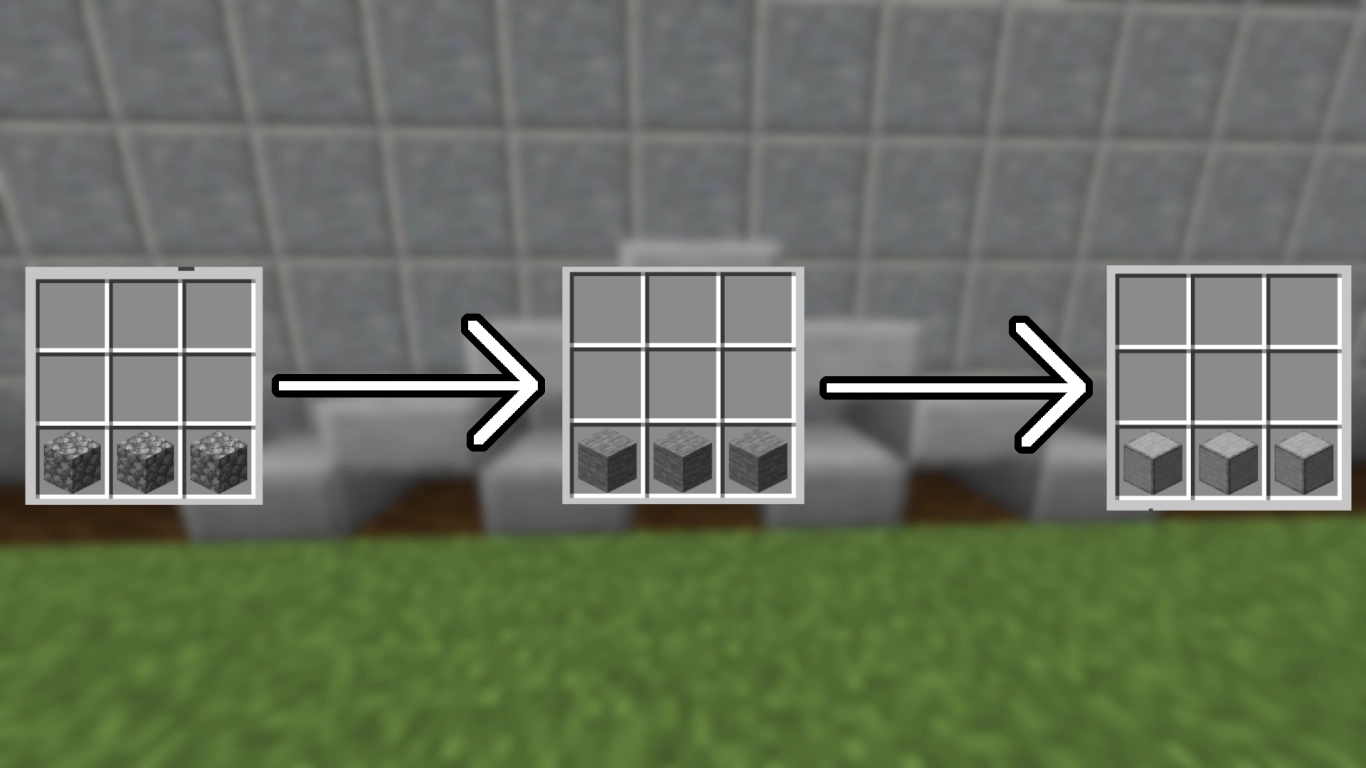
The slab recipe has seen two significant changes. Starting in Indev, you could craft them with three horizontal cobblestone blocks, a very simple and convenient recipe. In Beta 1.3, new slabs for wood, sandstone, and cobblestone were added, so the recipe was changed to three regular stone blocks. For a time, you could also use granite, diorite, and andesite. With version 1.14, the third variant arrived because smooth stone became its own block. Its texture was also updated at the same time.
Minecraft: Golden apple recipe – from nuggets to ingots
Golden apples are extremely useful in Minecraft. They don’t just fill your hunger bar; they also grant Regeneration as a status effect. You can find them in chests, but you can also craft them. How much gold you need depends on the Minecraft version.
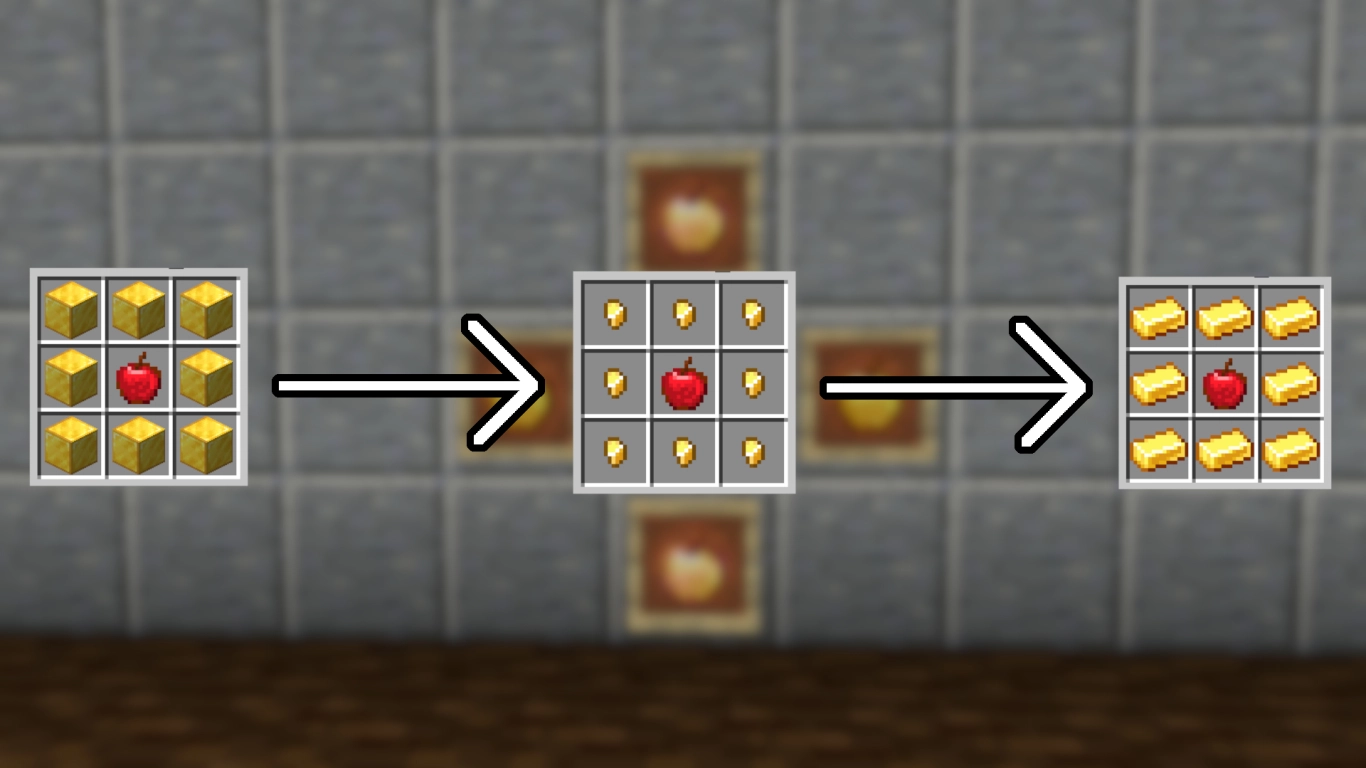
From Infdev through Release 1.0, you had to invest eight full gold blocks to craft a golden apple. As of 1.1, you only needed eight gold nuggets, a clear reduction in materials. The recipe with gold blocks was moved to the enchanted golden apple. With version 1.6, the requirements went back up to eight gold ingots. That’s still the case today. The recipe for the enchanted golden apple was removed entirely in version 1.9.
Minecraft: Crafting a book – recipe with leather
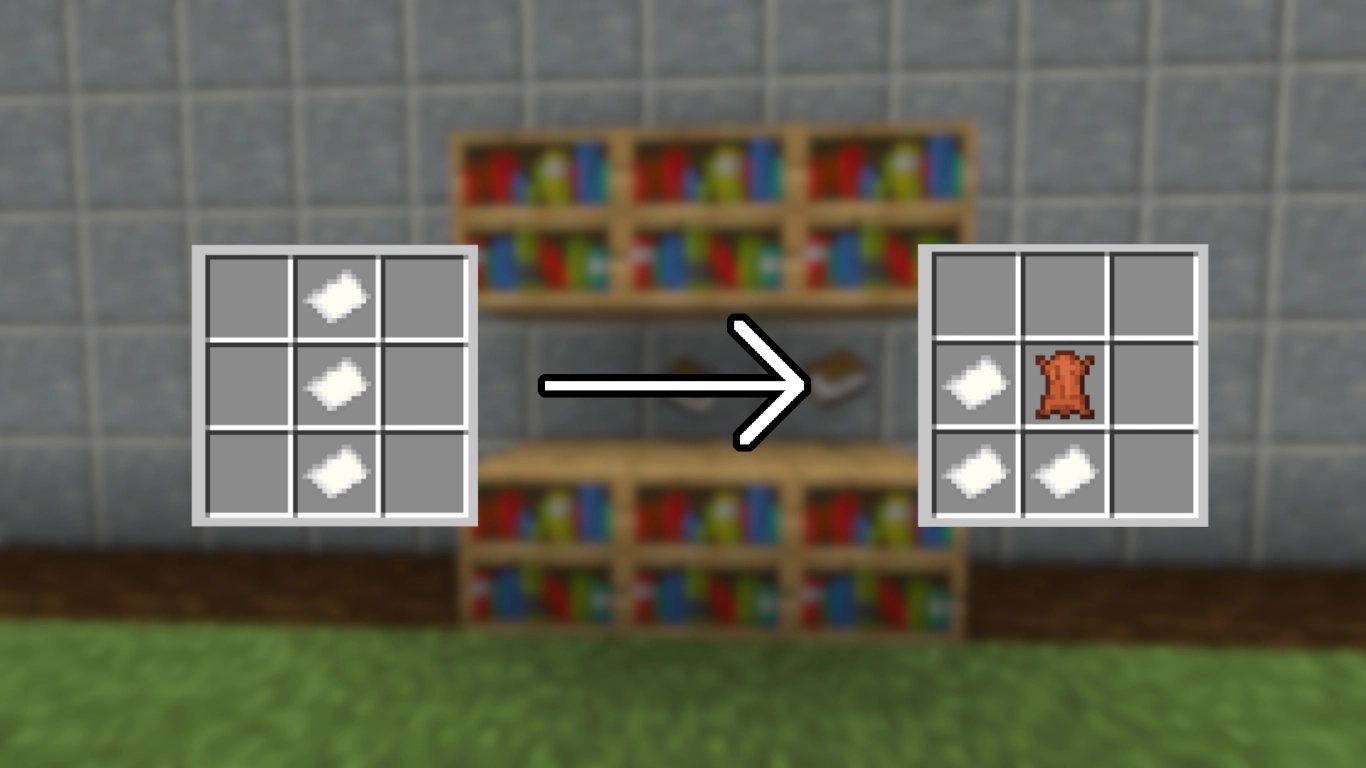
Books are now a key component of Minecraft, mainly thanks to enchantments you can store on them. In Alpha, though, they were only useful for bookshelves. The recipe back then was just three paper stacked vertically. With the introduction of Enchantments, that was likely too easy, so the recipe was changed in version 1.3.1 to three paper and one leather. Now you unfortunately have to kill cows and can’t rely solely on your sugar cane farm, which makes books noticeably more involved.
Minecraft: Composter recipe – differences between Java and Bedrock
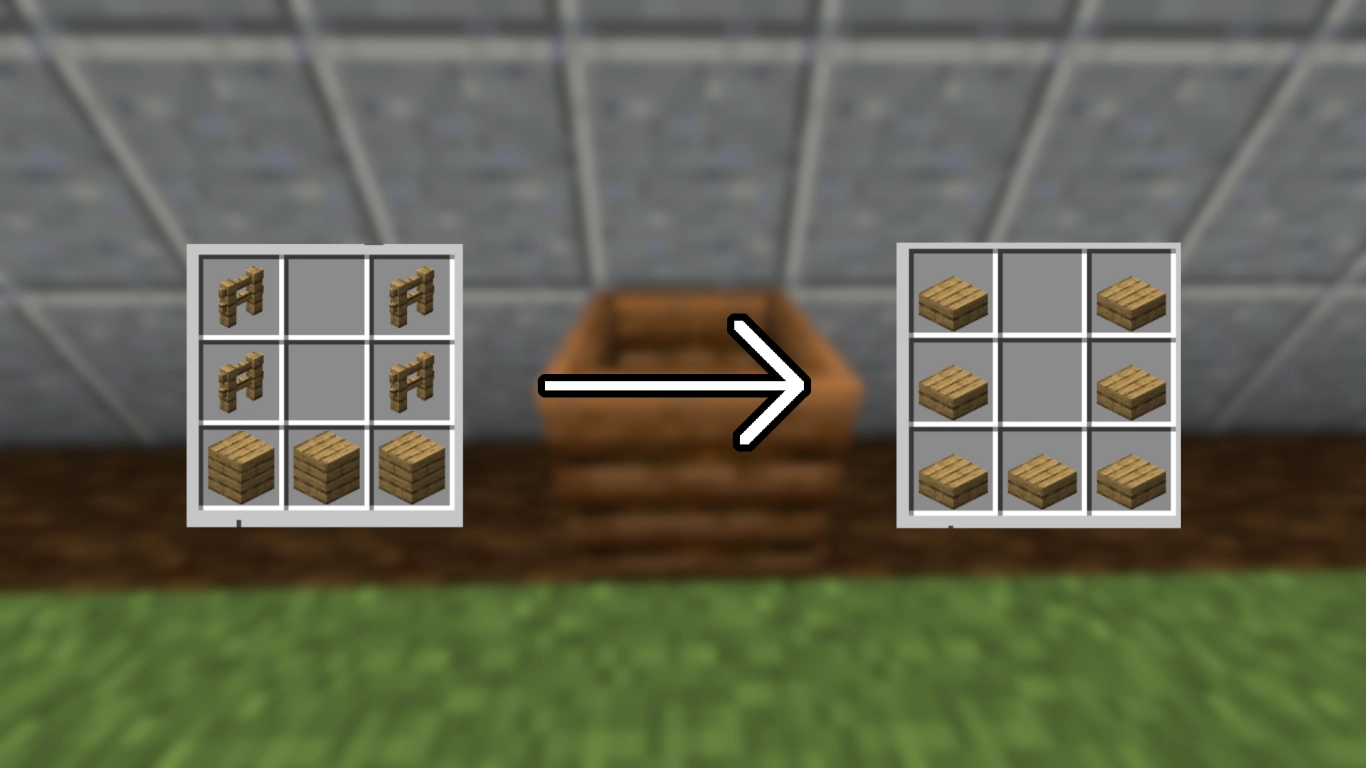
The composter is surprisingly versatile. It’s a job site block for villagers, turning them into farmers. You can also compost natural blocks in it to make bone meal. It was introduced in version 1.14. In Java, it was originally crafted with four fences around the edges and three wooden planks along the bottom. In Bedrock, you needed seven wooden slabs in a U-shape. That exact recipe was adopted in Java with the 1.15 update. It was a good move to bring both editions closer together, even if the first recipe felt more logical.
Minecraft: Bundle recipe – new crafting with leather
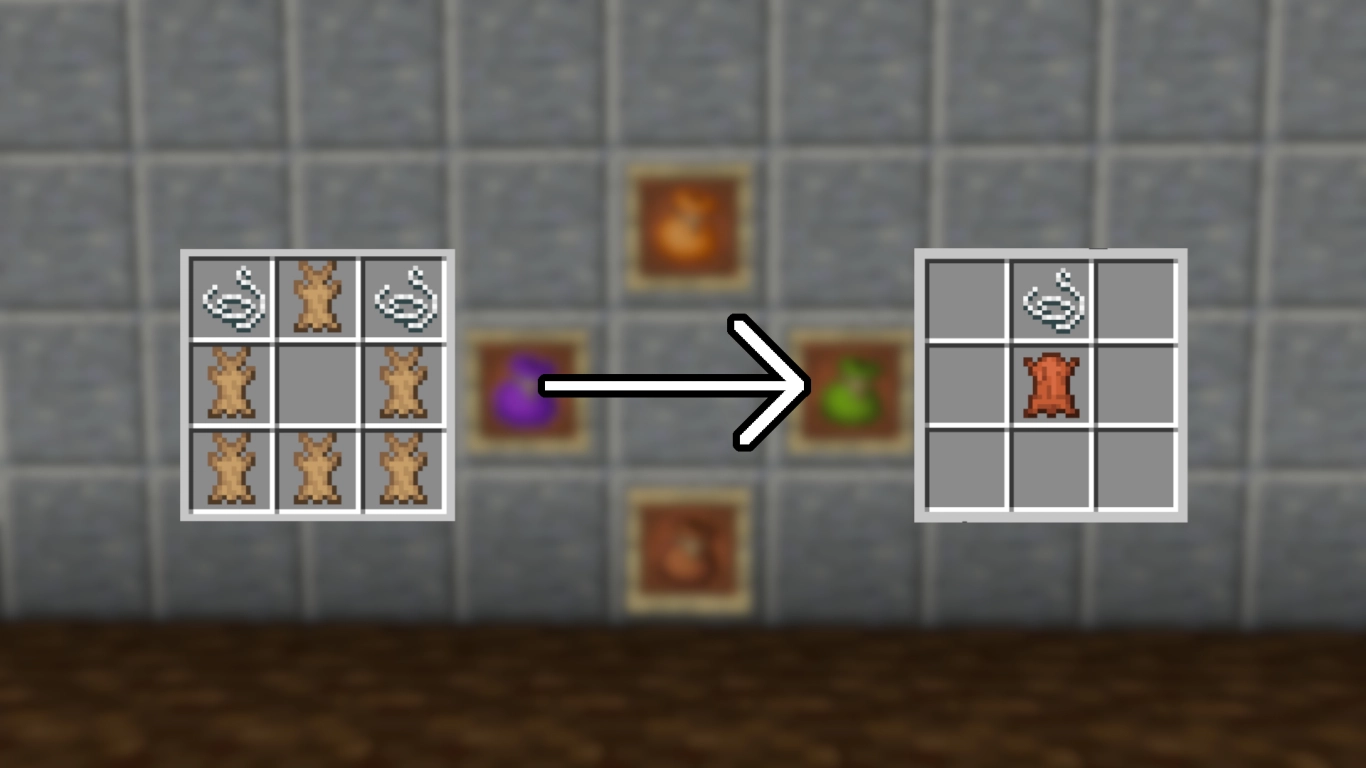
Bundles have had a very bumpy road. They were initially meant to help with inventory management. Their implementation, however, took several years. In their first conception with version 1.17, they consisted of two string and six rabbit hides. You couldn’t craft them back then, since they weren’t available in Survival. With version 1.21.2, their recipe changed to just one string and one regular leather and was officially added to the game. The old recipe fit the theme better, but rabbits are harder to find than cows, especially early on. And not everyone likes hunting them.
Minecraft: Crafting a lead – recipe without a slimeball
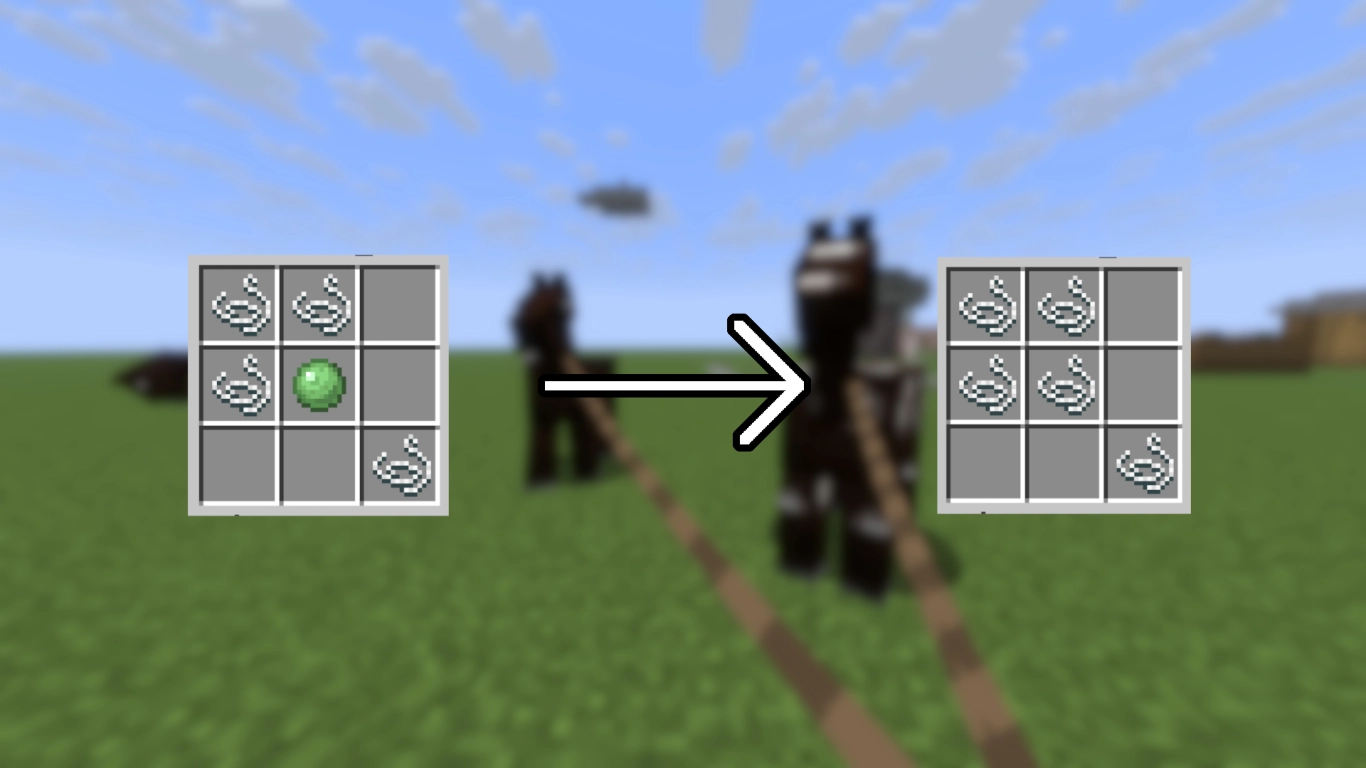
Leads for tying up animals have been around for a long time, since version 1.6.1 in 2013. Back then you needed four string and one slimeball in the middle. The recipe stayed that way until 2025, when version 1.21.6 changed it to five string. That’s a clear simplification and makes sense, since slimeballs are hard to get early on.
Minecraft: Crafting a lodestone – set a compass target
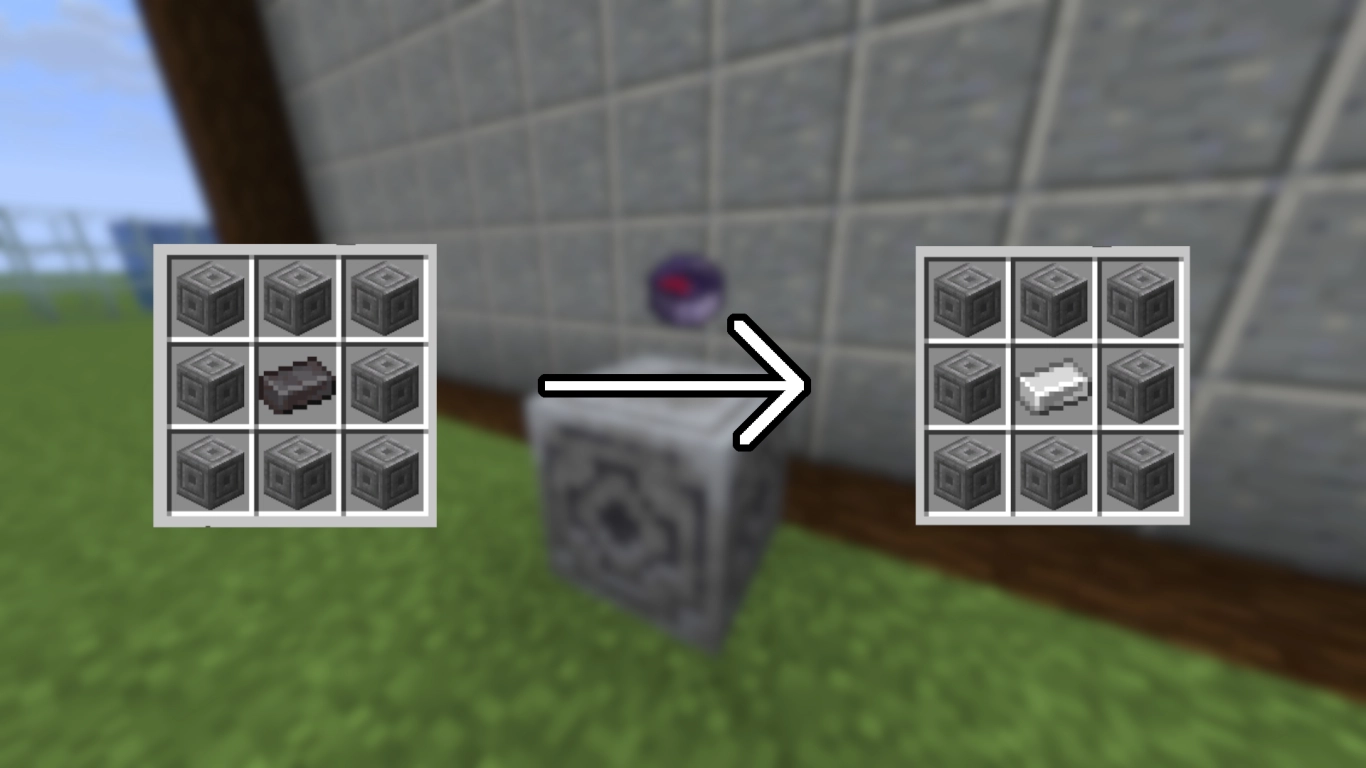
Many players forget about the lodestone, even though it’s incredibly useful. It can change the pole of your compass, making it point to the lodestone instead of the world spawn. That’s handy in the Nether, too, so the needle doesn’t spin wildly. When it was introduced in version 1.16, you needed eight chiseled stone bricks and a netherite ingot in the center. In version 1.21.5, that was reduced to one iron ingot. The lodestone is now much more accessible and useful earlier on—a very welcome change.
Minecraft: Crafting a fence – current recipe at a glance
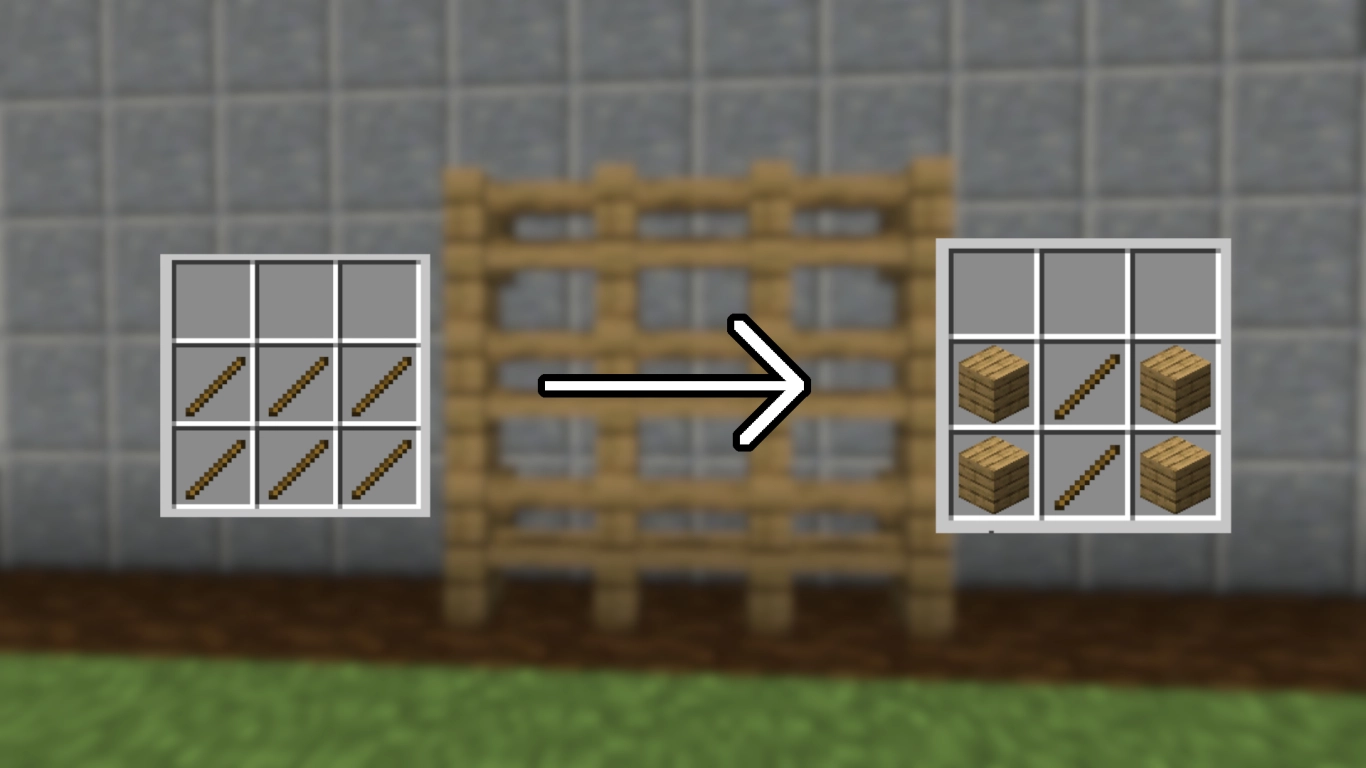
To wrap up, a classic: fences. When they were introduced in Alpha, they were made from six sticks—a very simple, iconic recipe. With version 1.8, it changed to four wooden planks on the sides and two sticks in the middle. Likely to align it more closely with fence gates, which use an inverted pattern. Plus, fences can now be crafted from any wood, which is very cool. Still, it’s one of those old recipes that players keep tripping over.
Conclusion: Minecraft crafting recipes change – stay up to date
Most recipes were adjusted to fit the game better, taking changes to mechanics and new blocks into account. Sometimes Mojang also used these tweaks to close gaps between Java and Bedrock. Either way, recipes keep changing, as the latest drops and updates show. So it’s always a good idea to keep an eye on the recipe book.
Maybe you want to play with friends who haven’t touched Minecraft in a long time and don’t know the new recipes. Use Minecraft server hosting for update testing to show them all the changes and ease them back into the game.