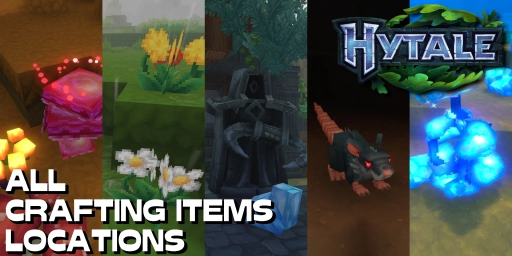
Hytale features many valuable resources you’ll come across throughout your adventure. But it’s not always obvious how and where to find them. To make sure you always pick up the right items on your travels, here’s an up-to-date list of all key crafting materials you should never leave behind. While stone, wood, and fiber are easy to gather, others are much rarer. For some, you’ll need to travel far and explore every zone thoroughly to collect them.
Hytale animal drops: leather, feathers, and wool for crafting
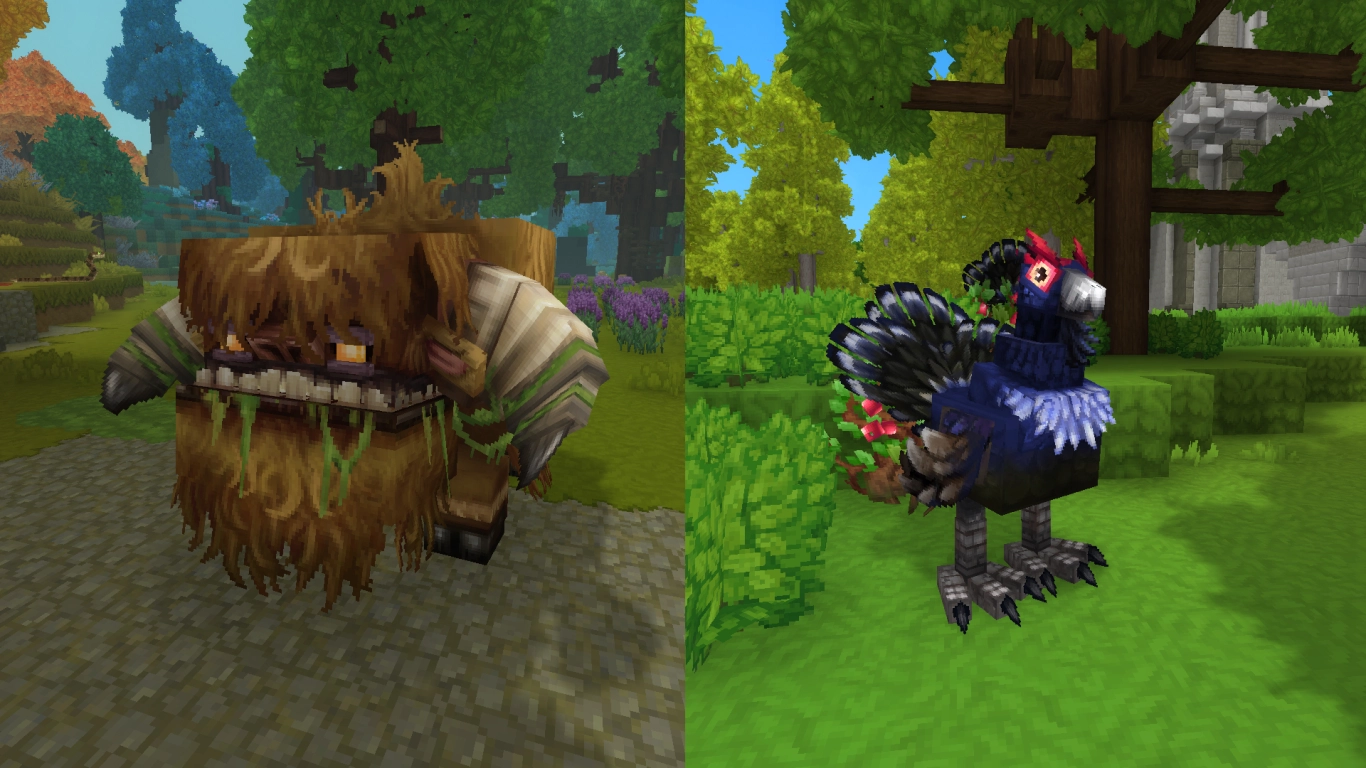
Hides and leather are among the first essential resources for all kinds of recipes at your workbenches. They’re crucial for armor, the backpack, and even tools. Always grab as many as you can and dry the hides at the Tanning Table to turn them into leather.
- Light Hide: Dropped by most small animals in Hytale when defeated. Rats in caves are a good source. Process into Light Leather.
- Medium Hide: Defeat larger animals to obtain these hides (boars, wolves, or Fen Stalkers). Process into Medium Leather.
- Heavy Hide: Considerably harder to get, as you’ll need to fight tough monsters such as bears, crocodiles, or the yeti. Mosshorns, the peaceful bison of Zone 1, can also drop them. Process into Heavy Leather.
- Sturdy Chitin: Don’t forget chitin, which only drops from Skaraks and insects in Zone 2. It’s important for workbench upgrades.
There are other valuable animal resources as well, including different feathers and wool.
- Dark Feathers: Dropped by dark-winged creatures, including crows, the Tetrabird, and vultures.
- White Feathers: A bit rarer; dropped by pigeons and chickens.
- Wool Scraps: Shear a sheep with shears to get wool scraps, then process them into Wool.
- Poop: Needed for fertilizer and dropped by tended livestock (cows, sheep, chickens) when you care for them.
Hytale fabric scraps: Linen, Shadoweave, and Cindercloth
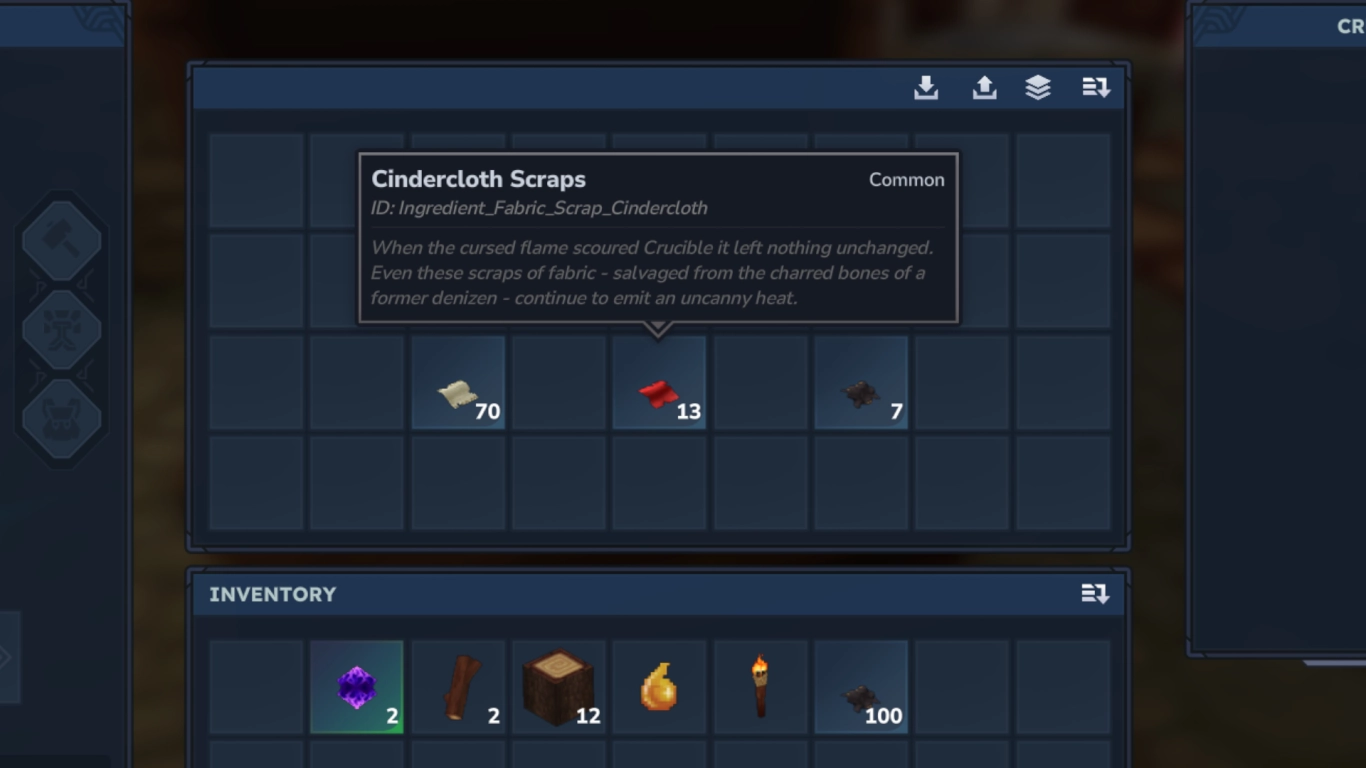
Fabrics are equally important and used in many different recipes. The further you progress, the more diverse the selection of scraps becomes. They’re especially important for armor, weapons, and tools. Stock up whenever possible to keep a healthy reserve.
- Linen Scraps: Easily obtained from skeletons, Trorks, and goblins. You’ll likely end up with plenty.
- Shadoweave Scraps: A black variant dropped only by Outlanders in Zone 3. Required for cobalt recipes from Zone 3.
- Cindercloth Scraps: Red linen pieces most commonly dropped by charred skeletons in deep caves or in Zone 4.
Hytale monster drops: key materials for workbenches

Monsters drop additional valuable resources you should pick up or farm. They’re used across different workbenches.
- Venom Sacs: Small, poisonous glands obtained from various venomous enemies (spiders, scorpions, or snakes).
- Bone Fragments: Easy to get, primarily dropped by skeletons in Zone 1.
- Void Heart: A very rare ingredient for your recipes, only dropped by Void creatures. Your best bets are the flying Void Eyes or large Void Spawns.
Hytale essences: Essence of Life, Fire, Ice, and Void
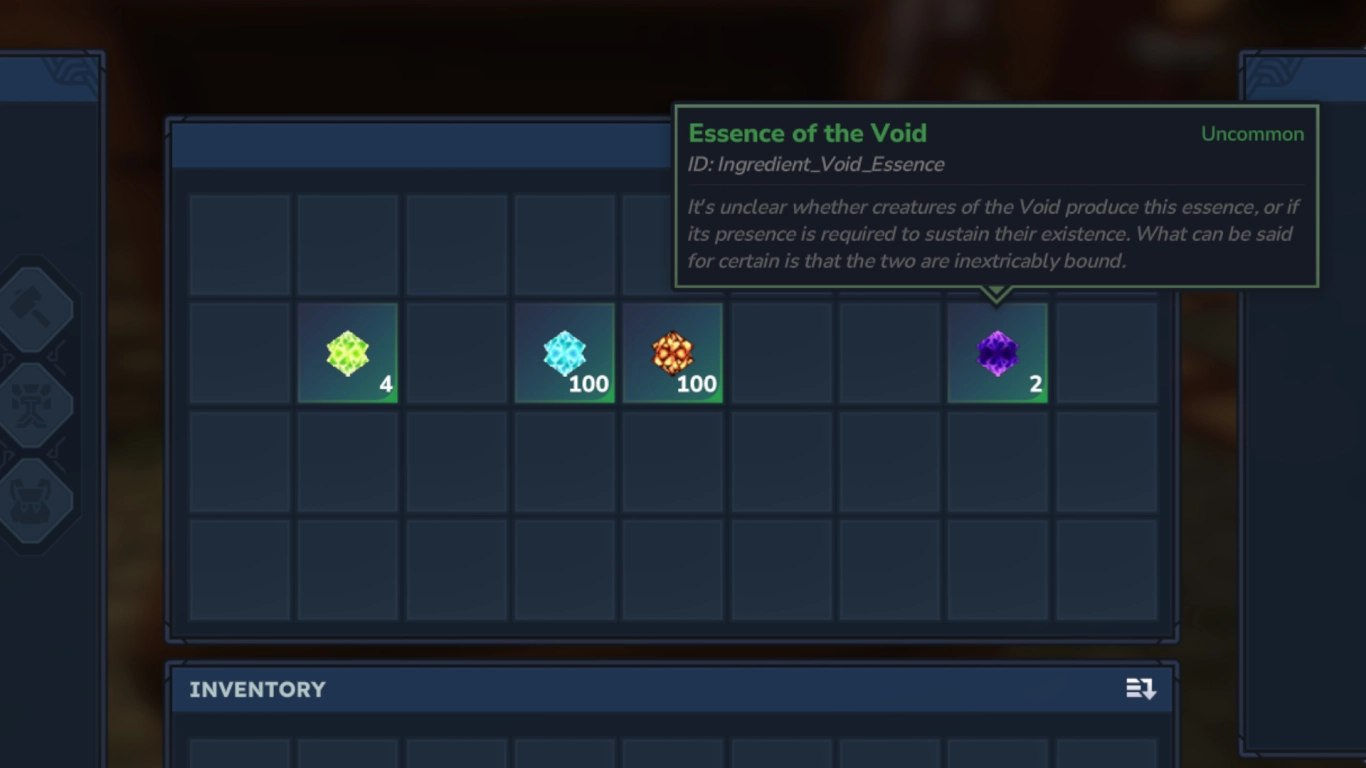
Essences cover many of Hytale’s magical aspects, often holding mystical powers that are unlocked through other game systems. If you plan to focus on them later, be sure to collect as many as you can. They’re also vital for workbench upgrades.
- Essence of Life: Life essences are part of farming in Hytale. You obtain them when you harvest crops. Learn more in our guide: (Hytale Farming Guide: Workbench, Irrigation, and Essence of Life)
- Essence of Fire: Dropped by fire creatures. Important for the Flame Crystal Staff, both for crafting and its ammunition.
- Essence of Ice: The counterpart to Essence of Fire, dropped by ice enemies. Needed for the Ice Crystal Staff.
- Essence of the Void: Dropped by Outlanders in Zone 3 or by Void enemies at night.
Hytale crystals: colors, locations, and decor tips
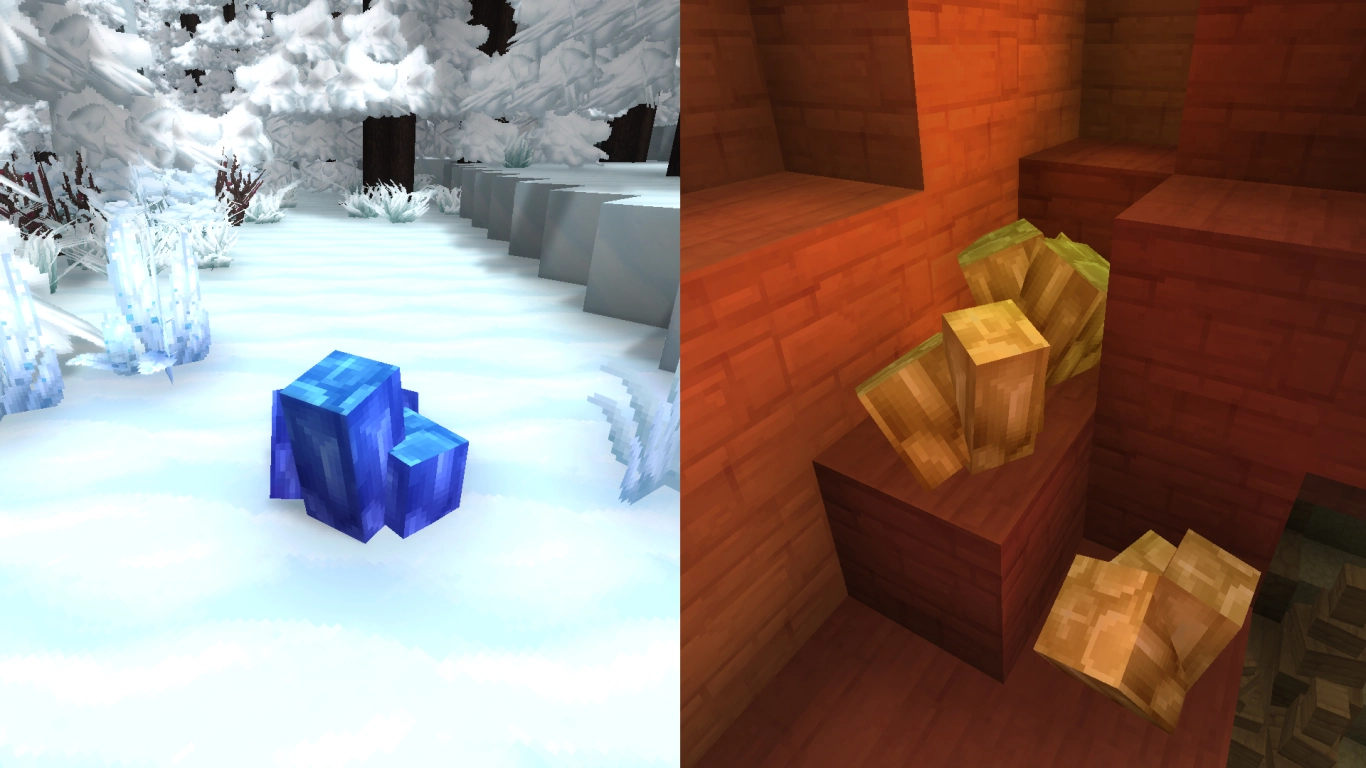
On your cave runs, you’ll naturally find plenty of ores you should pick up. We already have an article if you want exact spawn info for each ore: (Hytale Caves Guide: All Ores, Resources, Biomes, and Tips) . Don’t overlook the crystal shards you can also find, primarily in caves.
These crystals are used mainly for decorations or can be assembled into full crystals as a light source. You can loot them from certain enemies, including golems, or find crystal nodes and mine them with a pickaxe.
Available colors:
- Red (Zone 4)
- Yellow (Zone 2)
- Green (Zone 1)
- Cyan (Zone 2)
- Blue (Zone 3)
- Purple (Zone 4)
- White (Zone 4)
Hytale plants and petals: crafting dyes
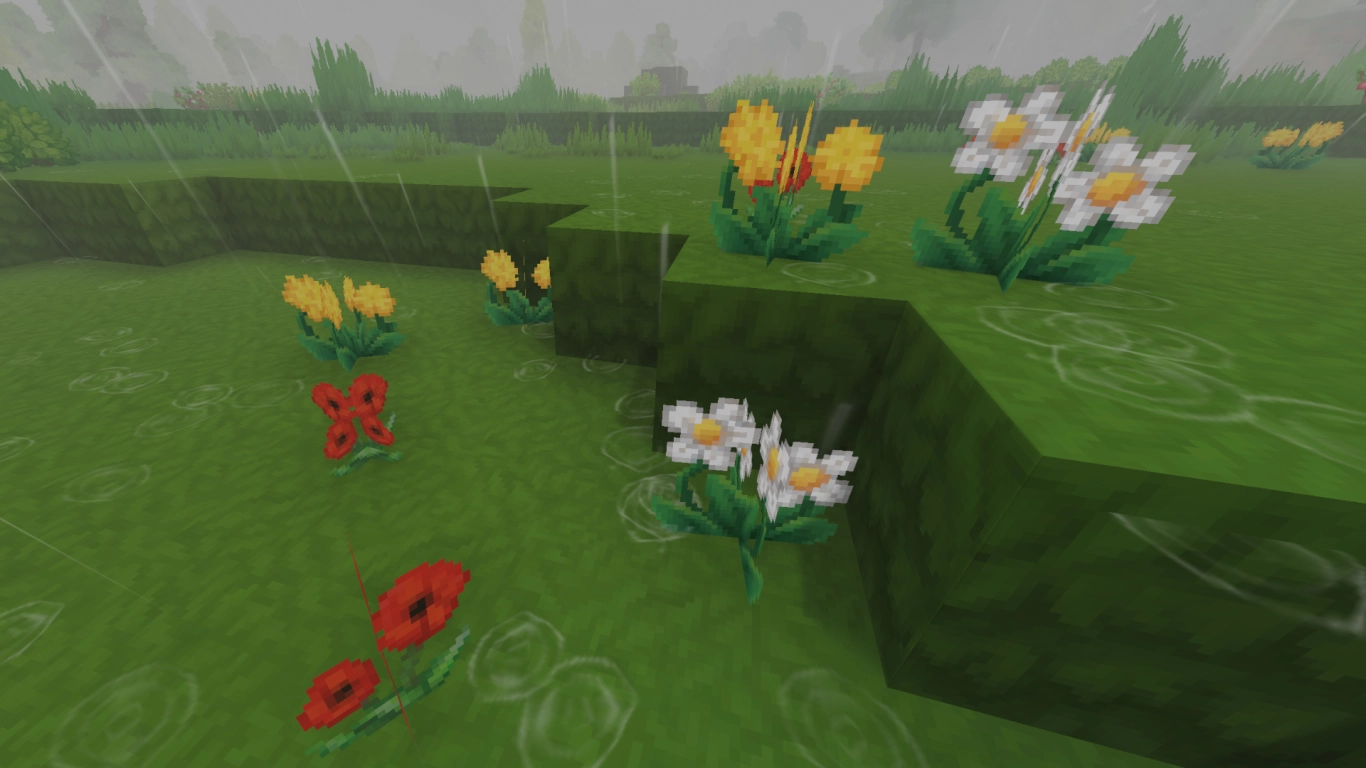
Flowers can be a valuable resource if you enjoy working with dyes. Their petals can dye both wool and clay as you like. Depending on the flower’s color you’ll get different petals, but you can also produce them from crops.
These petal colors exist:
- Black
- Blue
- Cyan
- Green
- Orange
- Pink
- Purple
- Red
- White
- Yellow
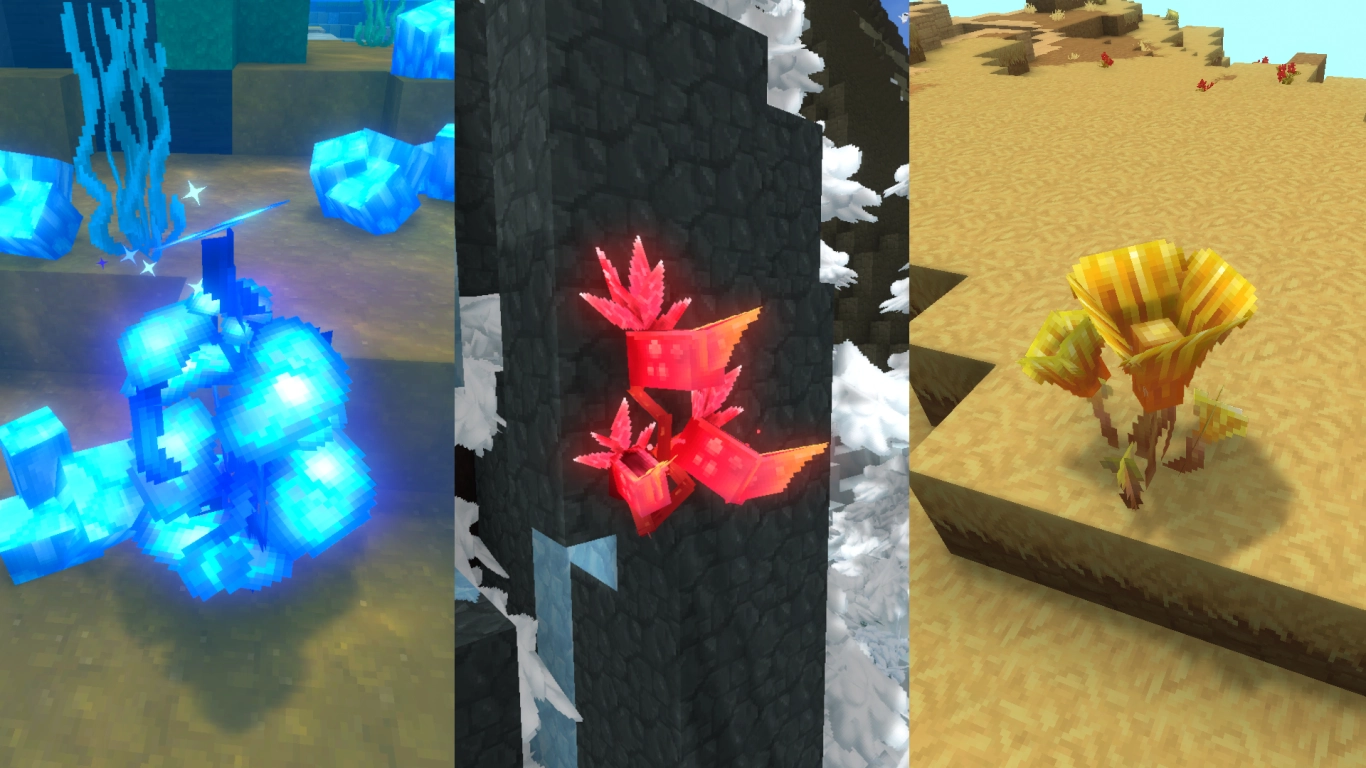
Finally, let’s look at some very rare plants that also hold a few secrets. Petals in the Storm, Azure, and Blood categories are needed for certain late-game recipes and upgrades, especially at the Farmer’s Workbench. You can grow them as crops, but the seed recipes only unlock at Tier 9. Before that, you’ll have to search for petals the hard way, as you’ll need about 300 per plant.
- Storm: Found in mountainous regions in Zone 2.
- Azure: Found in Zone 1’s Azure forests, among mushrooms and other plants.
- Blood: Spread across many zones, appearing as a mushroom (Zone 1 autumn forest), a rose (Zones 1 and 4), or a shrub (Zones 2 and 3).
Hytale resource management: conclusion and storage tips
To enjoy every facet of Hytale, you’ll need to collect a lot of materials. They feed into many crafting recipes and most workbench upgrades. Set up a comprehensive storage system so you always have access to everything you need. And once you unlock the backpack, you can carry even more on your journeys.
Rent your own Hytale server with us, keep up with the latest updates, and discover new materials. Invite your friends and explore the world of Orbis together!