On February 25, 2020, ARK: Genesis – Part 1 launched as one of the most ambitious chapters in the history of ARK: Survival Evolved. This expansion not only changed how players experience the world, but also what ARK can be as a game. Instead of an open map with freely explorable terrain, you step into a virtual simulation – an artificially created testbed that challenges everything you thought you knew.
Genesis was a watershed. It wasn’t a place in the traditional sense, but a digital world full of biomes, trials, and experiments. The DLC introduced storytelling, mission systems, and narrative characters with new depth, making it clear that ARK was no longer just a pure sandbox, but a universe with a defined story, central themes, and growing ambition.
This expansion was the beginning of the end – and at the same time, the start of a new era.
ARK Genesis simulation: structure, biomes, and teleportation
Genesis is not a physical world, but a simulation controlled by an artificial intelligence named HLN-A. She accompanies the player as a hologram – an evolution of the technological concepts from Extinction. Her goal is to prepare the survivor for their final trial.
The simulation is divided into five biomes, each with its own rules, dangers, and lifeforms: volcanic hellscapes, arctic tundra, oceanic depths, marshy swamps, and alien worlds. These regions are linked by teleportation points and feel like self-contained universes within a larger system. In practice, you switch biomes via HLN-A’s radial menu, enabling targeted resource and mission routing.
This structure breaks with the tradition of open maps. Instead of roaming freely, you are thrust into curated scenarios – challenges that test adaptability, knowledge, and resource management.
ARK Genesis biomes at a glance: Volcano, Arctic, Ocean, Bog, Lunar
Each of the five Genesis biomes is a proving ground with its own identity and mechanics.
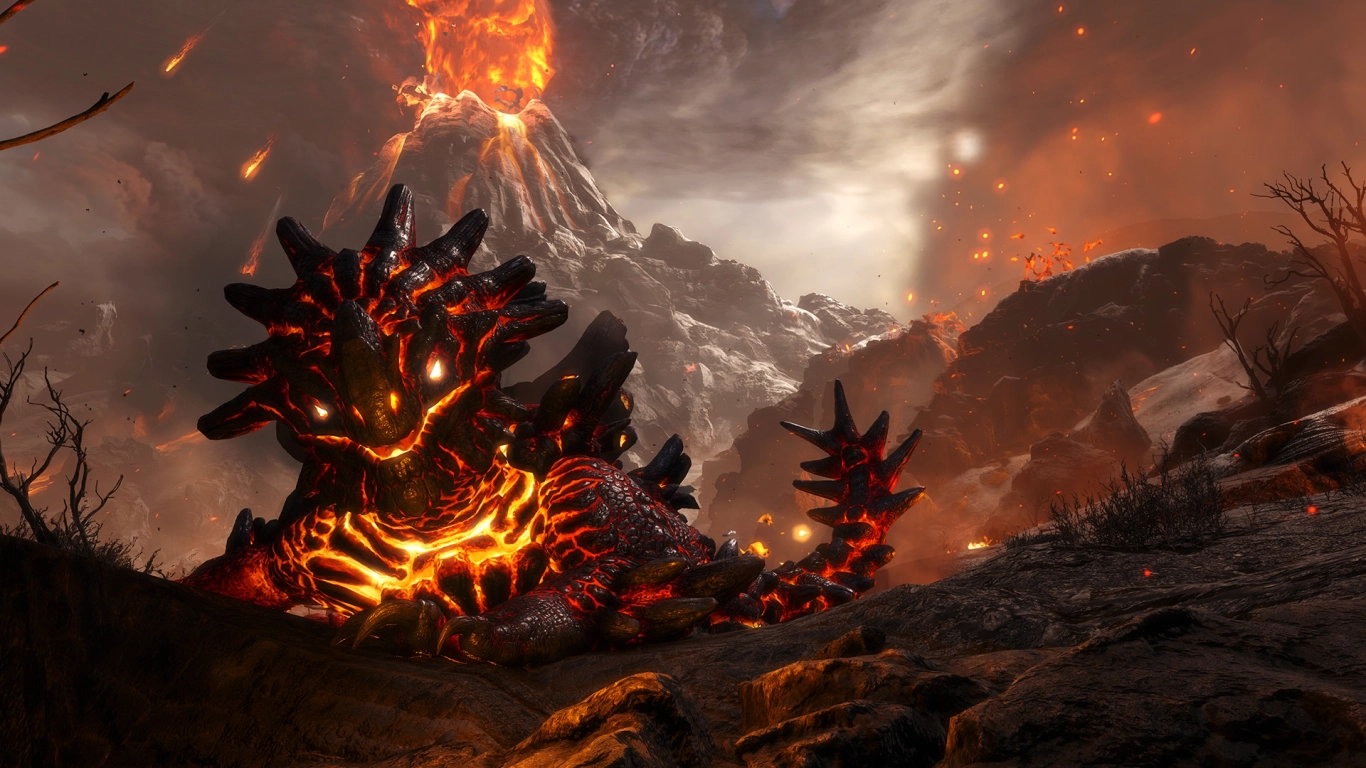
- Volcano biome: A hellscape of flowing lava, earthquakes, and ash clouds. Extreme heat, explosive eruptions, and creatures like the Magmasaur demand precise planning and heat protection.
- Arctic biome: Endless snowfields, frozen lakes, and biting winds. Cold resistance, food, and shelter are critical; resources are scarce.
- Ocean biome: One of the biggest shifts in ARK. You spend a lot of time underwater, exploring coral reefs, ruins, and caves while facing giant sharks, jellies, and new aquatic life.
- Bog biome: Fog, aggressive flora, and crafty small creatures. Vision, mobility, and poison resistance are constantly challenged.
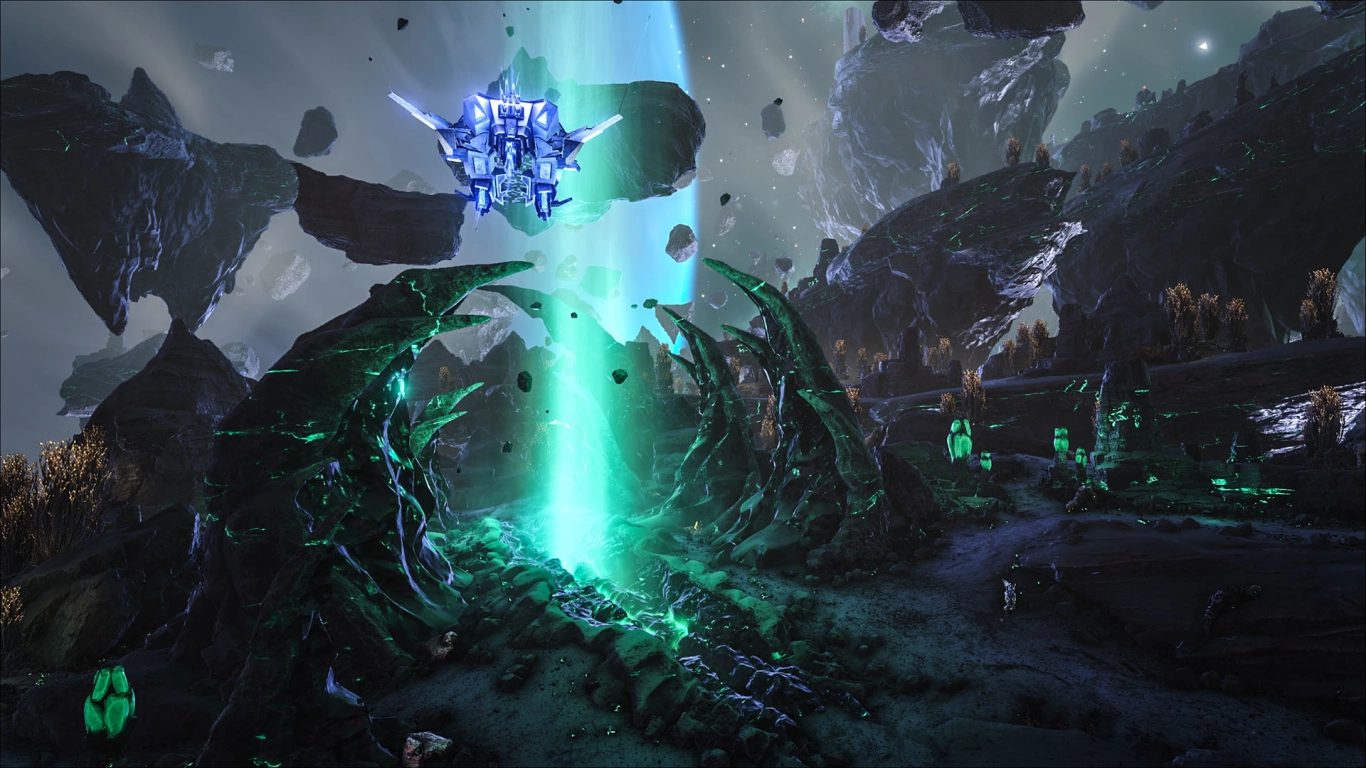
- Lunar biome: An otherworldly moonscape with low gravity, meteor showers, and floating islands – spectacular and risky both visually and mechanically.
This variety makes Genesis a journey through extremes. Each region forces new strategies and a different approach to survival.
HLN-A in ARK Genesis: AI companion and story depth
For the first time, ARK received a true companion character: HLN-A, the holographic AI. She’s more than a tutorial – she comments on events, explains background lore, and reacts to your choices. Her personality is friendly, sometimes sarcastic, and at the same time tragic: HLN-A was created to save humanity, yet she knows she’s part of a larger plan – a simulation controlled by someone she doesn’t fully understand.
This narrative depth gives Genesis an emotional dimension that earlier DLCs only hinted at. For the first time, you’re not alone – and yet the loneliness feels stronger than ever.
ARK Genesis creatures: Ferox, Magmasaur, Astrocetus & more
Genesis introduced some of the game’s most interesting and versatile creatures – not just as mounts, but as tools for specific mechanics.
- Ferox: Cute and fluffy, it transforms into a raging beast after consuming Element. The contrast between harmless looks and monstrous form made it a fan favorite.
- Magmasaur: A reptile from the volcano biome that can spit lava, smelt metal, and absorb heat – a mobile forge and war machine.
- Astrocetus: A colossal “space whale” with laser cannons that glides through the void; surreal and mysterious – like an echo of a bygone civilization.
- Bloodstalker: A spider-like creature that swings through the air on webs – ideal for mobility and vertical traversal.
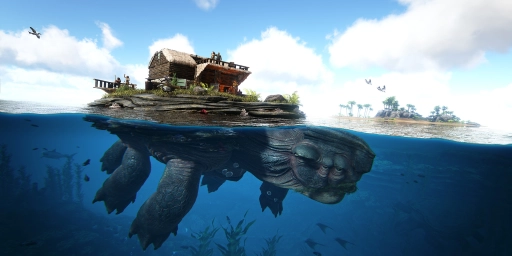
- Megachelon: A giant turtle that can carry entire bases on its back; perfect for nomadic setups in the ocean biome.
- X-Dino: Mutated variants of classic creatures with unique resistances and behaviors.
Each species reflects technological or biological advancement – the central theme of Genesis: evolution through simulation.
ARK Genesis mission system: Hexagons, tasks, and progression
For the first time in ARK, Genesis introduces a structured mission system. Instead of just roaming freely, you enter simulations that test your skills: combat, gathering, racing, survival, and exploration. Mission types range from arena fights and gauntlets to hoverboard races and underwater rescues. Each task rewards Hexagons, the DLC’s new currency, which you can spend on gear and resources in the HLN-A shop.
Missions come in Gamma, Beta, and Alpha – higher tiers yield better rewards but also significantly tougher mechanics. The system gives ARK clear progression without abandoning its sandbox nature – ideal for long-term motivation, especially on dedicated servers.
Corrupted Master Controller: boss fight and tactics in ARK Genesis
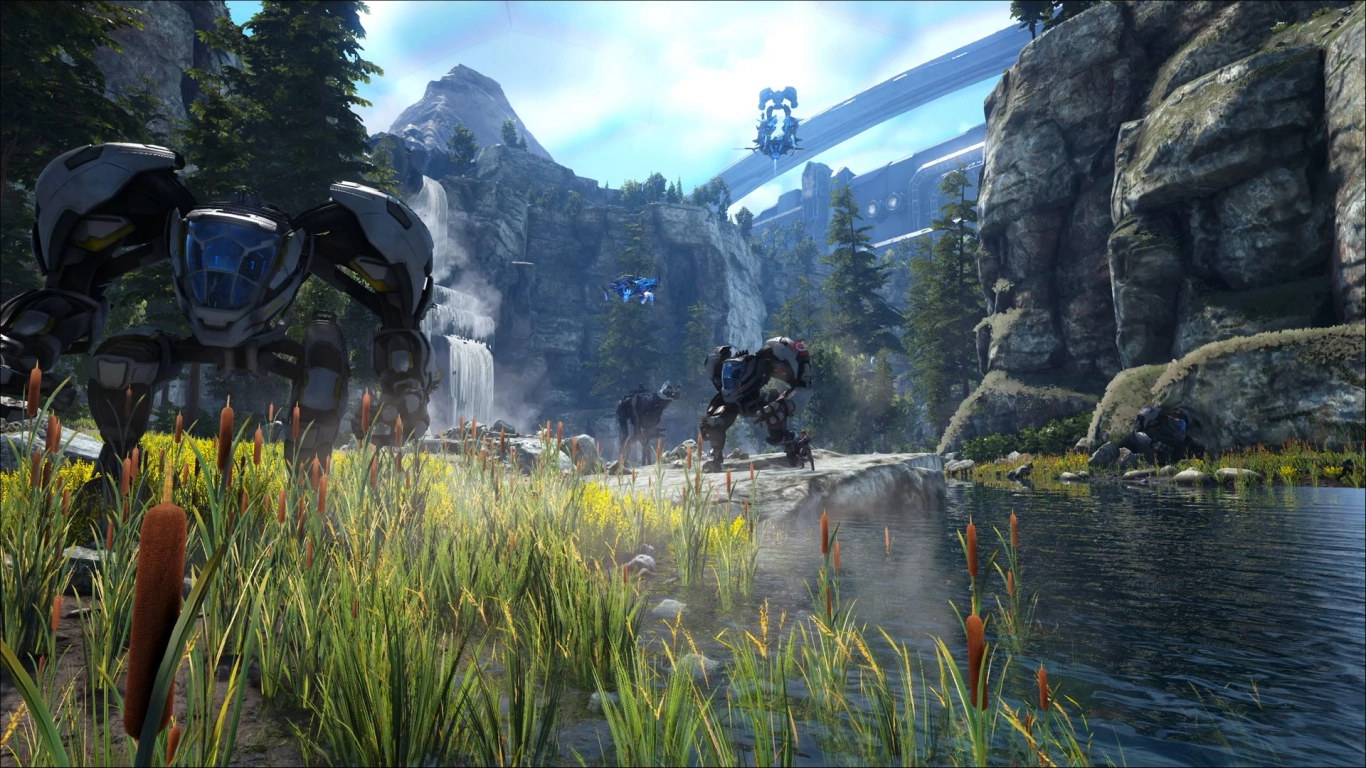
The final boss of Part 1 is the Corrupted Master Controller – a powerful AI that has seized control of the simulation. The fight is both visual and mechanical spectacle: cyberpunk aesthetics, holography, and classic boss phases meet modern encounter design. Symbolically, it represents the rebellion of machines and the digital form of corruption from Extinction.
Victory marks the end of Genesis Part 1, but not the end of the story. HLN-A reveals that this was only the first step – the true challenge awaits in Genesis Part 2.
ARK Genesis atmosphere: soundtrack, visuals, and performance
Genesis looks markedly different from other ARK maps. Stylistically unique regions – from the realistic Arctic to the surreal Lunar landscape – leverage the possibilities of the simulation: floating platforms, luminous energy veins, dynamic textures. The soundtrack leans on electronic tones that emphasise the digital setting.
Technically, Genesis brings new highs and lows: creative scenarios, but also higher system demands. Even so, the DLC stands as a milestone in design variety and atmosphere.
ARK Genesis lore: simulation, experiments, and a cosmic trial
Genesis sits at the heart of ARK’s mythology. It suggests that the entire saga is part of a larger experiment: humanity is being tested in simulations to prove its suitability for rebirth. This revelation links The Island, Aberration, and Extinction into a consistent narrative. The player is not just a survivor, but a candidate in a cosmic selection process.
Through contact with the player, HLN-A develops a deeper awareness and recognises her role in a flawed system – setting the stage for Genesis Part 2.
Verdict on ARK Genesis: strengths, challenges, and a server tip
ARK: Genesis is no ordinary add-on. It’s a philosophical and technical evolution of the entire game. It tests your skills, patience, adaptability, and your willingness to break patterns. With its episodic structure, demanding missions, diverse biomes, and dense storytelling, Genesis elevates ARK to a new narrative level.
On your own ARK server from 4Netplayers, Genesis reaches its full potential: tackle missions together, discover new creatures, and face the simulations – with the right balance of structure and freedom. It’s a reminder that even in the most artificial world, survival remains very real.
More interesting articles
ARK: Extinction – Guide to Titans, Creatures, Map & Lore
ARK Fjordur Guide: Map, Realms, Creatures, Bosses & Tips
ARK Aberration Guide: Map, Creatures & Tips
ARK Crystal Isles Guide: Biomes, Crystal Wyverns & Base Building