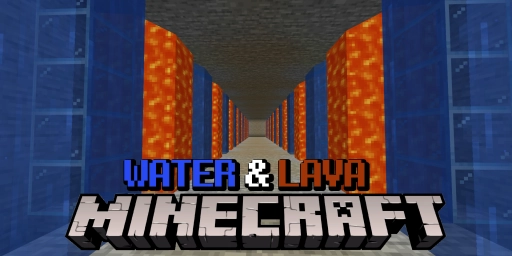
The world of Minecraft isn’t made up of solid blocks alone—fluids play a big role, too. While you’ll primarily find water in the Overworld, from vast oceans to small ponds, the Nether is dominated by massive lava lakes. Both fluids serve important and very different functions. Where they meet, though, some fascinating interactions occur that let you generate new blocks. Today we’ll take a closer look at both fluids, what makes them special, and when you should use them. We’ll also take a look at the different generators that rely on their interaction.
Minecraft water: properties, uses, and the infinite source
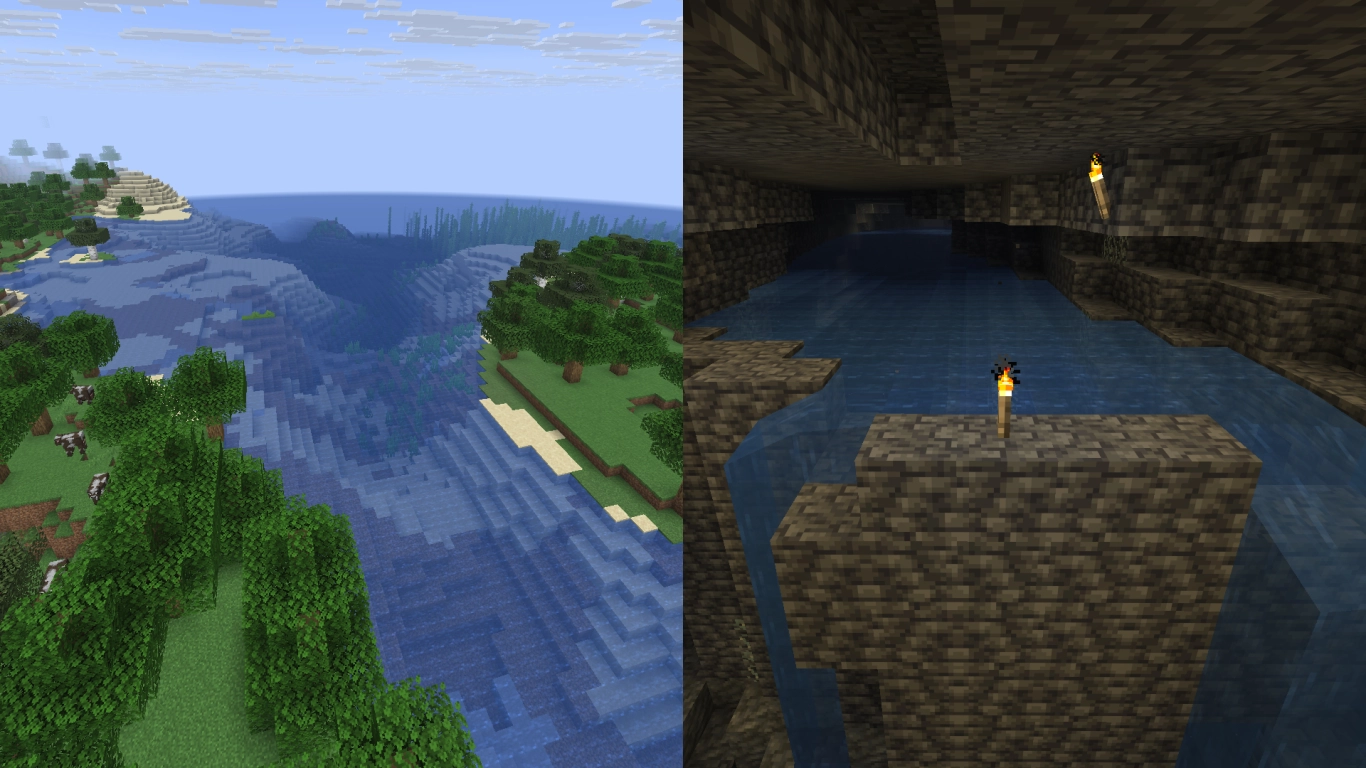
Water is hard to miss in Minecraft, no matter where you first spawn. It’s an essential part of the Overworld, appearing in oceans, rivers, and lakes. You’ll also find it as waterfalls or in caves, and sometimes as part of generated structures. In many ways, it behaves just like water in the real world.
You can’t pick up a water block directly, but you can scoop it with a bucket crafted from three iron ingots. This reveals a special property of water: you can create an infinite water source. This works when at least two adjacent water sources (or streams that refill) meet and close the gap. With two buckets, you can create as much water as you want.
A water source is very useful. Placed on a flat surface, water flows up to seven blocks from the source in all directions, forming a diamond shape. Downward, water flows indefinitely from a single source. Entities (mobs and players) and items can be carried by this flow—one of water’s most important uses in Minecraft.
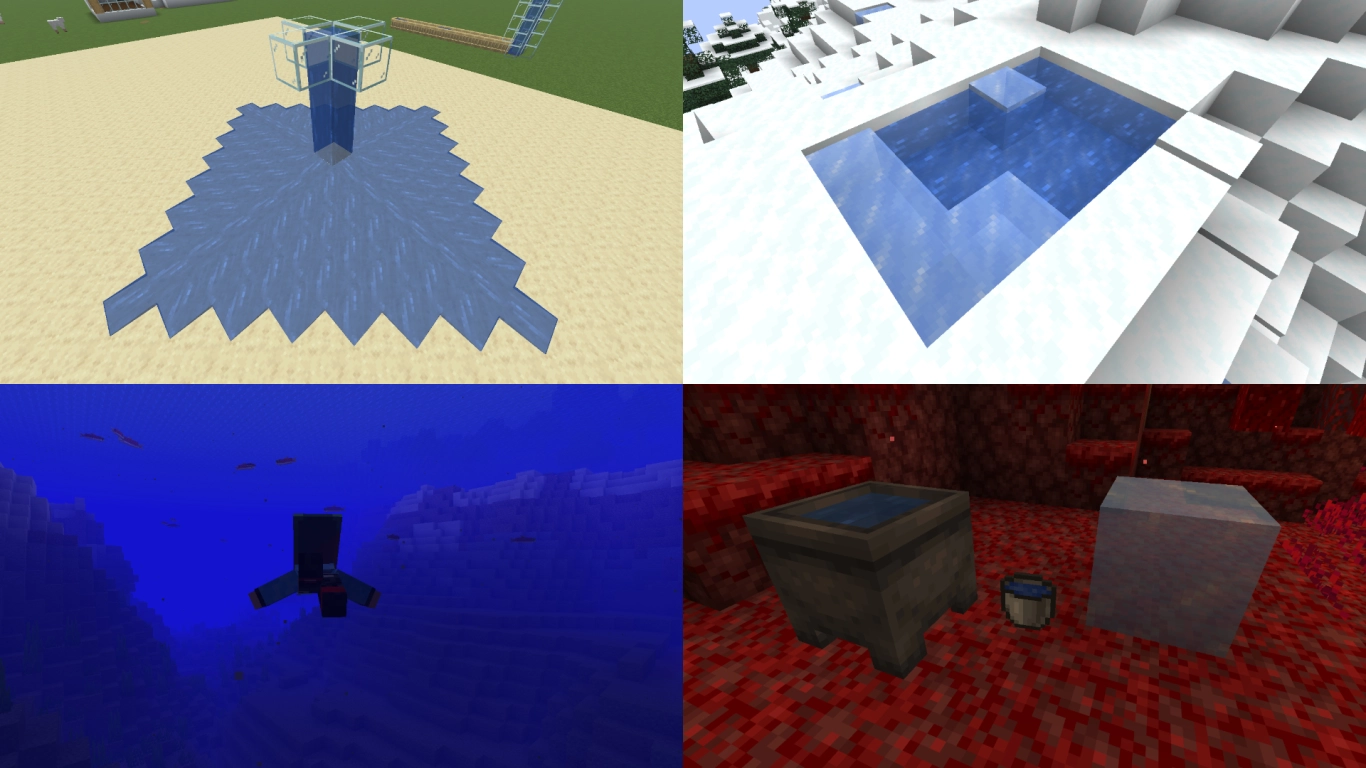
In cold biomes, a water source can freeze into ice. When you break ice, it turns back into water under the right conditions. Ice also melts if a bright light source is placed nearby. Note that you can’t place water in the Nether—it’s too hot and it evaporates instantly. You can, however, place water in a cauldron there. You can also bring ice to the Nether, where it’s often used for fast transportation.
Large bodies of water, such as oceans, come with extra behavior. A great quality-of-life feature is that items float at the surface—handy to prevent losing them (added in Update Aquatic). You can also move yourself through water with improved swimming mechanics introduced in 1.13. Water negates all fall damage, regardless of height or depth. Many players keep a water bucket in their hotbar to place beneath them in an emergency.
Water has more neat tricks: you can block it with signs or ladders, and magma blocks and soul sand can create bubble columns. Water also mitigates explosions, including TNT and creepers.
Minecraft lava: properties, damage, light source, and fuel
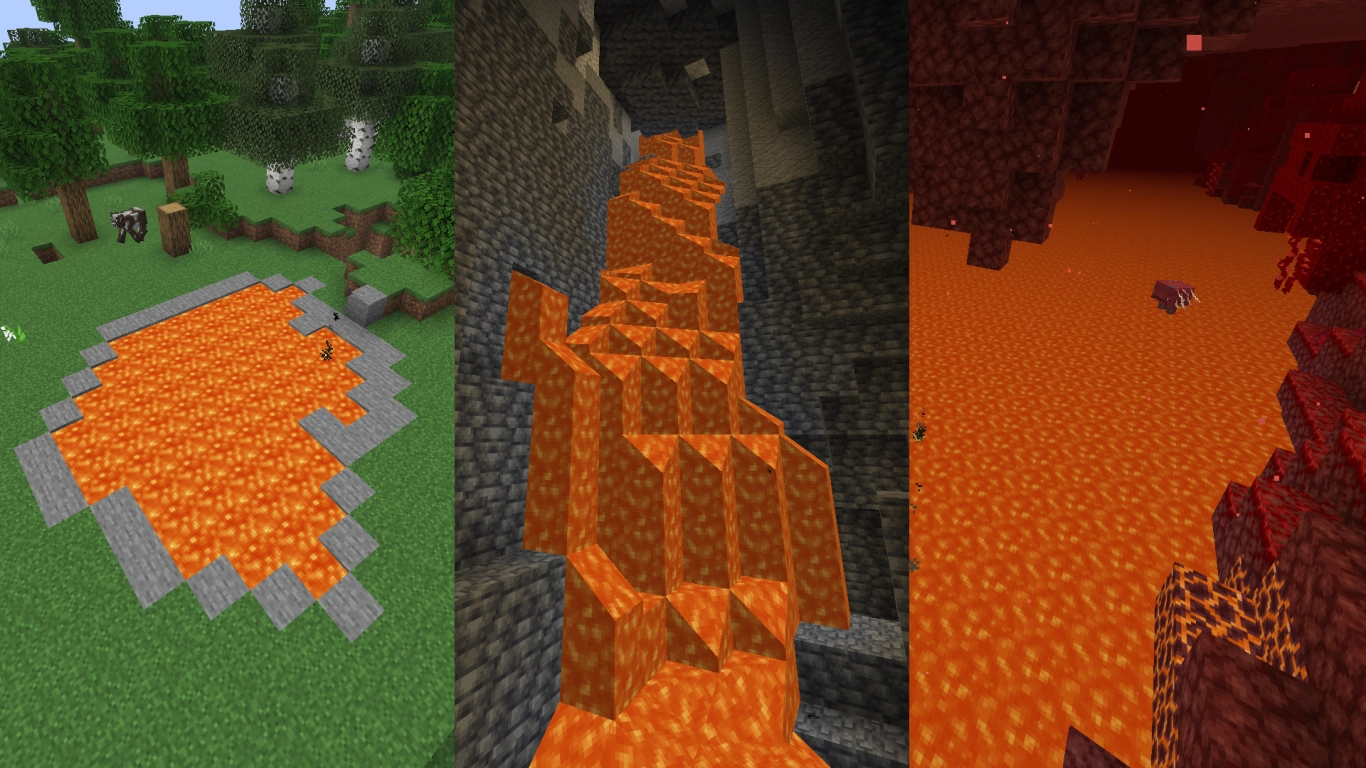
Lava is, in many ways, water’s counterpart. You’ll primarily find it in the Nether, though your first encounter is often deep in Overworld caves. You can also stumble upon surface lava pools.
Like water, lava can be scooped into a bucket. One major difference is that lava cannot form an infinite source. Every bucket you take removes that source block. That’s likely for balance, because lava is extremely useful: it’s the best furnace fuel, smelting up to 100 items per bucket, and it’s a great light source. Lava is still renewable, though—by using pointed dripstone and a cauldron. Place a lava source above pointed dripstone so it drips into a cauldron; over time, the cauldron fills with lava.
Lava flows differently depending on the dimension. In the Overworld, it flows up to 3 blocks and quite slowly; in the Nether, it flows up to 7 blocks and much faster. Lava can also ignite adjacent flammable blocks, which you’ve likely noticed near lava pools in forests or in mineshafts with wooden supports.
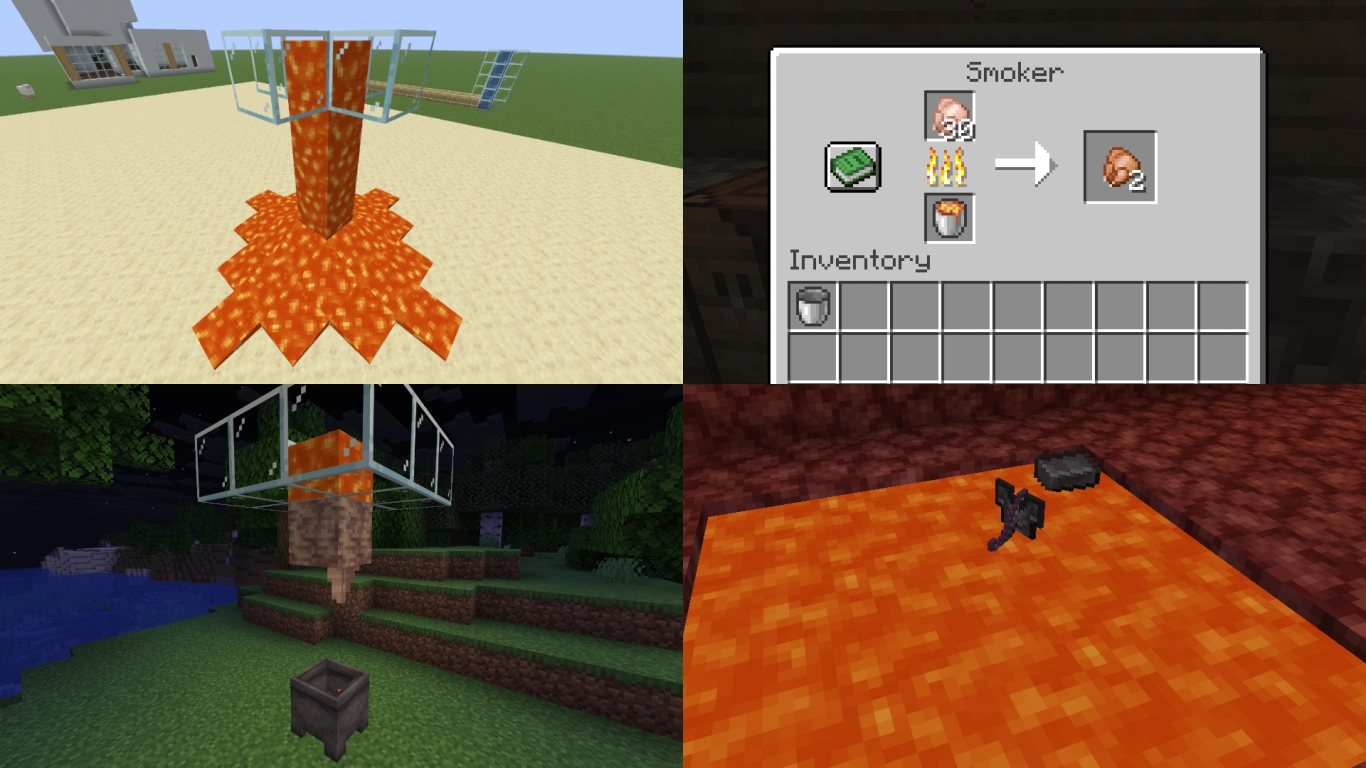
The biggest downside of lava is that it deals damage and destroys most items. Immune to this are Netherite items, Nether-native mobs, and anyone under the Fire Resistance effect. The Fire Protection enchantment only reduces fire damage and does not grant full immunity.
Lava and water in Minecraft: interactions and block generators for obsidian, cobblestone, stone, and basalt
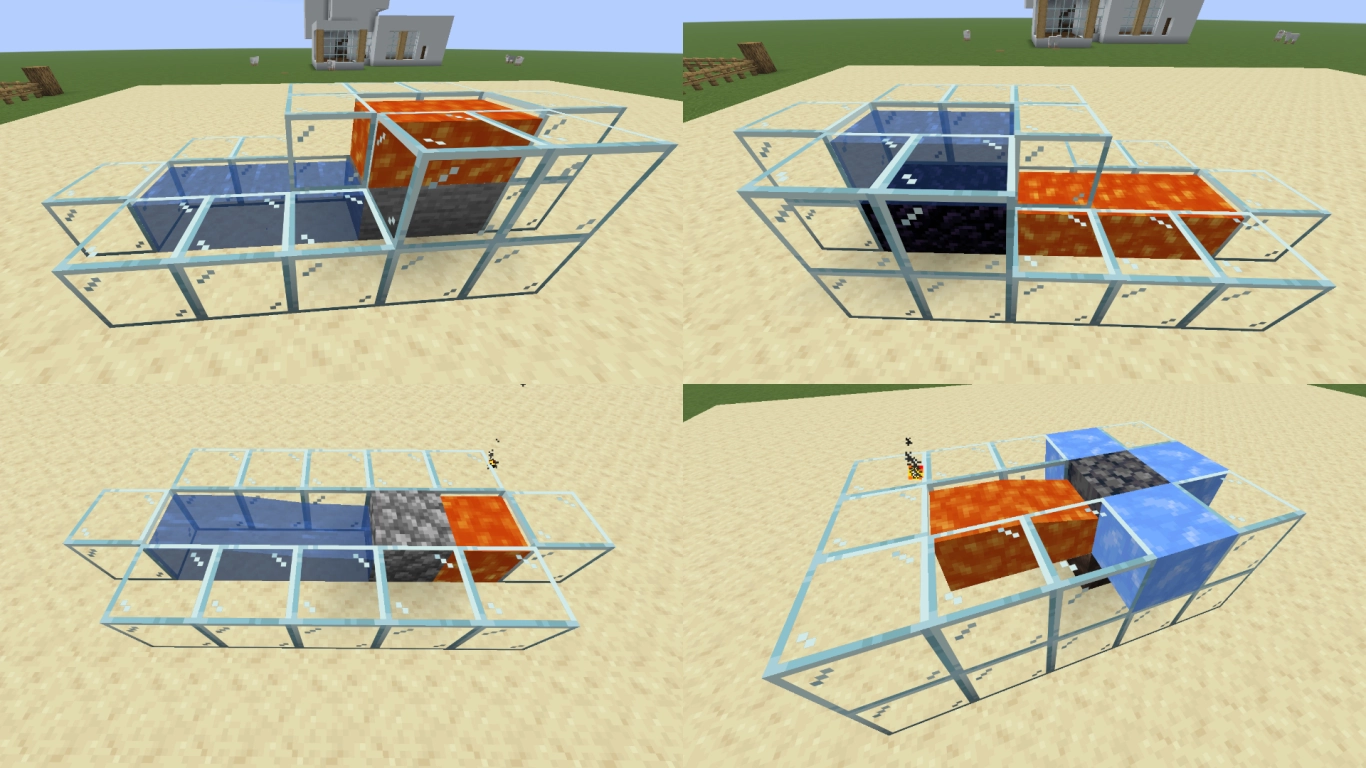
Things get interesting when you let lava and water interact. Some of these interactions occur naturally, while others require a bit of setup. Use them to create renewable stone blocks or to build automated farms.
In general, there are four outcomes:
- Cobblestone generator: Flowing water meets flowing lava → cobblestone forms where they touch
- Stone generator: Flowing lava meets a water source → stone
- Obsidian generator: Water touches a lava source block → obsidian
- Basalt generator: Flowing lava over soul soil with blue ice adjacent → basalt
Conclusion: using water and lava wisely in Minecraft
Water and lava are two of Minecraft’s most important elements, and it’s easy to take them for granted. Their properties, however, are unique and useful in many different situations. Water excels at transporting items, while lava destroys them—but lava is also an excellent light source and a powerful fuel. Together, they can generate four different blocks, which you can leverage for semi-automated farms.
If you want to take a closer look at both fluids, try Minecraft server hosting for survival builds. Both water and lava are more fascinating than they first appear and can make many tasks in your world much easier.