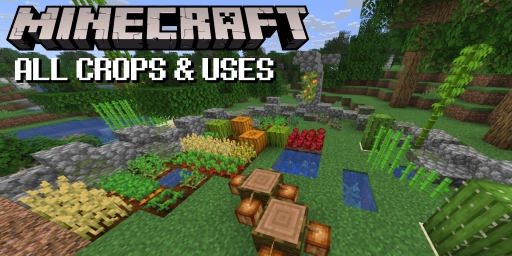
Growing and harvesting crops is a key part of Minecraft’s gameplay loop. After all, you need food and other farmed resources to craft certain items in the game. While everything started with just wheat and sugar cane, there are now many more plants you can cultivate. We strongly recommend finding them all and putting them to work for you. In this guide, we’ll look at which crops exist and how to grow each one. If you’re looking for suitable automatic farms, we’ve got several guides on the blog!
Growing Minecraft crops: water, fields, and yield
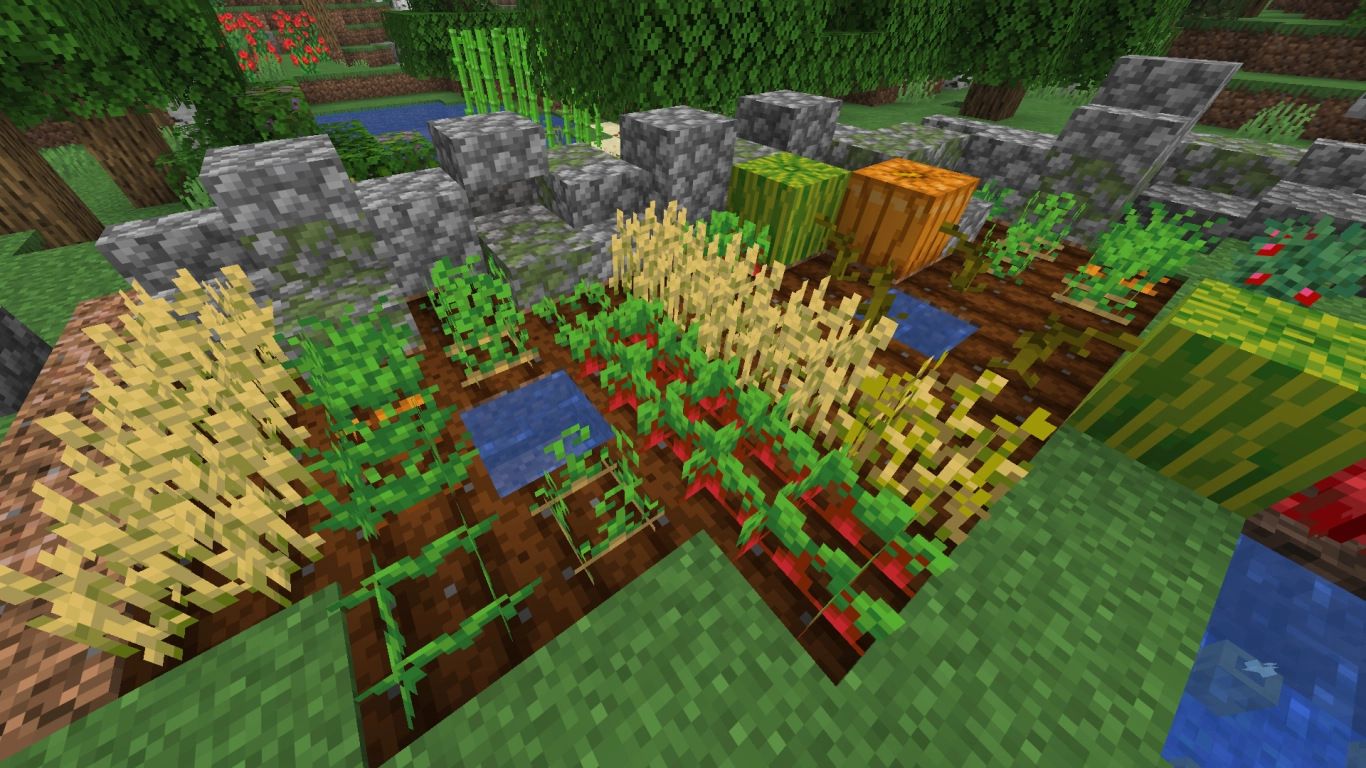
Plant all of these on farmland that’s hydrated by a water source up to four blocks away. Use a hoe to till dirt and create fields. Alternating different crops (for example, in rows) helps them grow faster. You’ll also get larger yields with a Fortune enchantment.
Wheat
- Where to find: Get seeds by breaking grass and ferns (12.5% chance) in nearly all biomes. Harvesting wheat also drops seeds.
- Uses: Primarily for bread, but also to bake cake and cookies. Needed for hay bales and packed mud.
Carrots
- Where to find: Harvest from village fields; also found as loot in Pillager Outposts and shipwrecks. Zombies can drop carrots, but very rarely.
- Uses: Can be eaten as-is, but golden carrots are better. Also used for rabbit stew. Combine a carrot with a fishing rod to craft a Carrot on a Stick to ride and steer pigs.
Potatoes
- Where to find: Like carrots, found on villager farms, in outposts, and in shipwrecks. Zombies rarely drop them.
- Uses: Cook in a furnace to make tasty baked potatoes. They’re also used in rabbit stew.
Beetroot
- Where to find: Also grows in village fields, especially in desert villages. Beetroot seeds can appear as loot in dungeons, mineshafts, trial chambers, or woodland mansions.
- Uses: Craft six beetroots with a bowl into beetroot soup. Beetroots can also be turned into red dye. And yes—beet stains are tough to get out of clothes.
Pumpkins
- Where to find: Pumpkin patches generate in certain biomes, especially forests. Their seeds appear as loot in dungeons and mineshafts.
- Uses: Bake pumpkin pie with pumpkin, sugar, and egg. Carve a carved pumpkin and make a Jack o’Lantern. Pumpkins are also required for Iron Golems and Snow Golems.
Melons
- Where to find: Melons generate in jungle biomes. Seeds appear in mineshafts and dungeons. Some villages also grow melons.
- Uses: Breaking a melon yields melon slices, which you can craft back into a melon block. You can also craft slices into glistering melon slices.
Growing Minecraft berries: glow berries and sweet berries
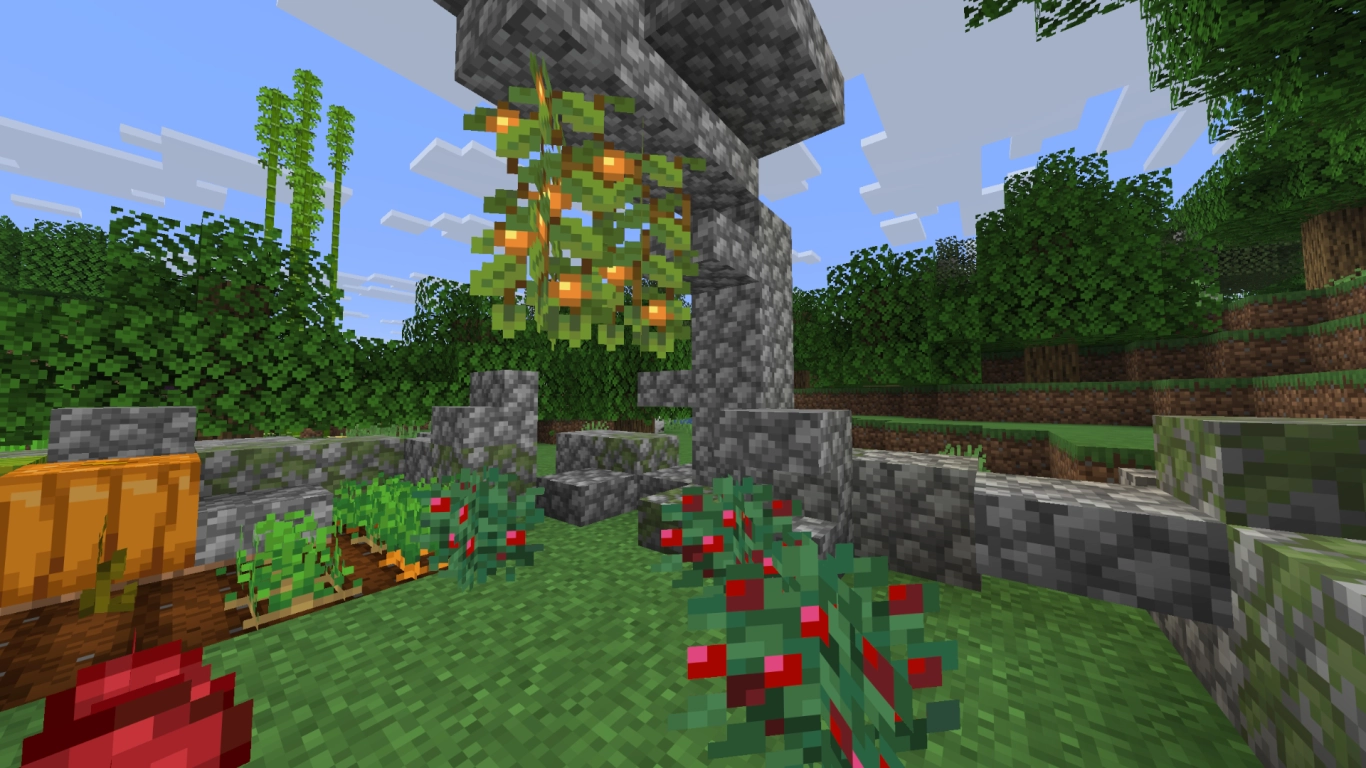
You can also grow berries. They’re not very filling, but they have other handy uses.
Glow Berries
- Where to find: Found hanging from the ceilings of Lush Caves, sometimes in mineshafts.
- Uses: Grow downward like vines, and you can climb them. Glow berries grow slowly and can be harvested. They’re also a weak light source.
Sweet Berries
- Where to find: Their bushes generate in taiga biomes.
- Uses: Besides the berries themselves, the bushes are thorny and hurt you if you stand in them—useful for dealing damage to mobs.
Tall Minecraft crops: sugar cane, bamboo, cactus, and kelp
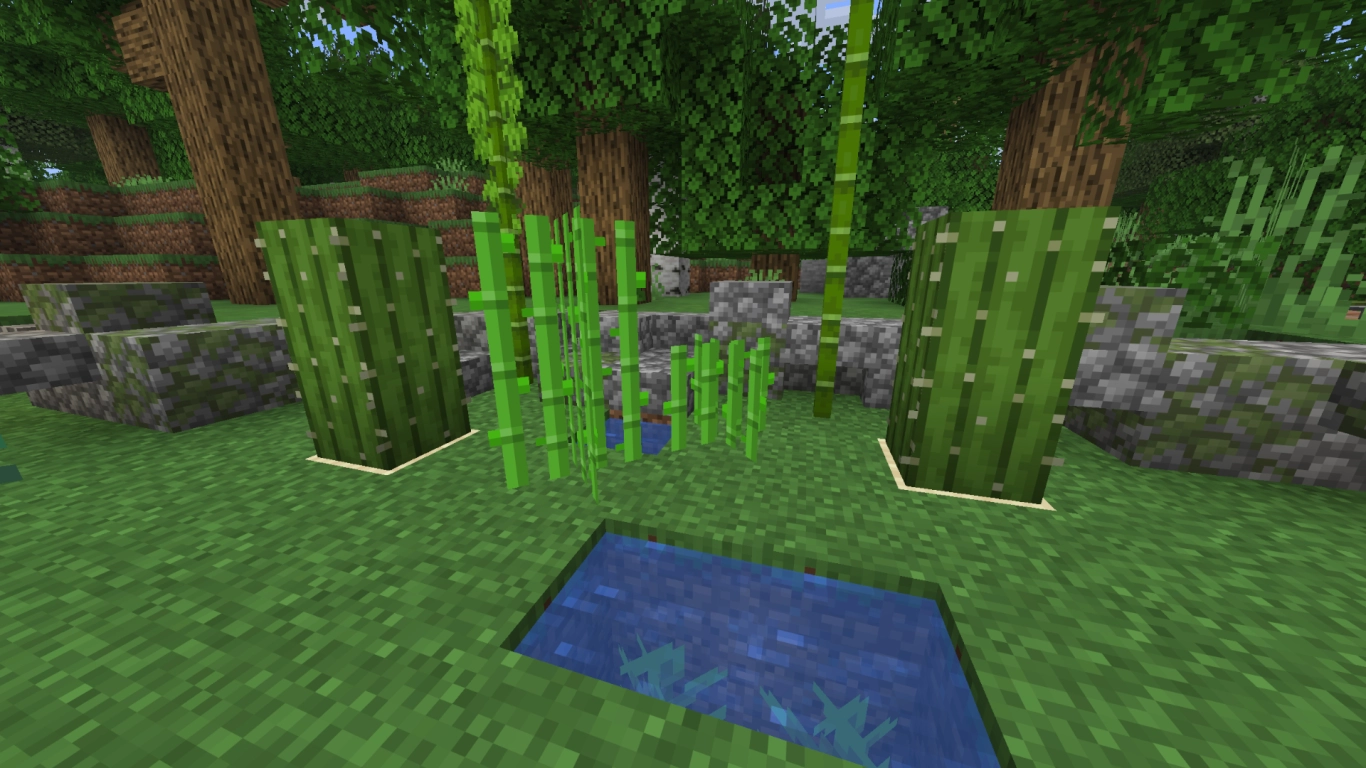
Some crops grow mostly upward and are great candidates for piston-based harvesting. You should farm all four, as they serve different purposes in your world.
Sugar Cane
- Where to find: Spawns near water and is common everywhere. Requires water directly adjacent to grow.
- Uses: Craft sugar, but more importantly paper.
Bamboo
- Where to find: Naturally occurs in jungle biomes. Break the bottom with a sword and it collapses. Grows without water and very fast.
- Uses: Craft bamboo wood or use it for scaffolding to build more efficiently.
Cactus
- Where to find: Grows in every desert and in the Badlands.
- Uses: Deals damage on contact. Can be smelted into green dye. In an automatic farm, it’s a solid source of XP.
Kelp
- Where to find: Generates in oceans (except frozen and warm). Can only be grown underwater, and randomly grows up to 24 blocks tall.
- Uses: Smelt into dried kelp, a food item. Craft it into a full block, which is a good fuel.
Exotic Minecraft crops: cocoa beans, nether wart, sea pickles
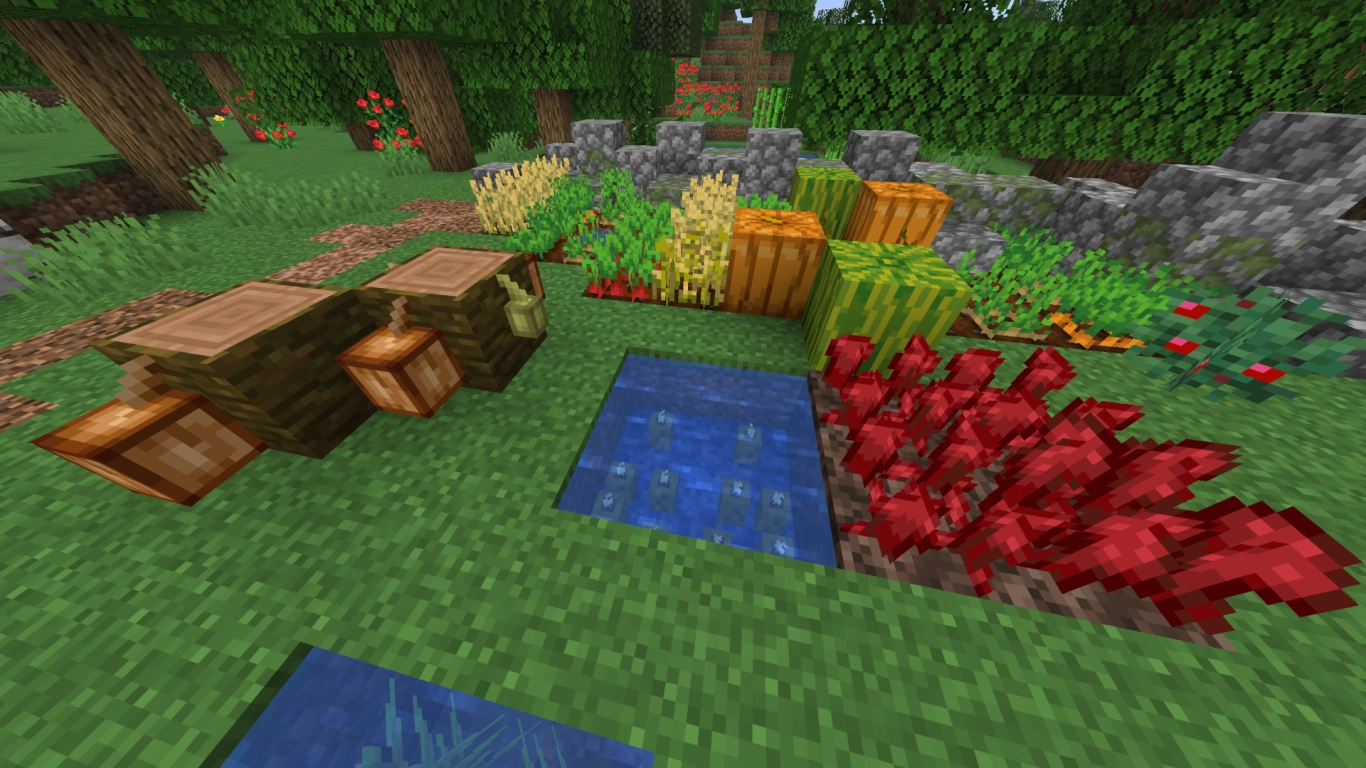
Minecraft also features a few unusual plants that grow in their own unique ways. They’re useful too, and worth cultivating.
Cocoa Beans
- Where to find: Naturally grow on jungle trees and can only be farmed on them.
- Uses: Combined with wheat to make cookies. They can also be crafted into brown dye, their only dye use and source.
Nether Wart
- Where to find: Generates in Nether Fortresses and Bastion Remnants in the Nether. Only grows on Soul Sand.
- Uses: An essential brewing ingredient for potions. Also used to craft red Nether bricks.
Sea Pickle
- Where to find: Generates in warm oceans and coral reefs. Can be grown on live coral and multiplied with bone meal.
- Uses: A wonderful light source and decoration. The more pickles in a cluster, the more light they emit, and they only glow when underwater. Can also be smelted into lime dye.
Conclusion: Find, farm, and use every Minecraft crop
Minecraft now offers a wide variety of different crops. Not all of them are primarily for food, though that’s often their main role. Some plants you’ll want to farm for other reasons: sugar cane for paper is important, as are nether wart for brewing potions. It never hurts to diversify your world and collect everything the game has to offer.
With Minecraft server hosting for crop farms, you can, of course, grow and harvest all kinds of plants there as well. Share some with your friends, or build automatic harvesters together so you always have plenty of resources.