In our tutorials on automated farms, we’ve already showcased many designs, and you’ll notice the same components keep popping up. If you want to dive deeper into Redstone and design your own automated farms, you should understand the components themselves. After all, it’s important to know how they work so you can troubleshoot without help. Plus, Minecraft’s Redstone is less complicated than you might think. If you need an introduction, we’ve got a guide for that too: (Introduction to Redstone: Understanding and Applying the Basics) .
Minecraft Redstone: Hoppers and chests for automated farms
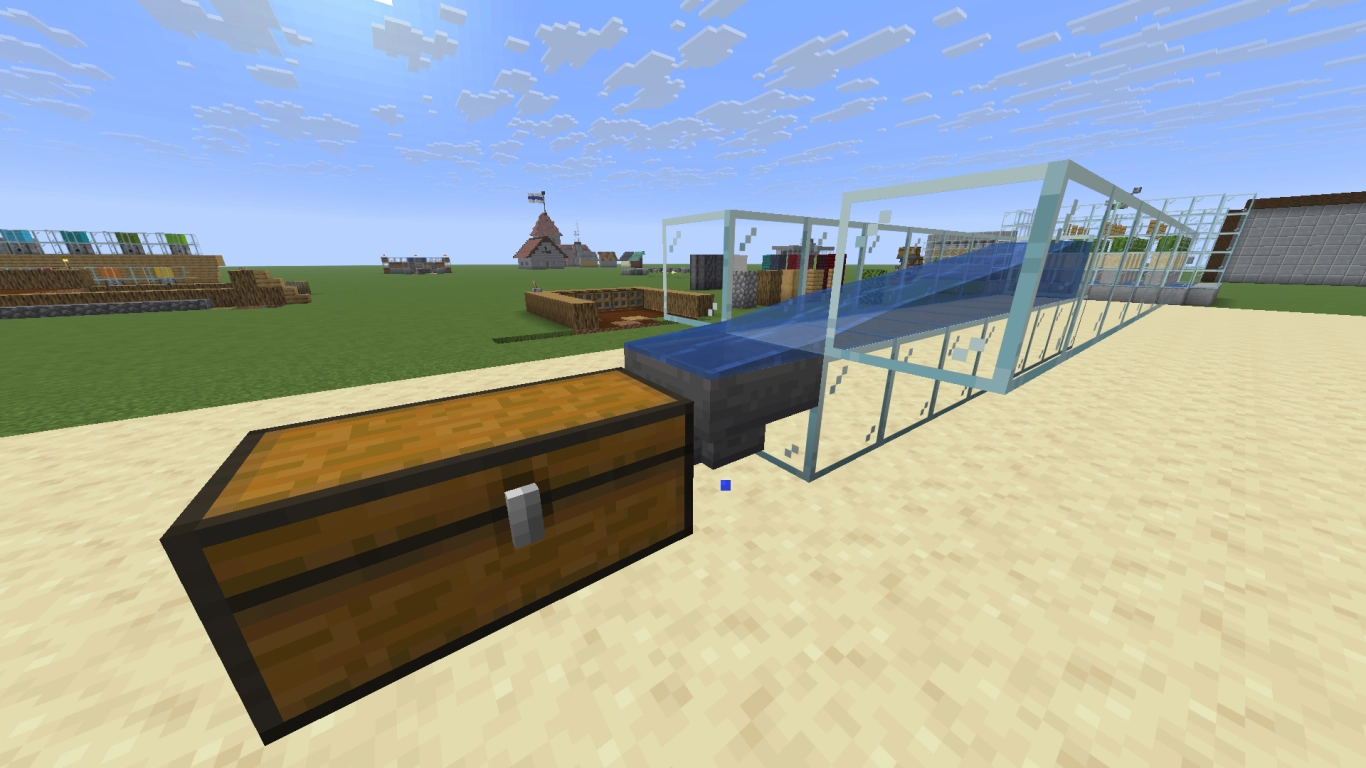
Hoppers were added with the Redstone Update 1.5 and are an essential component of almost any farm. They can automatically collect items and pass them on to a chest or another container. Before that, items stayed on the ground and the player had to pick them up before they despawned. Hoppers made fully automated farms possible!
Almost every farm uses a hopper to funnel items into a chest. Sometimes you’ll need multiple hoppers pointing into one another to transport items over long distances. But that costs a lot of iron, so it’s often more efficient to use water channels to carry items to a hopper instead.
Hoppers can do much more, too: you can build automatic sorting systems with them. Find out more in our article (Minecraft Automatic Storage System: A Guide for Efficient Item Sorting) . With clever setups, you can block certain items or let them pass through.
As an alternative, hopper minecarts are very popular. They can run in a loop to cover a larger area and have the advantage of being able to pull items through a block. A regular hopper can only do this with a slab. The minecart can then stop over a hopper and chest to unload collected items before moving on.
Observers in Minecraft: Detect block updates and automate farms
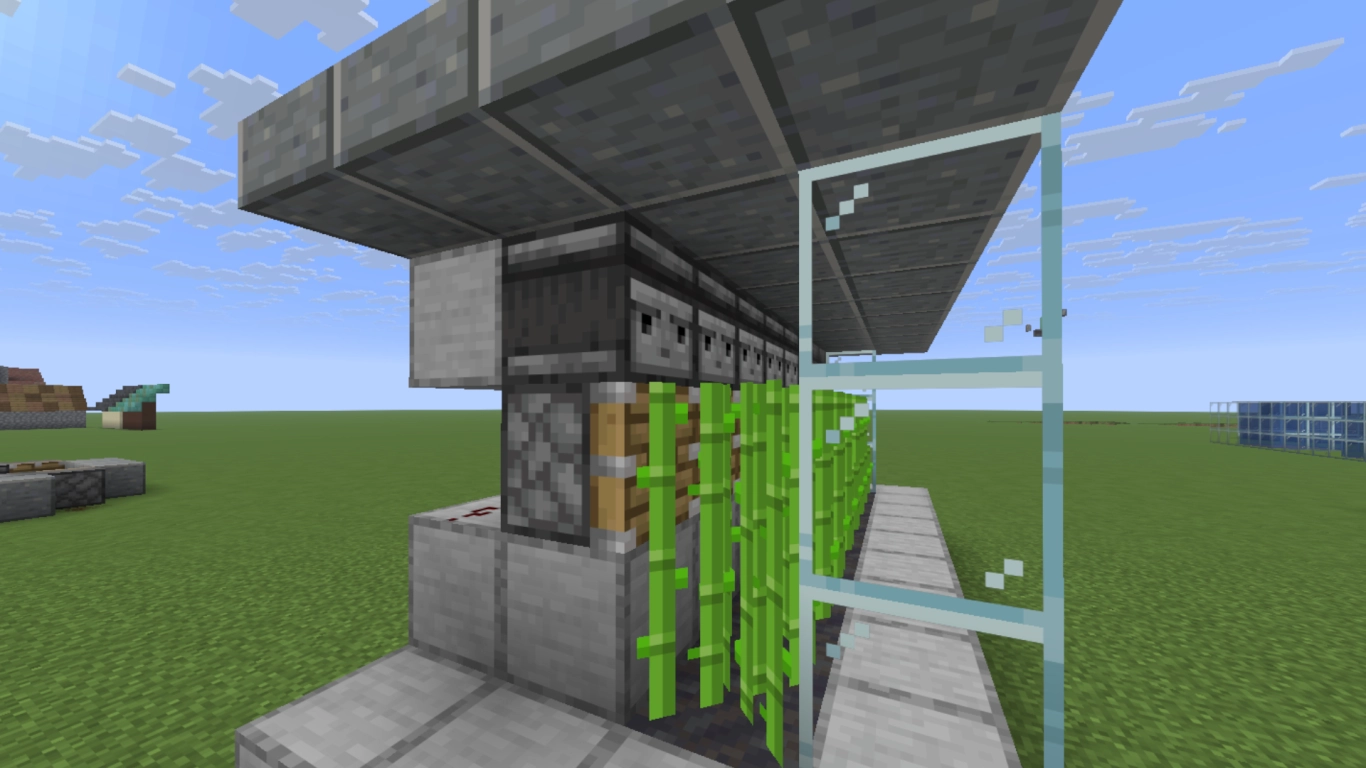
Observers have been in the game since Update 1.11 and took Redstone to a new level. They can automatically emit a Redstone signal without player input. The observer’s face watches the block in front of it and emits a pulse whenever that block changes in any way.
A simple demonstration is a sugar cane farm. Sugar cane can grow up to three blocks tall, so it makes sense to place observers at that height. When the cane grows, the observer can detect it and send a signal to pistons one block below to harvest it. The same principle works with bamboo, as well as pumpkins and melons.
Observers are also handy for building a kind of automatic clock. If two observers face each other, they regularly output a signal. There are limitations, though: an observer does not detect movement. It only reacts to changes in the state of the block in front of it, such as sugar cane growth or a block being placed.
Dispensers in Minecraft: Use items automatically
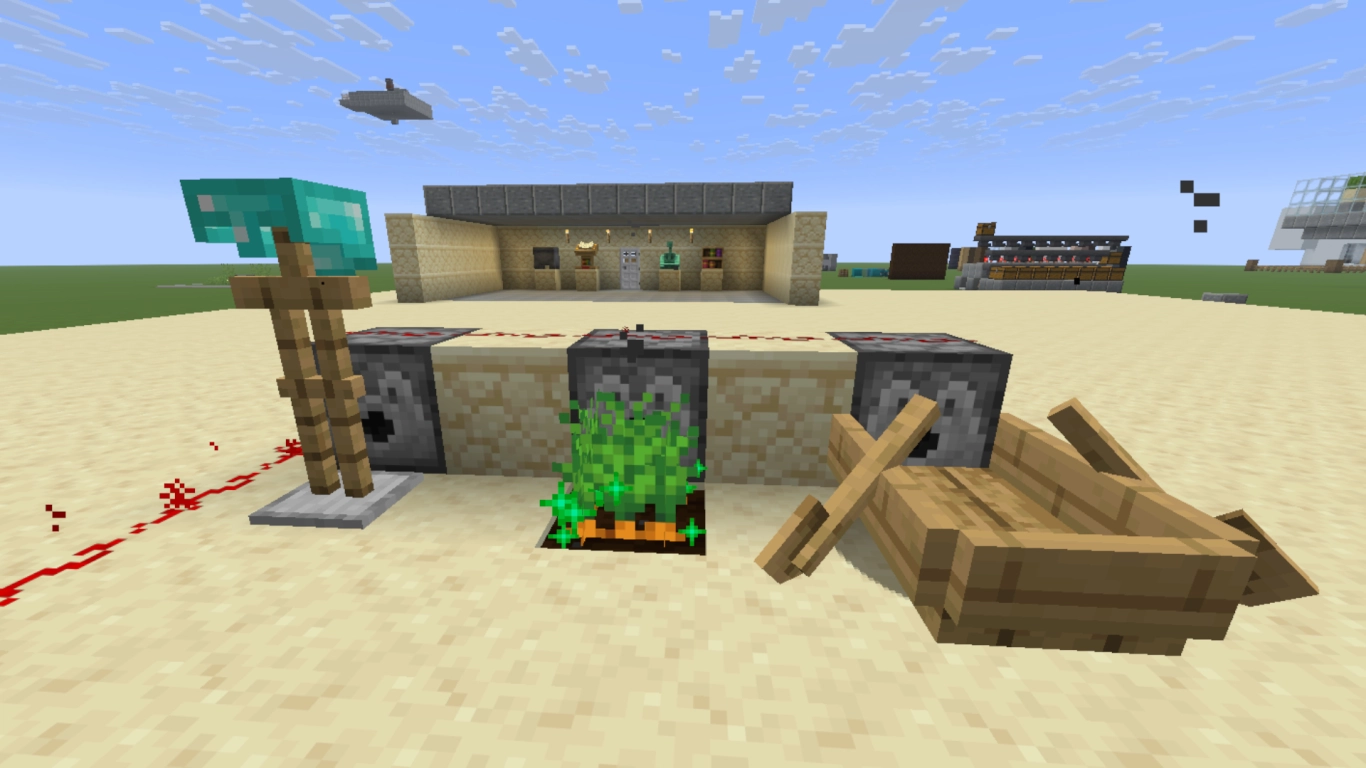
The next two Redstone devices are quite similar, even in appearance. First up is the dispenser, recognisable by its O-shaped mouth. It was added back in Beta 1.2—a fact many may not know! A dispenser can hold up to 9 item slots, and when it receives a Redstone signal, it will use those items. It doesn’t just spit them out; it tries to place or activate them.
That doesn’t work with every item or block, but dispensers have several unique uses:
- Armour is automatically equipped
- Projectiles—eggs, snowballs and arrows—are fired
- Bone meal is applied to crops
- Buckets (with water or lava) are emptied and can pick fluids up again
- Shears are used and can, for example, shear sheep (Minecraft Wool Farm Guide: How to Easily Automate Wool Farming in All Colours)
- Firework rockets are ignited
- Entities such as boats, minecarts and armour stands are placed
- Equipment for various animals is fitted, such as saddles, chests or armour
Droppers in Minecraft: Dispense and pass items along
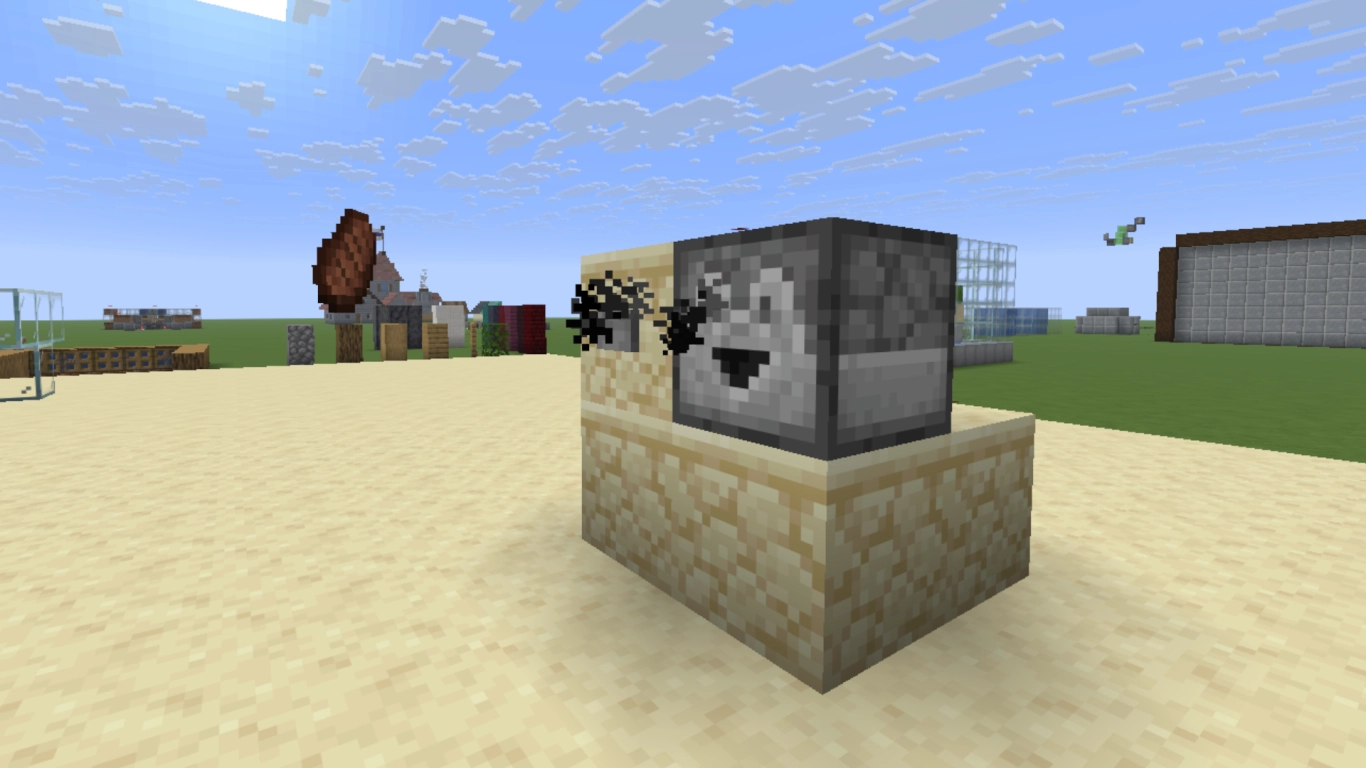
Players often confuse the dispenser with the dropper, but you can tell them apart by the dropper’s D-shaped face. It was added in the same update as the hopper—Version 1.5. Unlike the dispenser, a dropper does not use its items when it receives a signal. It simply drops them, which still opens up interesting options.
Think of the dropper as a vending machine. It gives you items stored in its slots. This can be handy for topping up food in your inventory, or for other consumables.
Even more interesting is its ability to pass items to other containers. This doesn’t happen automatically like with a hopper, but it can still be useful. The dropper needs to receive a signal. If you provide a continuous signal, a dropper can pass items along much like a hopper and deposit them into chests.
Pistons in Minecraft: Move blocks and trigger harvesting
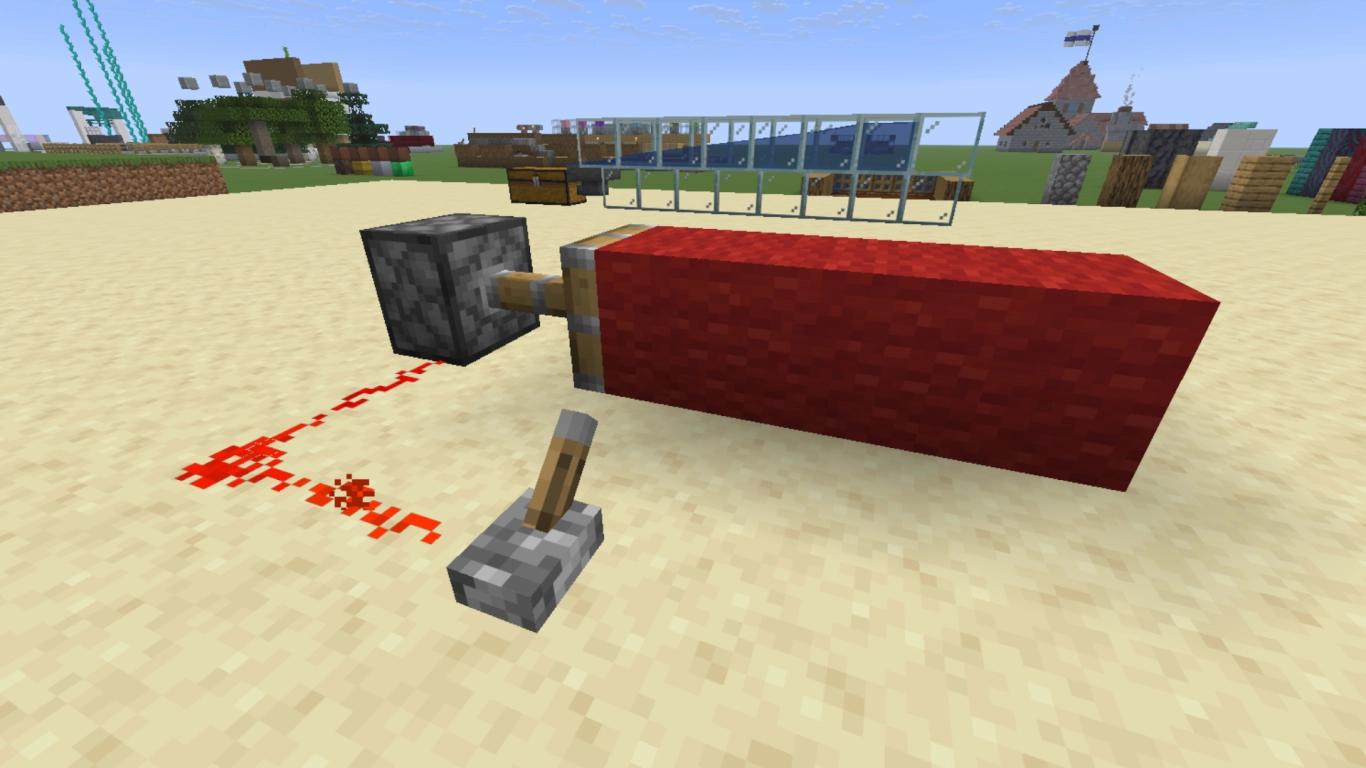
Lastly, let’s look at pistons, which can push blocks and, as sticky pistons, pull them back. This functionality was introduced in Beta 1.7. The use cases are practically endless, which is why pistons are a staple in automated farms.
While some blocks—such as obsidian or certain utility blocks like furnaces—cannot be moved, pistons are highly versatile Redstone components. Beyond pushing and pulling full blocks, clever designs can trigger harvesting actions. For example, they can harvest crops. The dropped items can then be collected with water or hoppers. Pistons are also often used for hidden doors, as they’re easy to conceal.
Conclusion: Understand Redstone components and build your own farms
If you want to try your hand at Redstone machines and automated farms, a basic understanding of the individual components is crucial. The five blocks presented here are the heart of many farms and will help you gather important items. Redstone isn’t that hard once you grasp how it works.
Tinkering with Redstone is even more fun together—so why not rent a Minecraft server from us right away? Learn the basics and then teach your friends, so you can build large automated farms in your world.