Quartz is a slightly different ore that you can only find in the Nether. Even so, it’s excellent for all sorts of exciting building projects! Thanks to its milky white surface, it’s a very elegant and attractive building block, perfect for completing modern builds. Its variants also lend themselves well to Roman-style architecture, evoking a classical era. Quartz isn’t just for looks though — it has a surprisingly wide range of uses. And you don’t always have to mine it yourself: you can even set up an automatic quartz farm! We’ll take a closer look at all of that for you.
Minecraft Nether quartz: where to find it — biomes and Y-levels
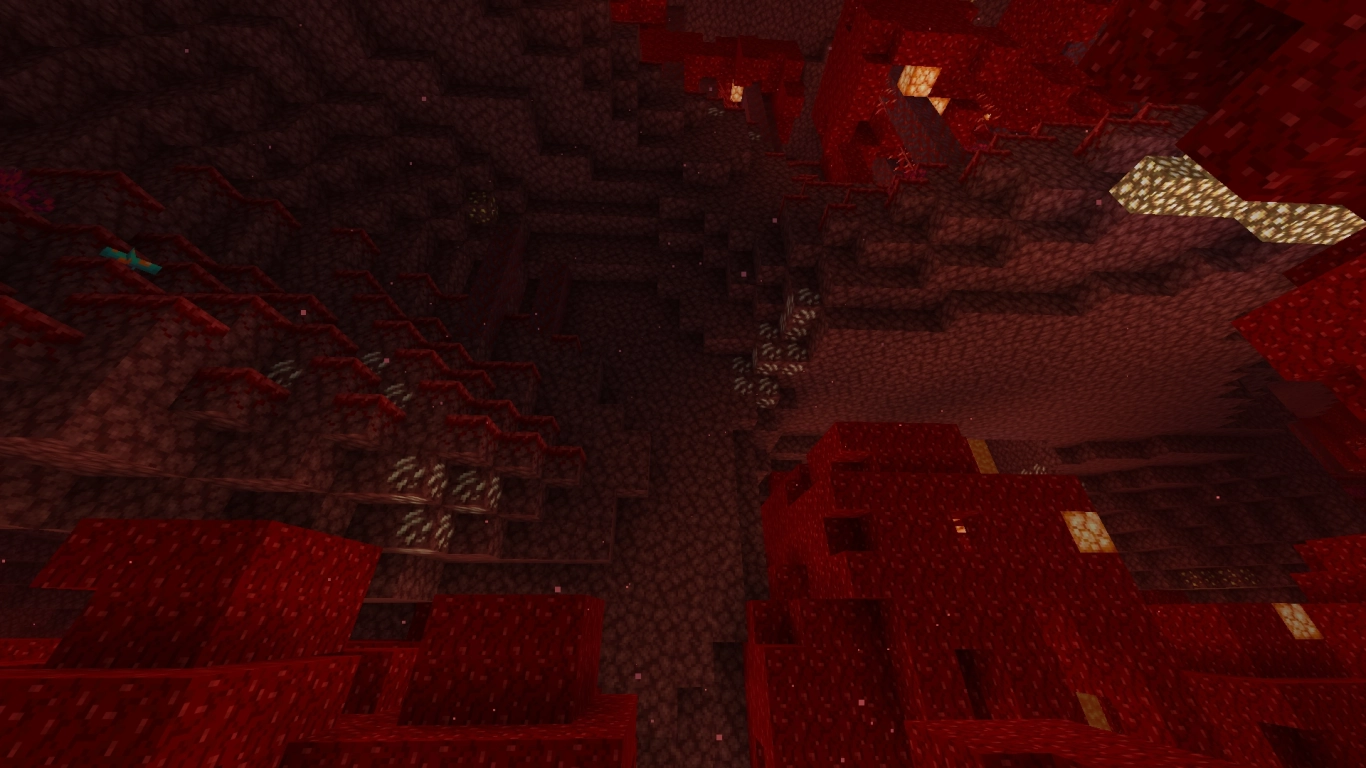
As the name Nether quartz suggests, quartz is found only in the Nether. That alone makes it rarer, but once you reach the underworld, the white veins against deep red Netherrack should stand out immediately. Quartz isn’t particularly hard to find, and you should gather plenty simply by exploring the Nether.
Nether quartz ore generates in every Nether biome, though it’s most visible in the Nether Wastes. It needs Netherrack on each side to generate, so it can feel rarer in biomes like the Soul Sand Valley or the Basalt Deltas.
In general, quartz ore appears more frequently near the top and bottom of the Nether, where there’s more Netherrack. For efficient gathering, tunnel between Y-levels 10 to 15 or Y-levels 104 to 114. Watch out for pockets of lava, and use Fire Resistance potions while mining. We also recommend a Fortune III pickaxe to get up to 4 Nether quartz per ore.
Minecraft Nether quartz via Piglin bartering and the mason
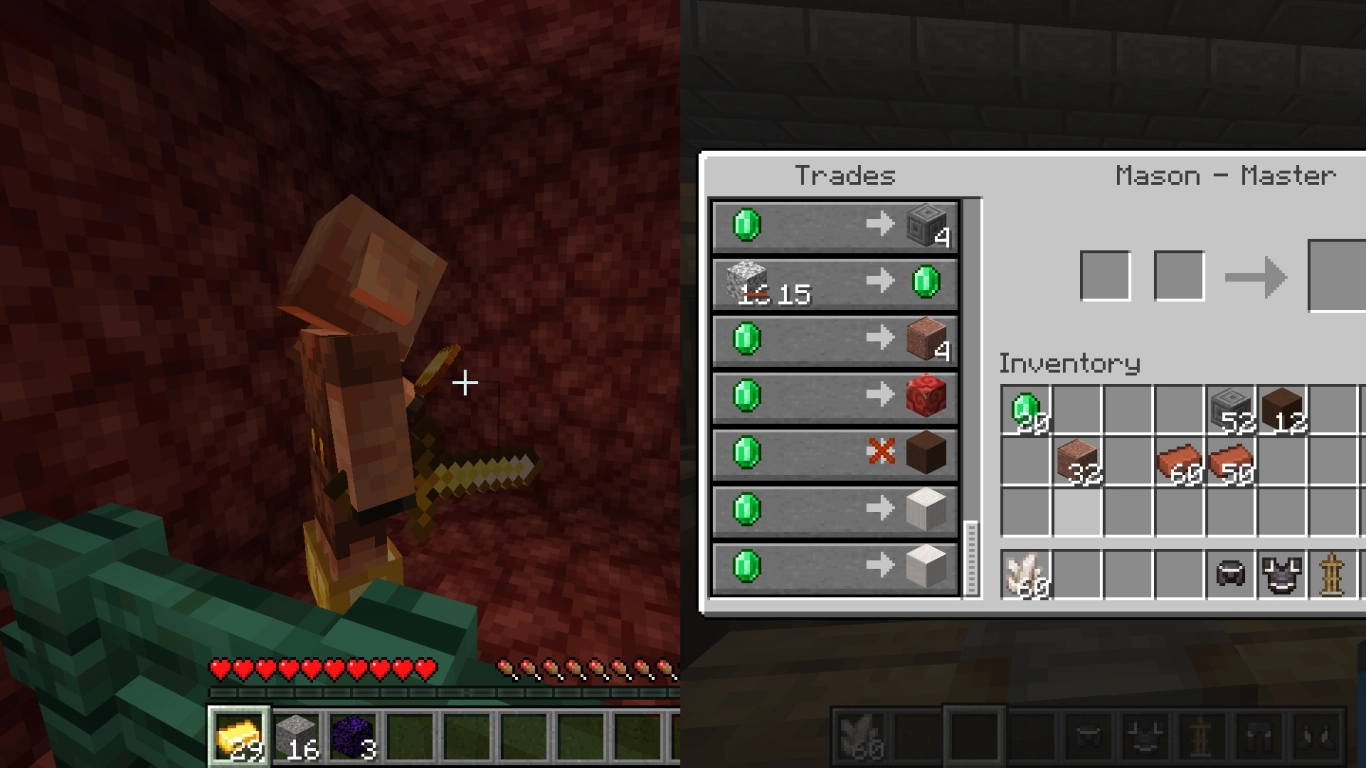
You can also obtain Nether quartz through bartering with Piglins. These porcine folk are found throughout the Nether and are especially fond of gold. Give them a gold ingot and there’s a 4.26 percent chance to receive 5 to 12 Nether quartz as a drop.
Alternatively, you can trade with a mason villager in a village to get quartz blocks. Level the mason up to master to unlock trades for quartz blocks and quartz pillars for one emerald each.
Minecraft Nether quartz uses: building blocks, Redstone and armour
Nether quartz as a building block: variants and recipes
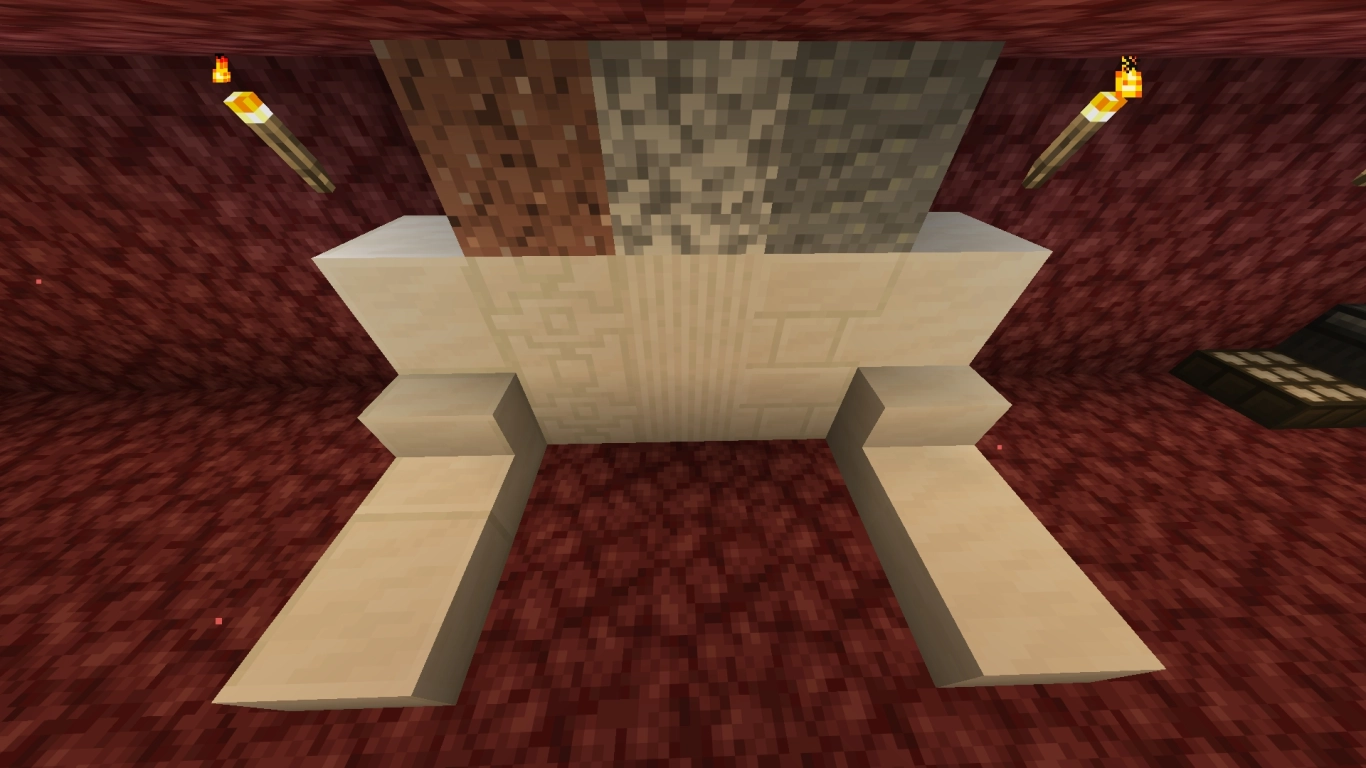
As a building block, quartz is very practical because its white colour is very pleasing. There are several variants to choose from. To gather enough quartz efficiently, we recommend a Fortune pickaxe to yield more from each ore. You can also use the stonecutter to simplify recipes.
- Quartz Block: Combine four Nether quartz to craft the block. It’s the starting point for all other recipes. You can also cut it into slabs and stairs, making it quite versatile.
- Quartz Pillar: Stack two quartz blocks to make a pillar. Ideal for Roman-style builds.
- Chiselled Quartz Block: Displays a geometric pattern and is great for decoration. Craft it from two quartz block slabs.
- Smooth Quartz Block: Smelt a quartz block in a furnace to get the smooth variant. It has a fine, sandy texture and looks very sleek. Slabs and stairs are also available.
- Quartz Bricks: Combine four quartz blocks into bricks. This variant also looks very refined.
You can also use Nether quartz to craft three additional stone types, making these blocks renewable:
- Diorite: 2 quartz + 2 cobblestone
- Granite: 1 diorite + 1 quartz
- Andesite: 1 diorite + 1 cobblestone
Nether quartz for Redstone: Observer, Comparator and sensors
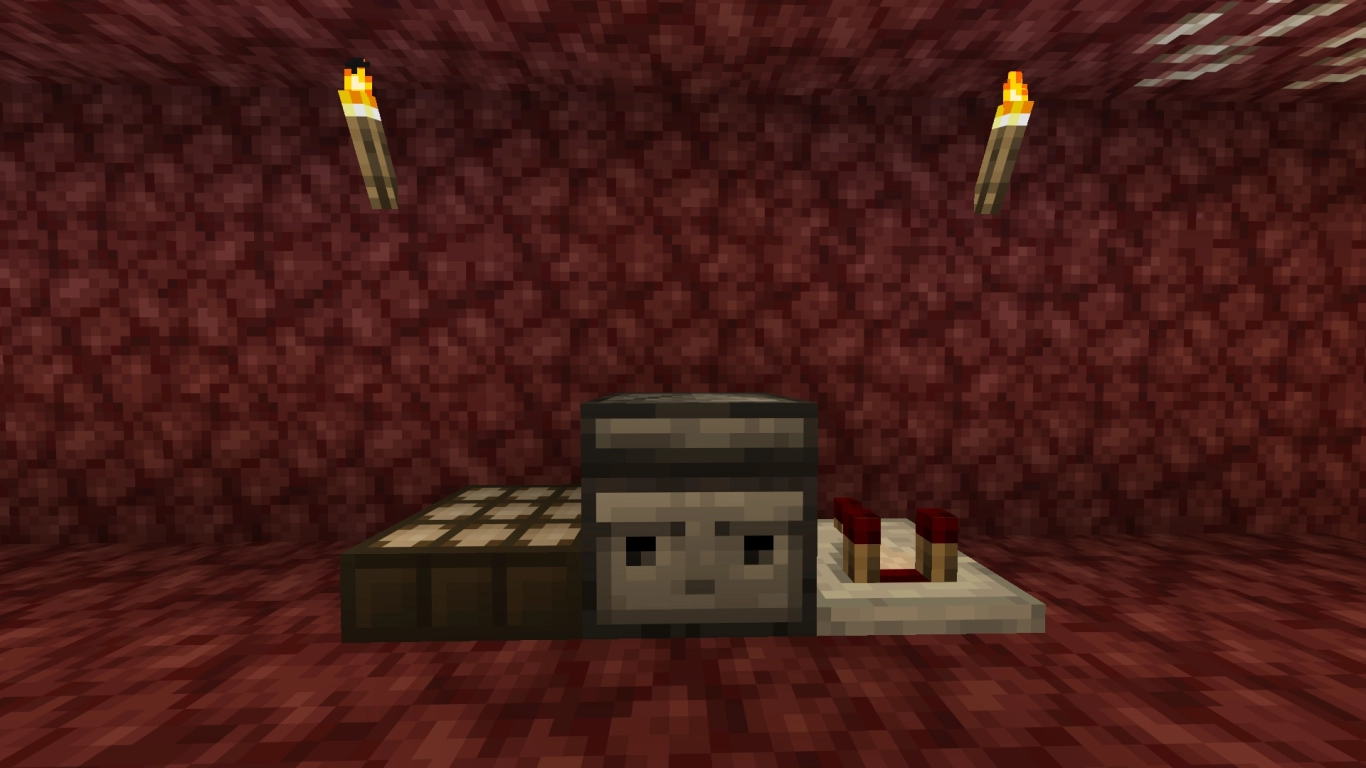
Quartz is a key component in several Redstone mechanisms, so you’ll need Nether access before you can build certain farms.
- Daylight Detector and its inverted night mode: Stores power and outputs a signal depending on the time of day.
- Observer: Watches the block in front; when its state changes, it emits a Redstone signal.
- Redstone Comparator: A versatile Redstone block. Details in our guide: (Minecraft Redstone Comparator: Doors, Passwords & Puzzles) .

Nether quartz for armour trims: using smithing templates
You can also use quartz to trim your armour. First, find a smithing template, which appears in various structures. Then use a smithing table to apply a colour to the armour piece of your choice. Quartz applies a white accent.
Trading Nether quartz with the mason
The mason can not only sell you quartz blocks, but will also buy raw Nether quartz. Trade 12 Nether quartz for one emerald at expert level.
Quickly farm experience points with Nether quartz
Nether quartz ore is an excellent way to gather experience points if you’d rather avoid fighting mobs. This is particularly handy in Peaceful mode, where there are no hostile mobs. Mining quartz ore yields 2 to 5 XP. The Fortune enchantment does not affect XP gained.
Minecraft Nether quartz automation: Piglin bartering and villagers
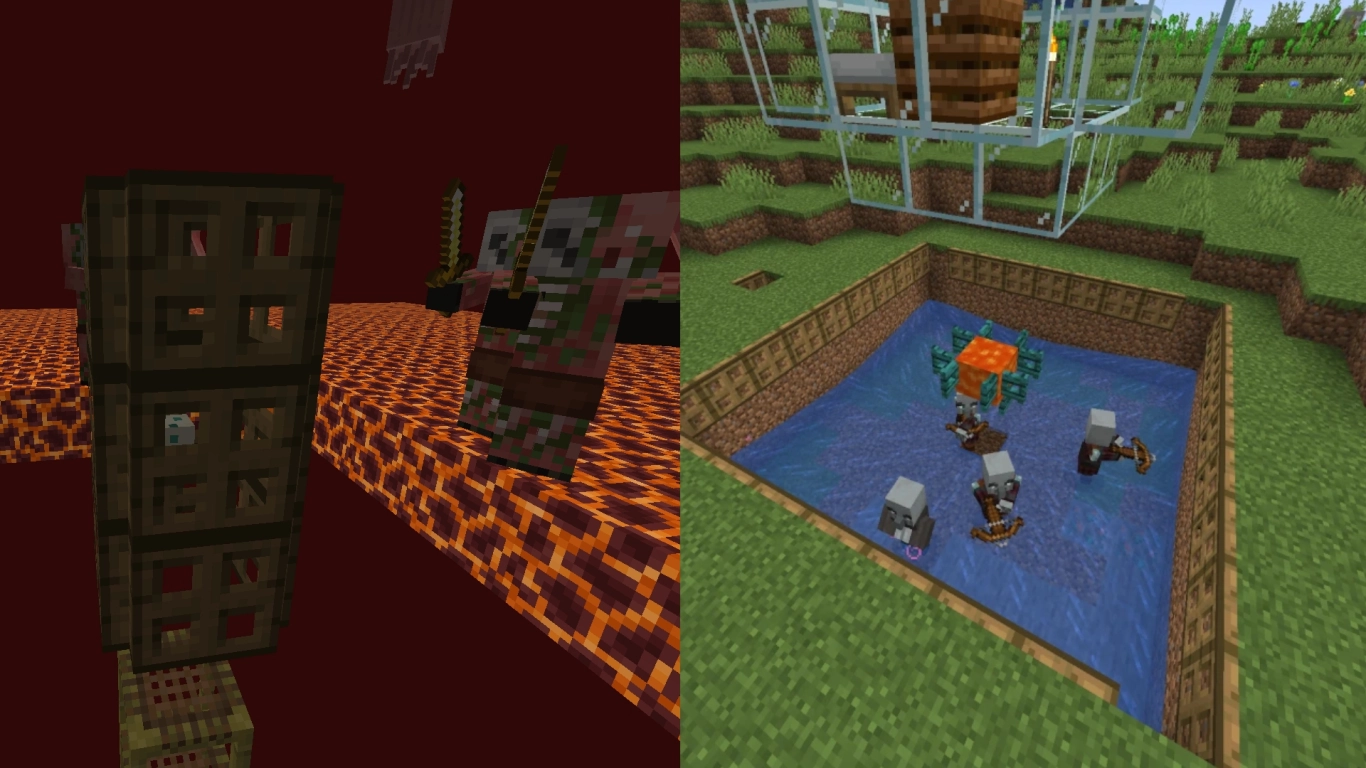
Option 1: Piglin bartering with a gold farm for Nether quartz
You can obtain quartz by bartering gold ingots with Piglins in the Nether. It’s a viable option, even if the odds are only around 5 percent. You’ll want a combination of an efficient gold farm and a Piglin bartering setup to collect enough Nether quartz.
We already have in-depth guides for both:
- (Minecraft Gold Farm: Build an advanced gold and XP farm)
- (Bartering with Piglins in Minecraft: Guide & Build an Automatic Farm)
Option 2: Mason villager and raid farm for quartz blocks
Your second option is to amass enough emeralds and trade them with a mason for quartz blocks. In Java you can get both quartz blocks and pillars; in Bedrock only one of these trades exists. The exchange is a 1:1 deal, so you’ll need plenty of emeralds. We recommend a raid farm (Building a Minecraft Raid Farm: Farm Infinite Totems & Emeralds) , though you can also earn emeralds through other trades.
Conclusion: Plenty of Nether quartz for elegant builds and Redstone
Nether quartz isn’t just a superb building block for your world — it’s also useful in many other ways. From trading with the mason, to Redstone components, and even as an XP farm source, the block and its variants are highly versatile. You can also use two automated methods if you want a steady supply of quartz. But straightforward mining in the Nether with a Fortune enchantment is well worth it too.
Rent your own Minecraft server and strike it rich with quartz. It’s perfect for building, whether you’re creating Roman temples or modern villas.
More interesting articles
Farming Netherite in Minecraft: Best Methods & Tips for Armour and Tools
The Ultimate Guide to Minecraft Bastion Remnants in the Nether
Master the Nether: Tips for Advanced Players
Surviving Minecraft Nether: Tips and Tricks for Experienced Players