Minecraft is a game deeply connected to nature. Thanks to a wide range of biomes, it also offers rich biodiversity. That variety isn’t just for show—you can actively use it in your builds. It’s easy to forget just how much vegetation and how many plants Minecraft actually has. With more than 60 biomes, it’s no surprise there are plenty of blocks to work with. Today, we’ve collected them for you in one place and will show you how to use them as decor in your own world.
Minecraft leaves and foliage: Hedges, bushes, and trees as decor
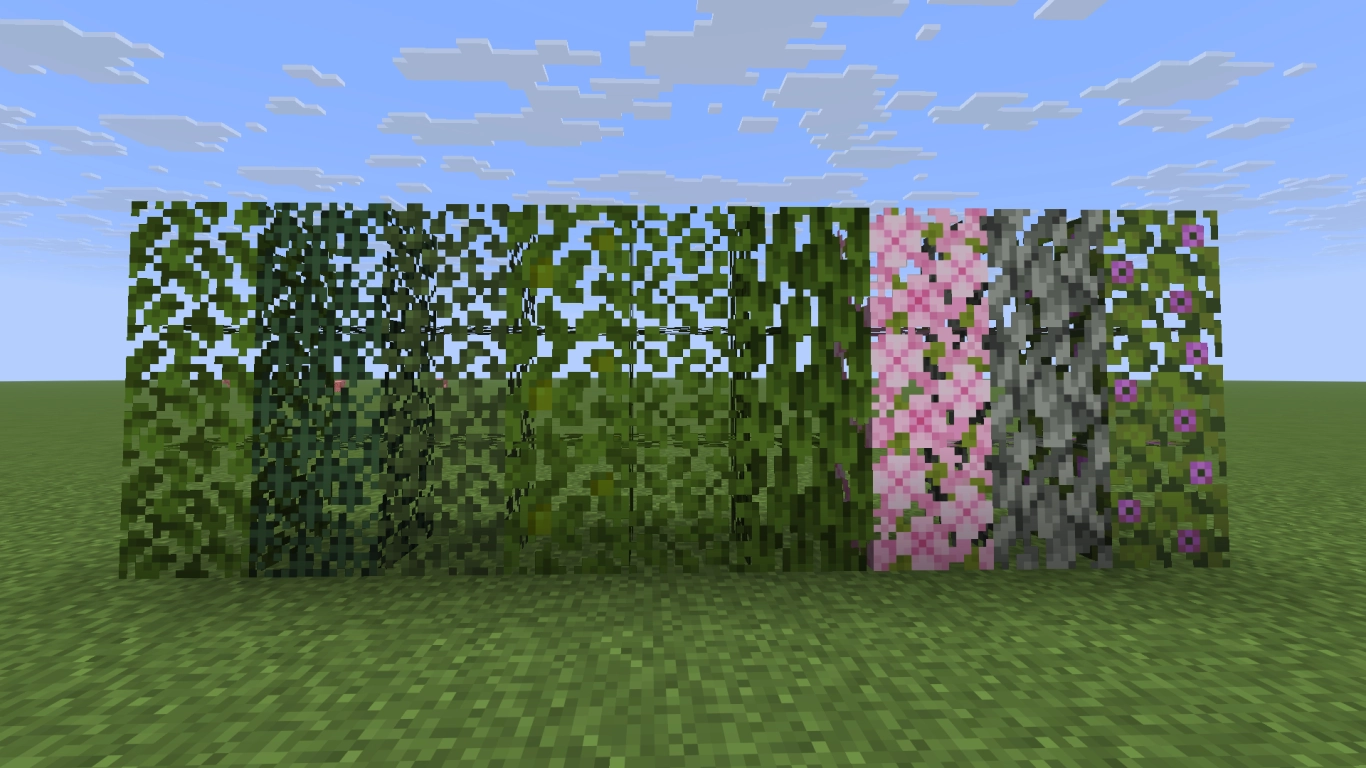
Tree leaves are a wonderful block to add more greenery to your builds. Use shears or a hoe enchanted with Silk Touch to gather leaves quickly and efficiently. You’ll have several stacks in no time, which you can use to create bushes, hedges, or custom trees. It looks even better when you mix multiple leaf types. You can also use the new leaf piles to add more character—pick them up directly or smelt leaves in a furnace to obtain them.
Leaves are practical: they don’t just look great, they also let light pass through. That makes them perfect for hiding light sources within your build style. You can also use them for their particles, which drift down gently and create a cozy atmosphere.
Minecraft flowers and flower pots: Color for home and garden
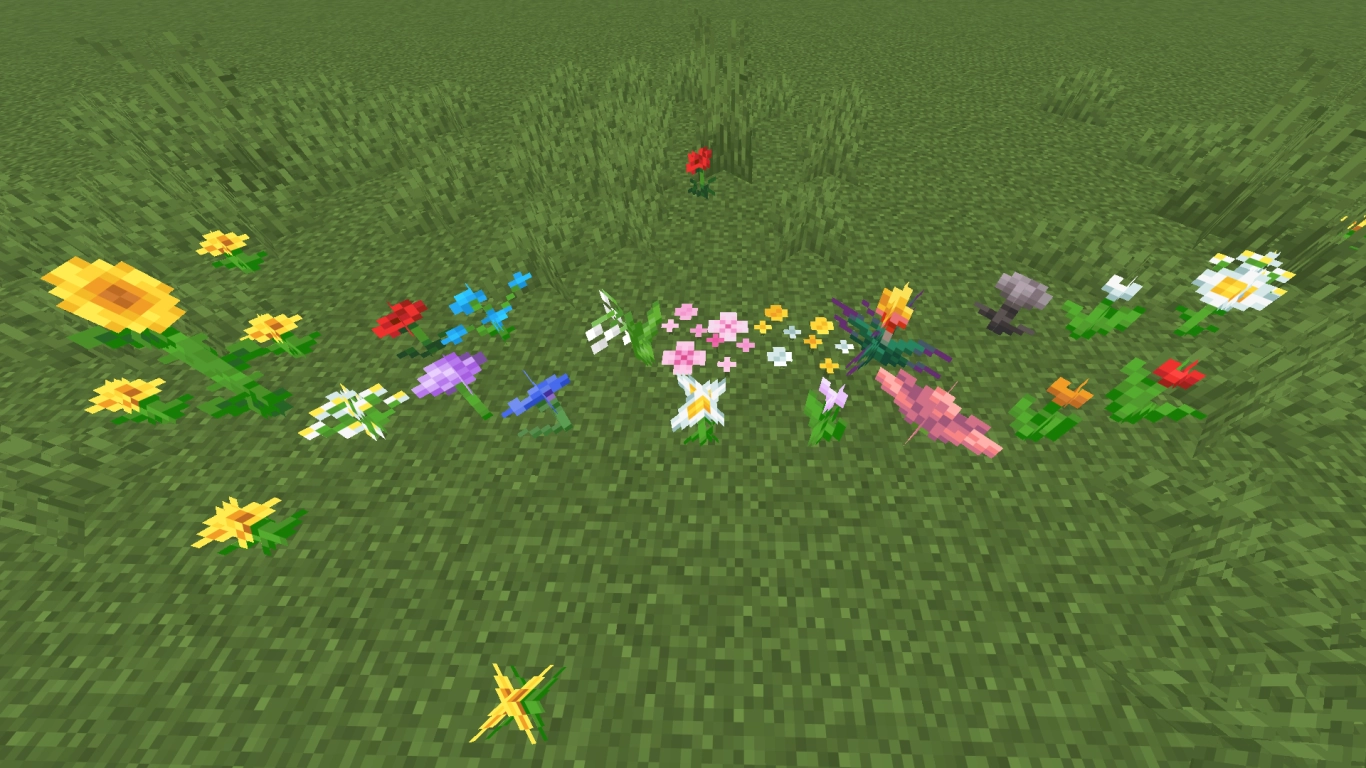
Minecraft certainly doesn’t lack flowers—from wildflowers carpeting the ground to tall rose bushes and the dangerous Wither Rose. What makes flowers in Minecraft special is their distribution across different biomes. You won’t find every flower everywhere; some appear only in very specific parts of your world. The blue orchid, for example, spawns only in the swamp, while allium grows only in the flower forest.
Flowers work as decor in almost any situation. A flower bed is gorgeous, and flower pots on a shelf look stylish, too. You can also use bone meal on grass blocks to grow biome-specific flowers naturally. If you want to build an automatic flower farm, we already have a guide for you (Minecraft Flower Farm Guide: How to Build an Automatic Flower Farm for Dyes and Bees) .
Minecraft grass, ferns, and shrubs: Add natural details
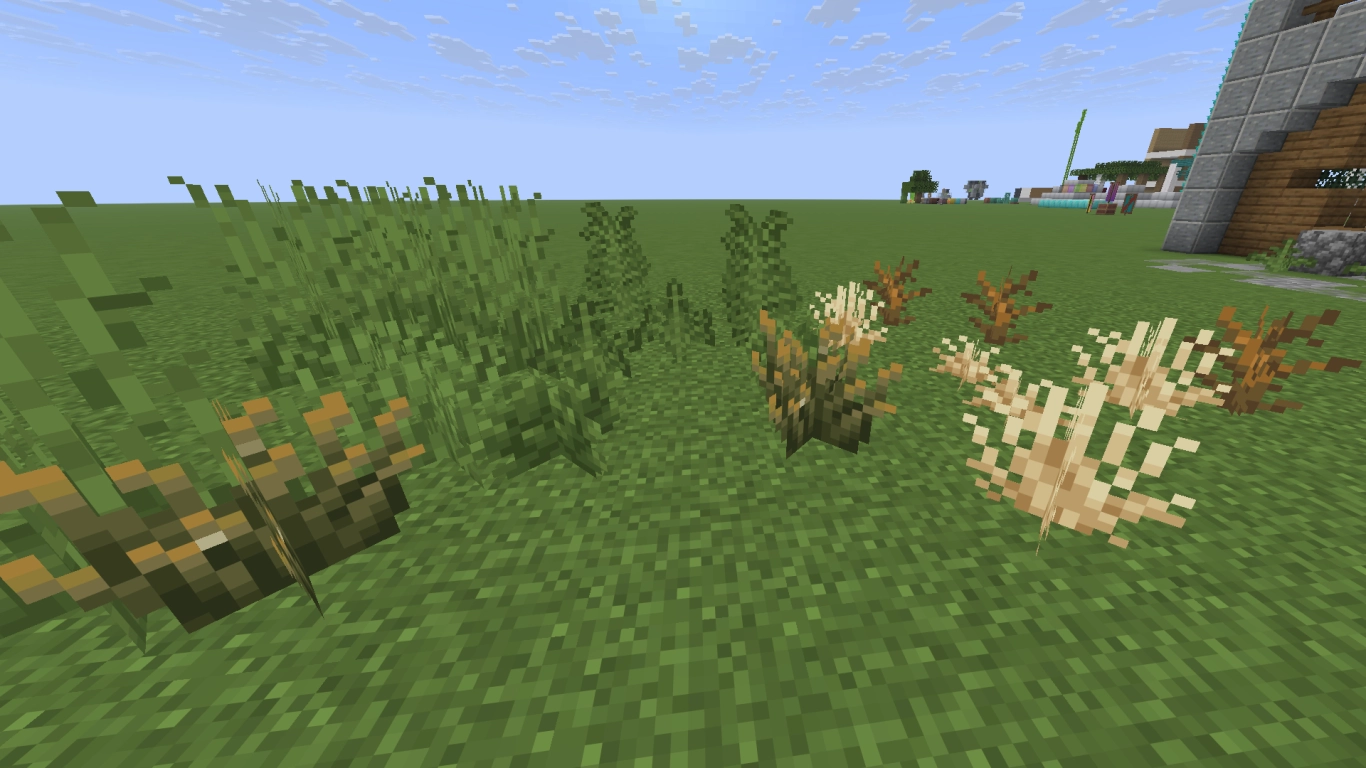
Grass and ferns often go unnoticed in Minecraft, but they can make a small yet meaningful difference in your decor. Over the years, new types have been added, which may surprise returning players. You can not only grow them with bone meal, but also harvest them with shears.
There’s short and tall grass, and the same variations exist for ferns and dry grass. You’ll also find new shrubs and grasses with fireflies. And those dead bushes in the desert can work great as decor, too. Manually placing grass can look much better than using bone meal.
Minecraft utility plants: Decorate with cacti, bamboo, and sugar cane
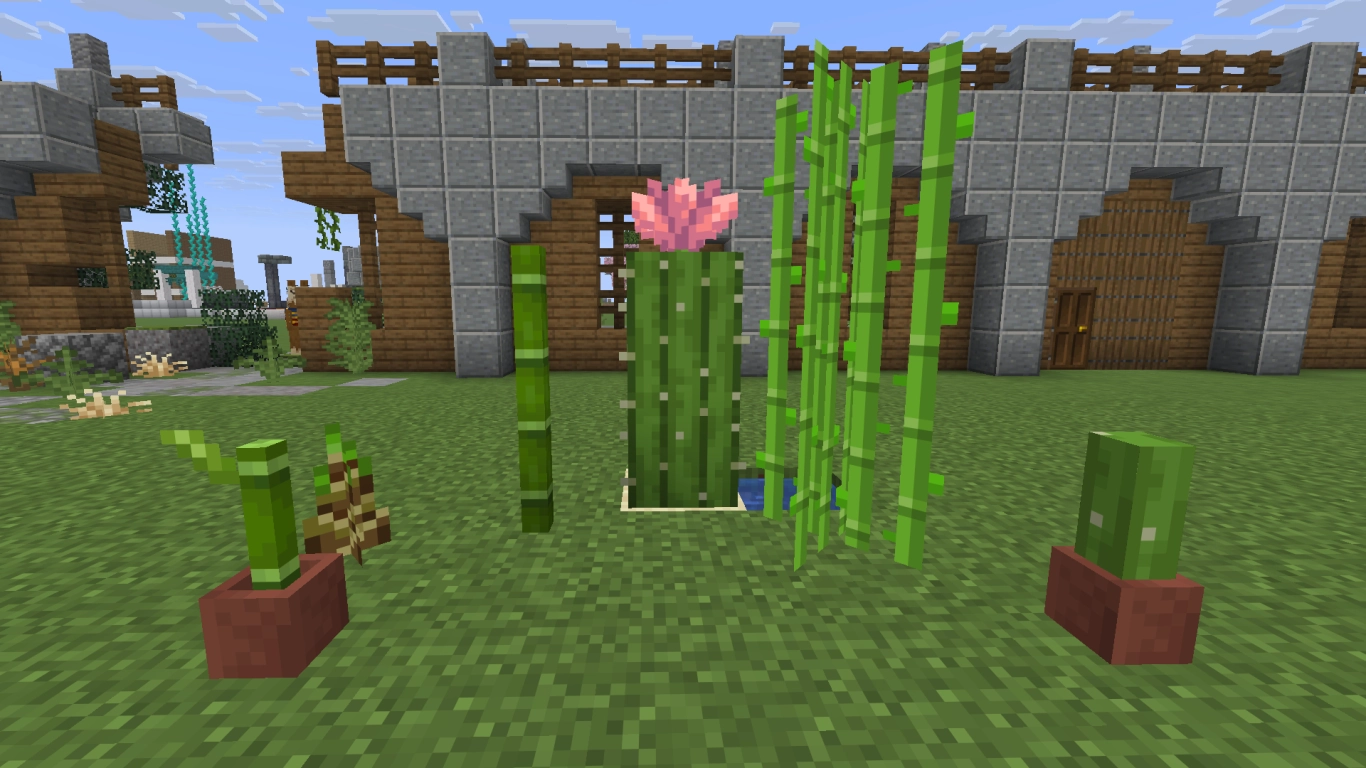
Don’t underestimate the decorative power of utility plants. We want to highlight cacti, sugar cane, and bamboo. While you can place a cactus and bamboo in a flower pot, all three also look great at full height to spruce up your builds.
Cacti are a natural fit for the desert, while sugar cane works well along any water feature, where it looks a bit like reeds. Bamboo pairs wonderfully with modern builds, since it’s also used in real life as a clean, minimal plant.
Minecraft berries, glow berries, and mushrooms: Edible and decorative
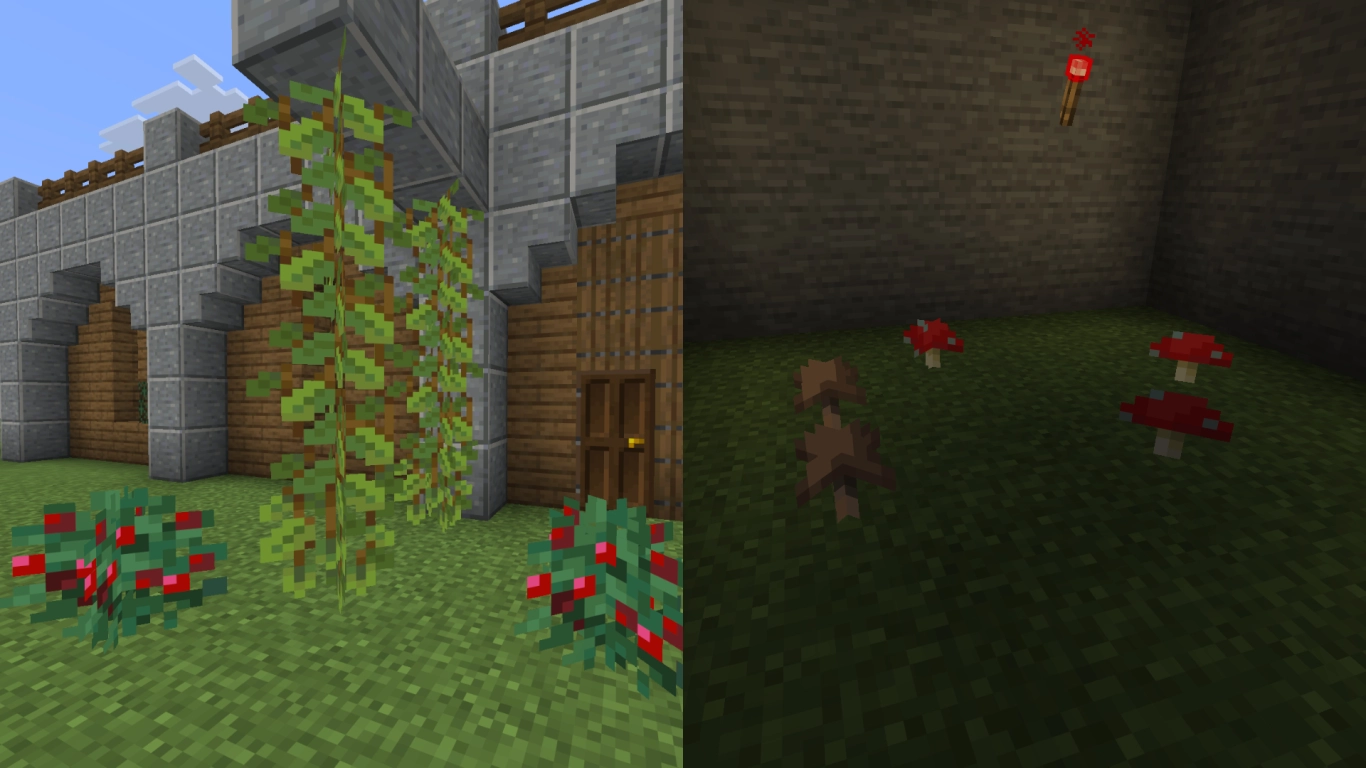
Alongside green utility plants, you’ll find edible vegetation in Minecraft. That includes wild sweet berry bushes found in the taiga. Their red berries are tasty, but be careful not to walk into the bushes—they hurt. In caves, you’ll find orange glow berries, which grow on vines from ceilings and emit light.
We’ll also count mushrooms here, even though they’re organisms and not technically plants. They’re edible and give you another decorative block to work with. They grow only in dark areas, but you can use bone meal to grow them into huge mushrooms. They’re perfect for spooky builds, like witch houses.
Minecraft biome decor: Vines, moss, lily pads, and Nether plants
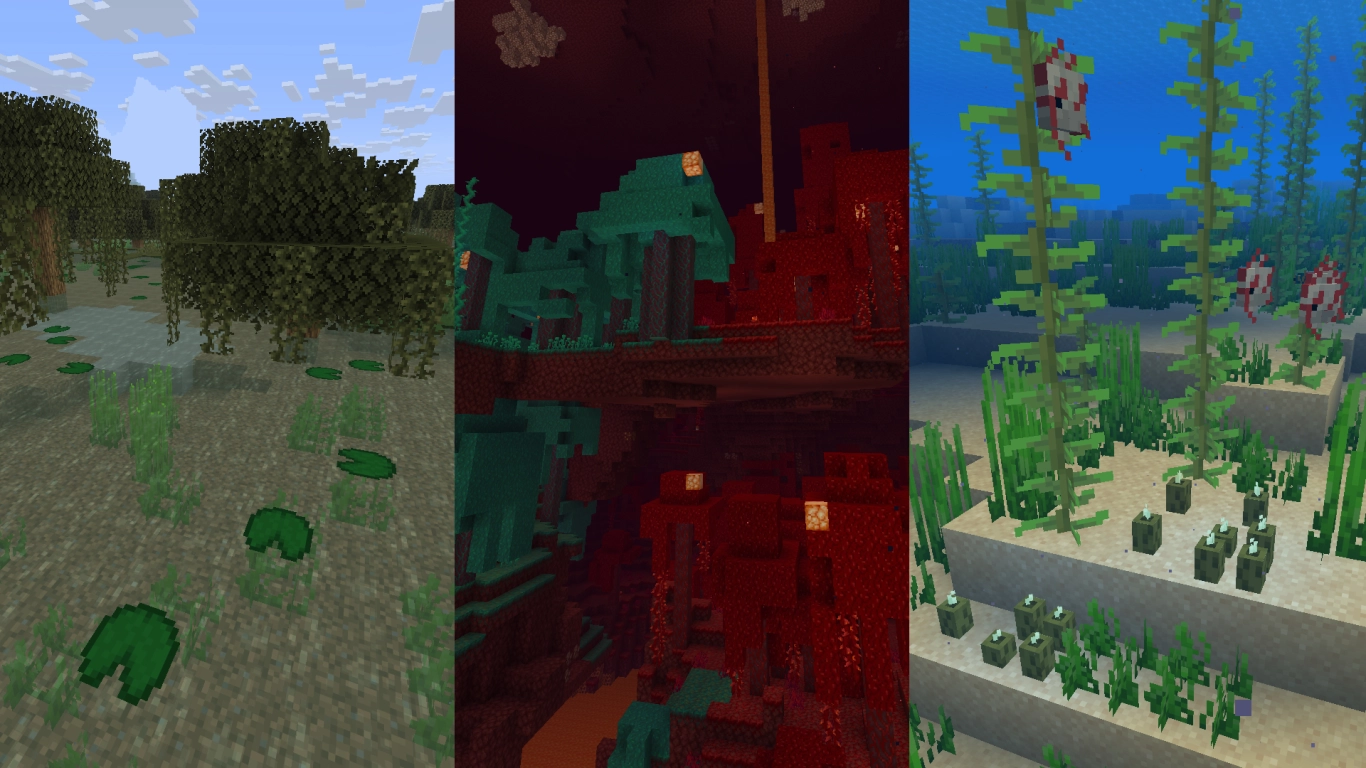
To wrap up, here are a few more vegetation types you can find in Minecraft. First, check out lush caves, which—besides glow berries—also feature moss, small and big dripleaf, azalea, and spore blossoms. All of them are beautiful blocks for decorating.
In the swamps, you’ll find lily pads, which not only look nice but also let you walk across water. Here and in the jungle, you’ll also find vines, which grow and can overrun buildings in no time. There’s also a variety of vegetation underwater you can use for decor. That includes sea pickles, which emit light, as well as seagrass and kelp to enhance ponds, rivers, and coastlines.
Even in the Nether, there’s vegetation. Most natural surfaces there are nylium rather than soil. You’ll find warped and crimson fungi, along with vines and roots in teal and crimson. This type of vegetation is great for fantasy builds.
Conclusion: Round out your builds with Minecraft vegetation
As we hope we’ve shown, Minecraft’s vegetation and plant life give you tons of creative options. Small details fit in beautifully and give your world its unique character. It’s also a great excuse to travel biomes and discover new blocks. And who knows—the wandering trader might have just what you need the next time he stops by.
With Minecraft server hosting for creative builds, you can experience Minecraft’s diverse vegetation up close. Use these items and blocks in your builds to give them that final polish.