Once you’ve grasped the basics of Satisfactory and completed a few early Milestones, the game opens up and throws new recipes and resources at you. That can become quite overwhelming! But this is exactly where Satisfactory shines: mapping out individual production lines and combining them logically is what many players look forward to most. For newcomers, though, it can be tough—especially if you’ve never played a game like this before. So let’s take a closer look at how to stay on top of things and still get the best out of your factories.
1. Satisfactory production chains: from goal to raw input

First, decide exactly what you want to produce. That’s your starting point for every factory, because you need to know what you’re ultimately working towards—new Milestones, MAM research, or materials for the Space Elevator.
Then work the production chain backwards to the starting point. Which intermediate steps and machines are required? Most products rely on base ores like iron, copper, or limestone, which you later combine. It helps to calculate production rates:
- Pay attention to the purity of your resource nodes (Pure, Normal, Impure) – they determine the Miner extraction rate.
- Check machine throughputs (e.g., Smelters, Constructors, Assemblers, Refineries) and balance inputs and outputs.
- Use overclocking (Power Shards) to eliminate bottlenecks – note the increased power draw.
- Plan buffers (Storage Containers) and Smart Splitters to handle overflow.
- Consider alternate recipes (Hard Drives) to shorten chains or make better use of by-products.
A clear workflow is: set the target product → break down recipes and intermediates backwards → size rates and logistics (conveyor belts, lifts) accordingly.
2. Factory layout with foundations: make best use of space and grid
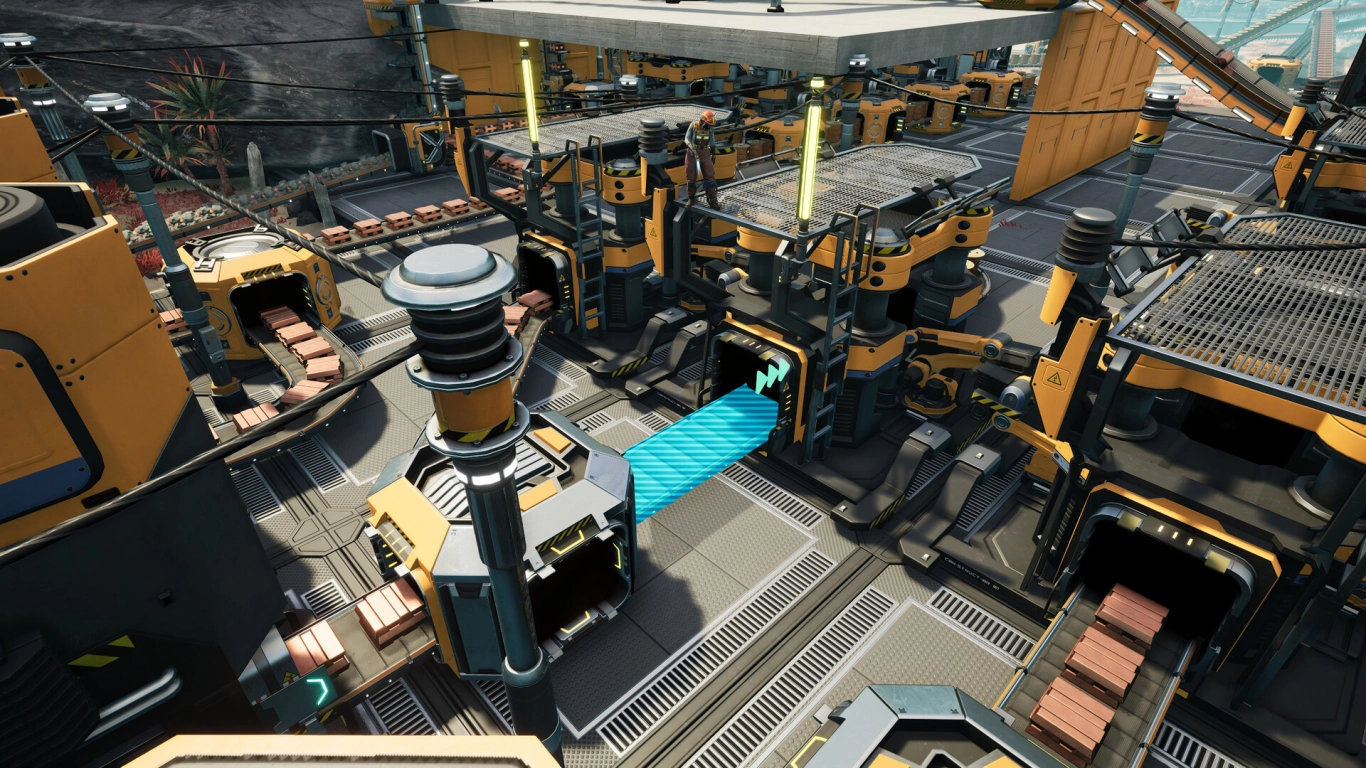
Choose a site with access to the required base resources and decide between a mega-factory or several specialised plants feeding into a central storage. In both cases, foundations are key:
- Foundations level the ground and give you a grid for precise alignment.
- Align machines, conveyor belts and power neatly to the grid; this makes later expansions easier.
- Use walls, wall power outlets, and ceiling logistics to keep walkways and cable routing tidy.
- With Blueprints you can standardise recurring modules (e.g., smelting blocks, constructor lines) and replicate them quickly.
Lay out the footprint first and plan material-flow routes (e.g., main bus vs manifold) before placing machines. That way you avoid later reworks.
3. Power supply calculations: biomass to fuel
Your power supply must keep pace with factory growth. Early on, Biomass Burners suffice; later you’ll roughly follow this path: Coal → Fuel/Turbo Fuel → Nuclear (optional). Tips for stable networks:
- Regularly check production, consumption and peak consumption in the Power UI. The graph shows you bottlenecks.
- Build enough Power Poles and distribute Power Switches to split sub-networks or switch them off for testing.
- Use Power Storage to absorb demand spikes.
- Precisely calculate water and fuel inputs (pumps, refineries) for Coal and Fuel Generators.
- Remember: overclocking increases power demand disproportionately – use it selectively.
- You can send excess production to the AWESOME Sink to earn FICSIT Coupons and relieve storage.
4. Build vertically: multi-storey factories and tidy logistics
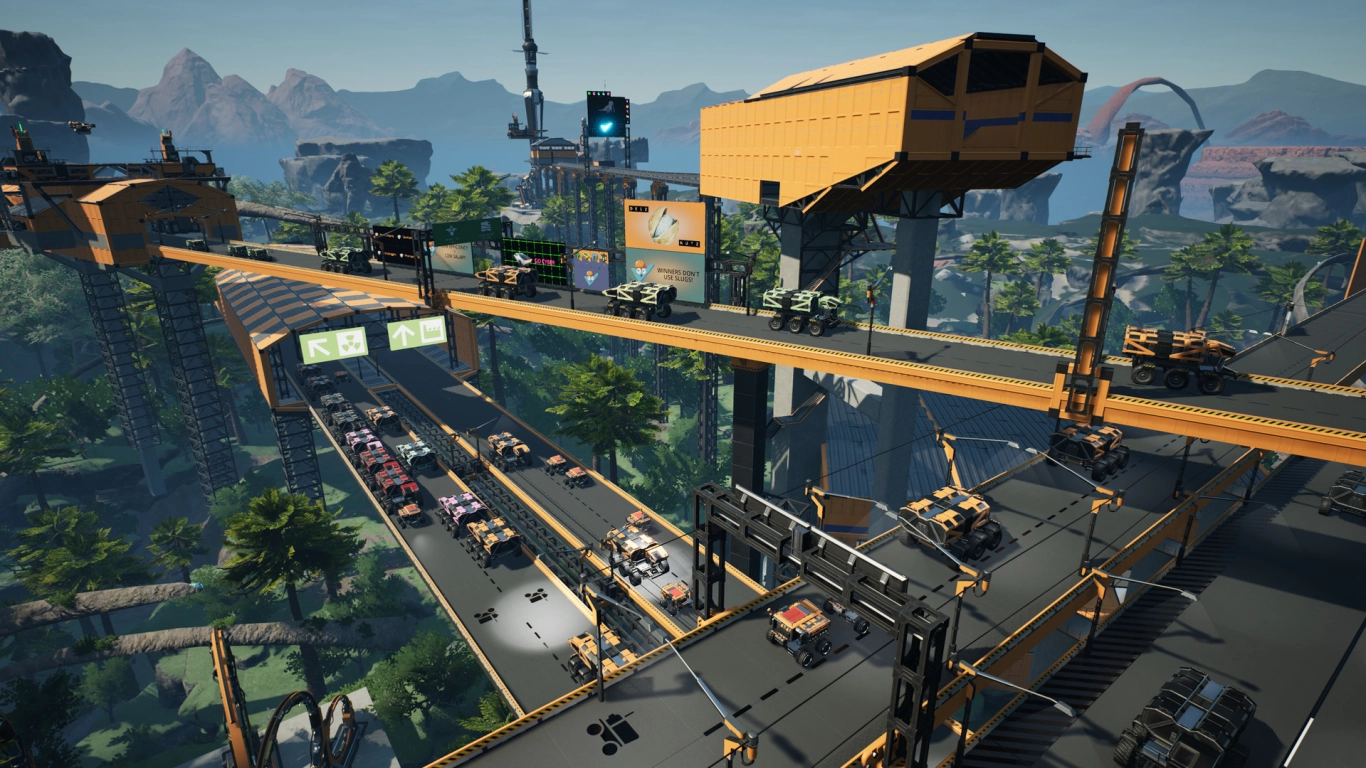
If space is tight, build vertically. Stacking production lines creates clear separation and better maintainability:
- Use conveyor lifts, Hypertubes and Walkways for vertical transport and quick routes.
- Separate floors logically (e.g., raw materials below, processing in the middle, finished goods on top).
- With the Jetpack (Tier 5) you can manage tall builds even more comfortably.
Vertical factories don’t just look great; they also keep material flow and power routing tidy.
5. Maintenance access and accessibility: safety and clarity
A common beginner mistake: missing maintenance access. Plan space for gaps from the start so you can reach everything:
- Leave corridors around machines; use Catwalks, Ladders and Railings for safe inspections.
- Route power cables and pipes neatly – ideally along walls or under ceilings.
- Use signage and colour-coding to identify lines and resources quickly.
This lets you intervene quickly when issues arise and keep process quality in view.
6. Use external planning tools and Blueprints
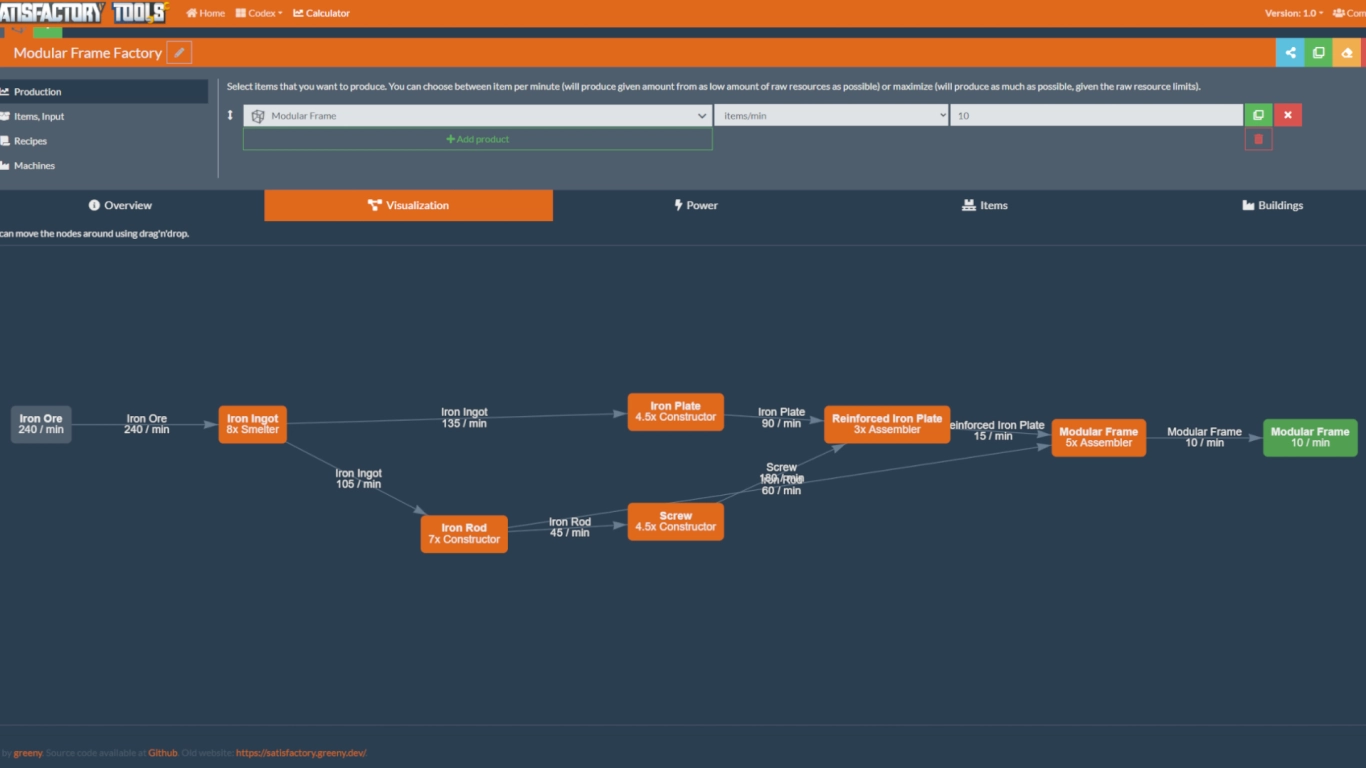
There are excellent community tools that save you a lot of calculation work and simplify route planning:
- Satisfactory Calculator: Detailed production chain planning and an interactive map with resource nodes – ideal for site selection and rates.
- Satisfactory Tools: Alternative calculators and visualisations, perfect for fine-tuning.
- Official Satisfactory Wiki: Up-to-date game information, recipes, alternate recipes and mechanics.
- Excel/spreadsheets: Your own tables for rate calculations and material balances.
- Pen and paper: Sketch layouts and material flows quickly and easily.
Combine tools with Blueprints to reproduce optimised modules quickly.
7. Design vs efficiency: find your factory philosophy
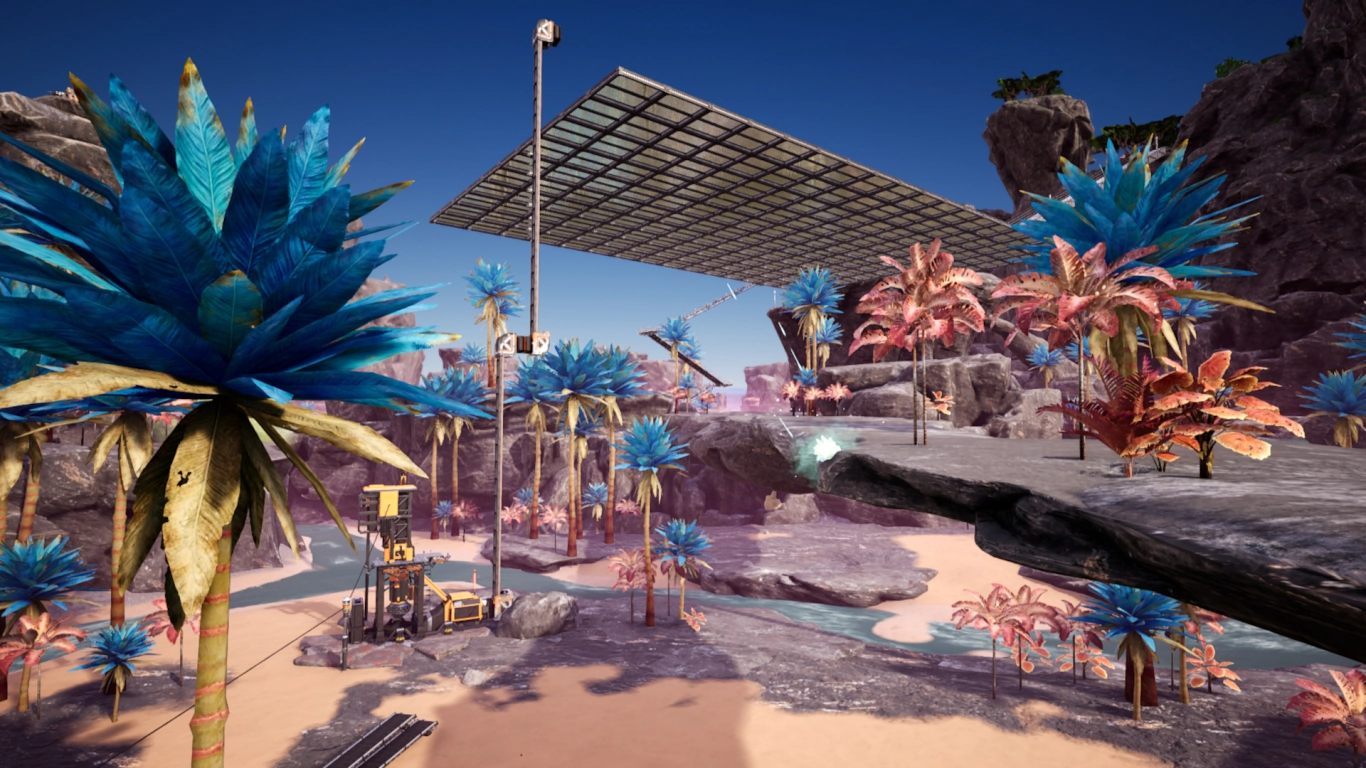
In the end, what matters is having fun – there’s no right or wrong. Some want to maximise every resource and optimise for efficiency. Others prefer compact, aesthetic lines with plenty of detail.
What’s important is that you reach your goal and keep unlocking Milestones. Good planning helps you combine both: beautiful and high-performance factories.
Conclusion: plan your dream factory
“Satisfactory” has “satisfaction” in the name, but getting there takes clear goals, well-thought-out production chains, careful space and power planning, and smart logistics. Plan ahead, standardise with Blueprints, and use tools to avoid frustration. That way you’ll build your personal dream factory step by step.
And if you rent one of our servers for Satisfactory, you can play together with others. You can then plan and interlink different production lines as a team to achieve the best result.
More interesting articles
Satisfactory Tier 3 Guide: Coal Power, Truck Transport and Steel Production
Satisfactory AWESOME Sink & Shop: How to farm coupons quickly
Satisfactory: Decor, lighting and building techniques for a beautiful factory
Organise your Satisfactory storage: containers, depot & pro tips
Satisfactory guide: best starting area for beginners and veterans