Finishing Milestones 5 and 6 opens up plenty of new ways to expand your factories and craft advanced components. From here on, difficulty ramps up fast, and you’ll need to focus on how to connect your production lines, power them reliably, and transport all materials to where you need them. To keep everything under control and prepare for the next stages, you first have to take care of another Space Elevator phase. This ensures you’re ready for the next step in Satisfactory. We’ll show you how to do it and then unlock Tiers 7 and 8.
Prepare Satisfactory Space Elevator Phase 3: Power, Trains, and Oil
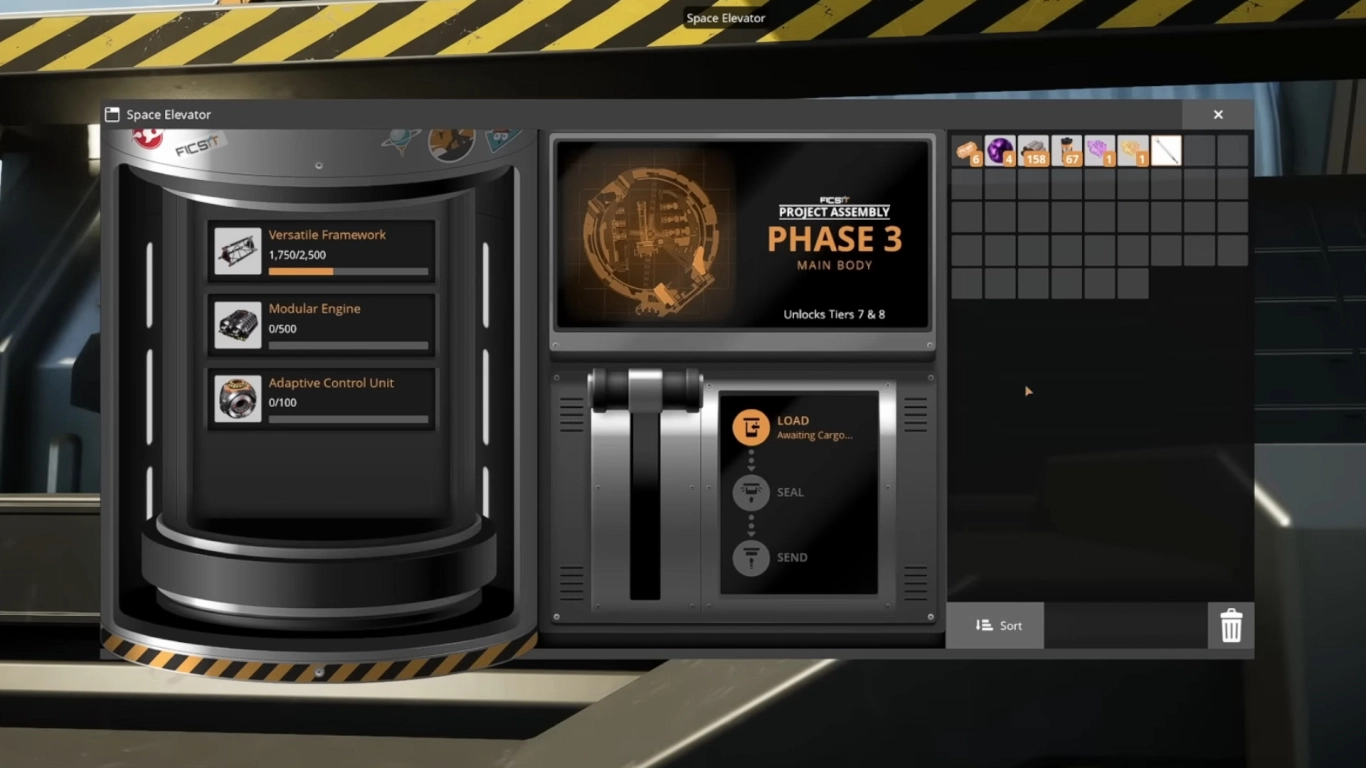
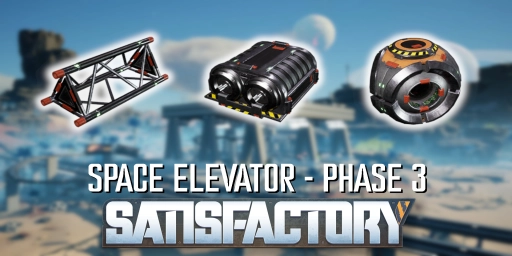
At first glance, Phase 3 doesn’t look too complex because you already crafted one of the components for Phase 2. The other two, however, are far more involved and require large factories you’ll need to build first.
For Phase 3 you need:
- 2500x Versatile Framework
- 500x Modular Engines
- 100x Adaptive Control Units
Because you’ll need key resources and a lot of power, those are the two areas you should scale up. We recommend getting into Trains to bring materials from distant locations to your factory (Satisfactory Trains Guide: Freight Cars, Signals & Train Stations) . You don’t have to use them, but they can save you tons of running back and forth.
You’ll also need plenty of Power for all components. Use Fuel produced from Oil. If you’ve unlocked some alternate recipes, set up a loop with Heavy Oil Residue, Plastic, and Rubber to produce up to 300% more Fuel (Satisfactory: The 10 Best Alternate Recipes for Efficient Factories) .
Versatile Framework production for Space Elevator Phase 3
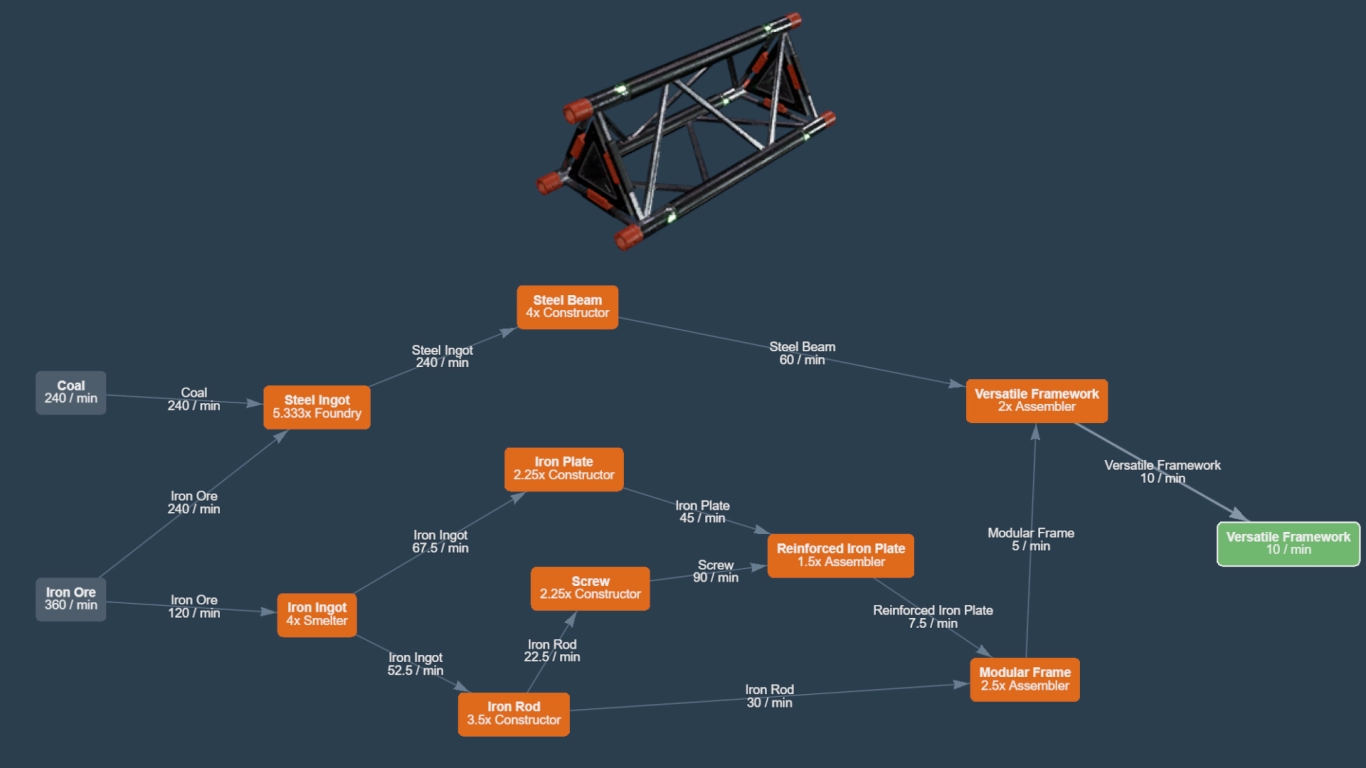
What was the most time-consuming part in Phase 2 is now probably the least exciting part of this phase. You should already have a production line for Versatile Framework, so there isn’t much more to add here. If you want more details, check our guide (Satisfactory Guide: Successfully Complete Space Elevator Phase 2) . In the end, you just need to patiently wait for the 2500 units.
We can recommend a few alternate recipes to simplify your production. The best combo is using Cast Screw and Bolted Iron Plate to make Bolted Frame. This lets you craft Modular Frames—one of the base parts for Versatile Framework—more easily and efficiently. You can leave Steel Beams as they are; alternate recipes aren’t really worth it here.
Crafting Modular Engines for Phase 3: Motors, Rubber, and Smart Plating
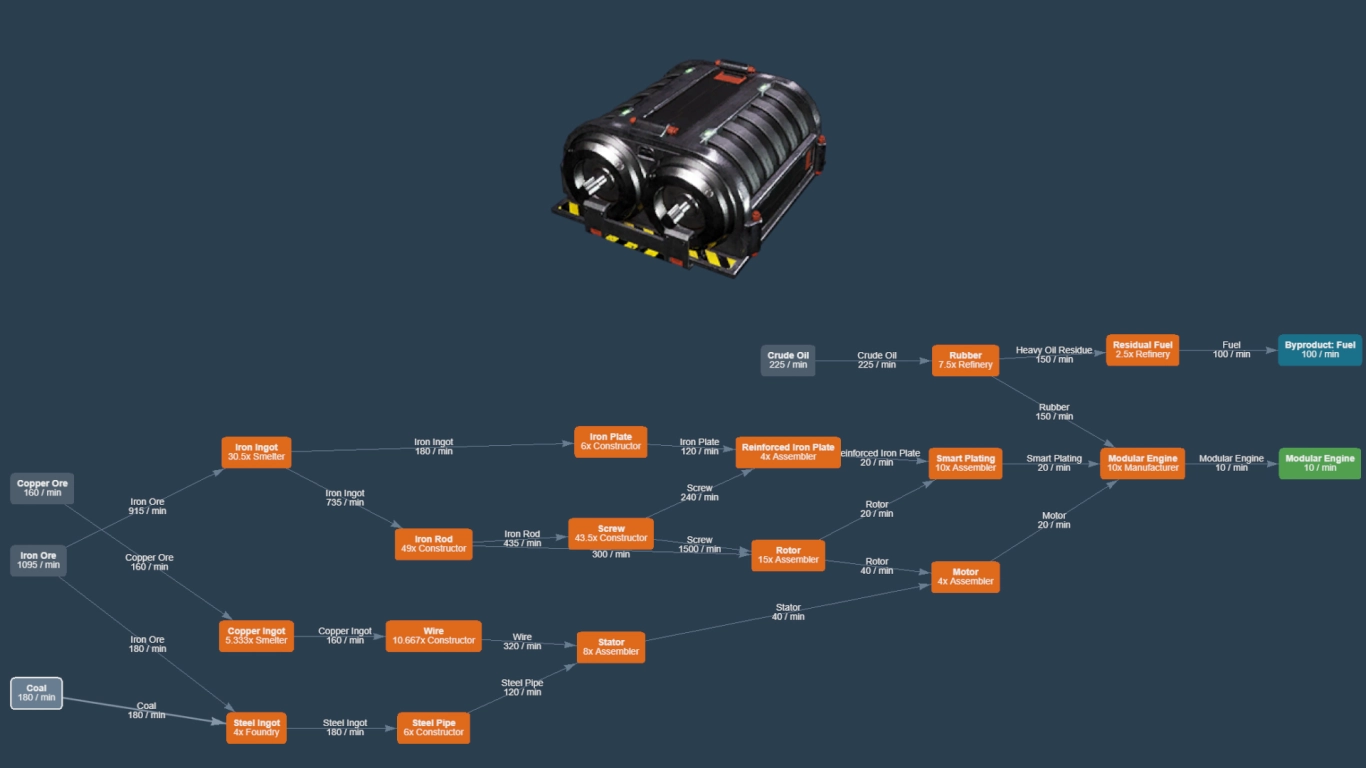
Things get much more complex with the Modular Engine, which is made from three parts. You’ll need more space and more power, but in total you only have to craft 500 of them. First, let’s look at production without alternate recipes.
- Motors: Motors are built from Rotors and Stators, which in turn start from Iron Ore, Copper Ore, and Coal. Many of the intermediate steps should be familiar and not too difficult—they just take up more space.
- Rubber: Even though it requires a fourth input—Crude Oil—Rubber is probably the easiest part of the Modular Engine chain. You can also turn the leftover Heavy Oil Residue into Fuel.
- Smart Plating: You’ll need Rotors again for Smart Plating, a Phase 2 Space Elevator component. This should be straightforward since you already need Rotors for Motors. The other ingredient is Reinforced Iron Plate, which is simple to produce.
Handy tip: many of these three chains overlap and feed into each other. This lets you produce all parts more efficiently and tie them together in a larger factory. If you break everything down into smaller steps, it won’t feel nearly as daunting.
Craft Adaptive Control Units: Computers, Wiring, and Heavy Modular Frames
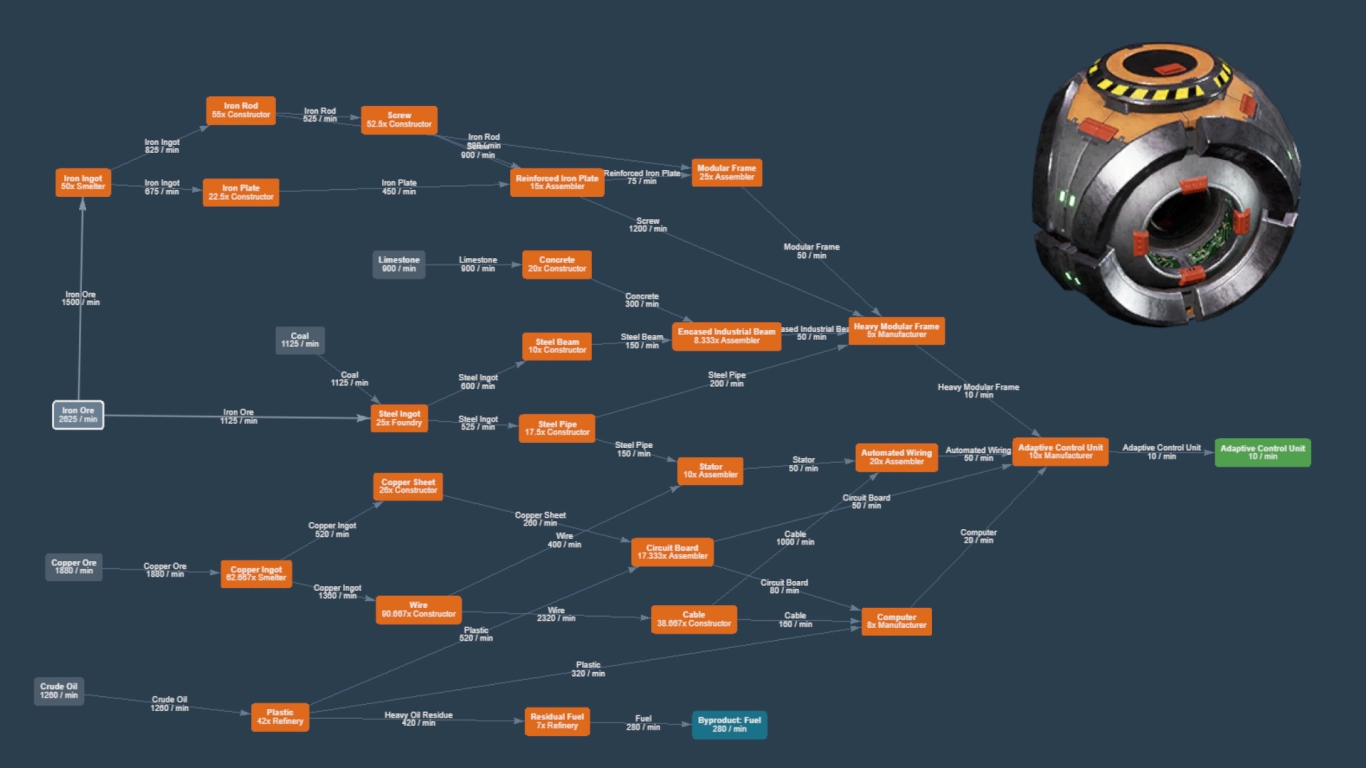
This unassuming item is actually the most involved part of the third Space Elevator phase. You need to craft four different components and assemble the Adaptive Control Unit in a Manufacturer. Again, break it into sub-steps so it feels less intimidating. Like with Modular Engines, there are overlaps that make a large, centralized factory viable. You only need 100 units, which is very manageable.
- Automated Wiring: You should know this one from Phase 2, so it’s mostly set. Start with Copper and Steel, then produce Cable and Stators.
- Circuit Board: A fairly simple part of the Adaptive Control Unit. You need Plastic and Copper Sheet to make Circuit Boards—both should be easy to mass-produce. As with Rubber earlier, Plastic production gives you access to Fuel through Heavy Oil Residue.
- Computer: Surprisingly straightforward, since Circuit Boards already cover one input. Cable comes from Copper, and Plastic is already part of your Circuit Board line.
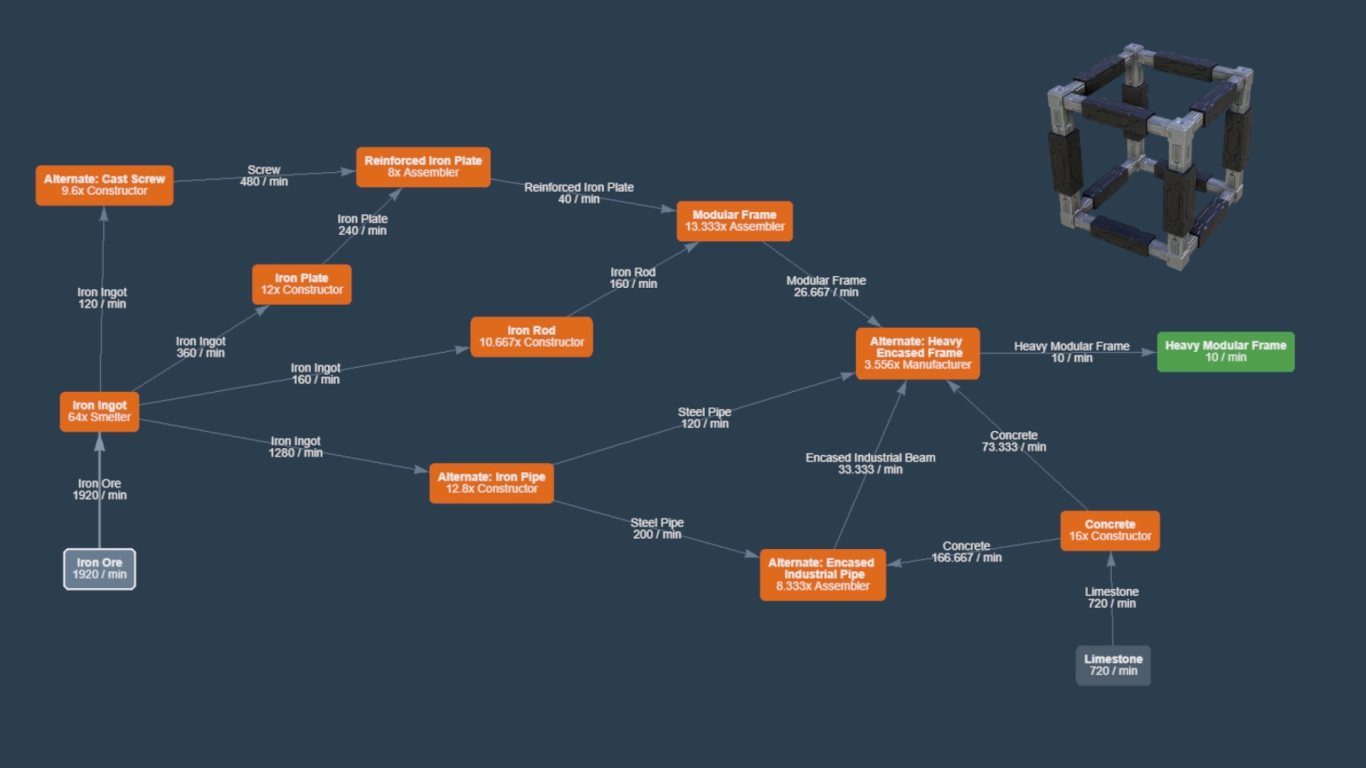
Heavy Modular Frames are definitely the most demanding part of the ACUs. Many steps come together here that have little to no overlap with the other three components. It can be worth producing the frames separately and then transporting them.
We recommend mixing several alternate recipes to make this easier:
- Cast Screw
- Encased Industrial Pipe
- Heavy Encased Frame
- Iron Rods
Conclusion: Unlock Satisfactory Tiers 7 and 8 with efficient factories
Space Elevator Phase 3 can look very hard and complex at first. But if you split the parts into their separate components, you’ll quickly see that most production lines are quite simple. You likely already have many of them running or can scale them up easily. This is also where many alternate recipes shine and streamline certain steps. In the end, it’s up to your factory which of these recipes are worth using.
Get ready for completing the third Space Elevator phase with one of our servers or team up with your friends in the world of Satisfactory. Playing together is far more fun, and everyone can focus on a different part of the phase.
More interesting articles
Satisfactory Tier 7 Guide: Aluminum, Hover Pack, Sulfur
Satisfactory Tier 6 Guide: Trains, Computers, Monorail, and Pipeline Mk. 2
Satisfactory Space Elevator Phase 4 Guide: Unlock Tier 9
Satisfactory Map: Best Locations for Every Resource
Satisfactory Trains Guide: Freight Cars, Signals & Train Stations