By Tier 3 you’ll start extracting water and oil and have your first hands-on experience with Satisfactory’s fluid system. And it can get pretty complex, because several mechanics come together that you probably haven’t had to think about before. Managing fluids—and later gases—is essential for crafting many late-game items and getting the most out of the game. Look to the real world as your model: aspects like gravity affect how your pipes work. Even then, not everything will be obvious, so let’s take a closer look at transporting fluids and gases.
Satisfactory fluids and gases: overview and uses
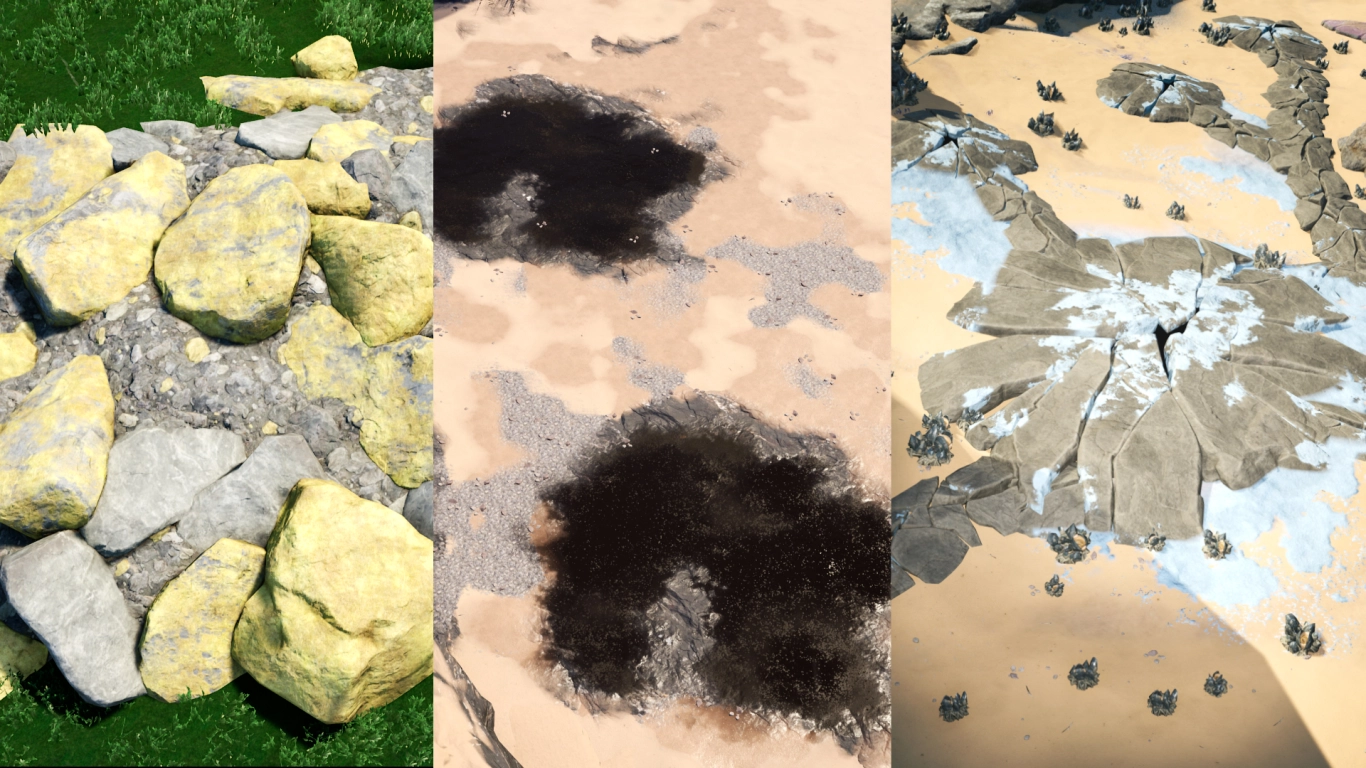
In your first hours you only deal with solid items and conveyor belts, but with Tier 3 you unlock pipes and your first fluids. This opens up many new possibilities, especially when it comes to fuel production.
Subsequent milestones expand this part of the game, which means you’ll juggle more fluids at once. First, here’s which fluids await you and how to extract or produce them. You’ll also see what you actually need each resource for.
Tier 3:
- Water (extract with the Water Extractor) is essential for producing many resources.
Tier 5:
- Crude Oil (extract with the Oil Extractor) is used for Fuel, Rubber, and Plastic.
- Heavy Oil Residue (produce in the Refinery) is a by-product and can be turned into Fuel.
- Fuel (produce in the Refinery) is a fuel type.
- Turbofuel (produce in the Refinery) is a fuel type.
- Liquid Biofuel (produce in the Refinery) is a fuel type.
Tier 7:
- Alumina Solution (produce in the Refinery) is used to make Aluminum and Batteries.
- Sulfuric Acid (produce in the Refinery) is important for nuclear power.
Tier 8:
- Dissolved Silica (produce in the Refinery) is required exclusively for alternate recipes.
- Nitric Acid (produce in the Blender) is used for Fuel and Uranium.
Gases arrive later and are especially important in the late game. They include highly effective fuels and resources for Tier 9 recipes.
Tier 8:
- Nitrogen Gas (extract with the Resource Well Extractor) is needed for some later aluminum parts.
- Rocket Fuel (produce in the Blender) is a fuel type.
Tier 9:
- Ionized Fuel (produce in the Refinery) is a fuel type.
- Excited Photonic Matter (produce in the Converter) is used by the Quantum Encoder.
- Dark Matter Residue (produce in the Converter or Quantum Encoder) is important for Ficsonium.
Satisfactory pipes and pumps: transporting fluids and gases
Now you know what fluids and gases exist. But how do you move them from point A to B and process them? Unlike regular resources, you must use pipes, which can carry both product types.
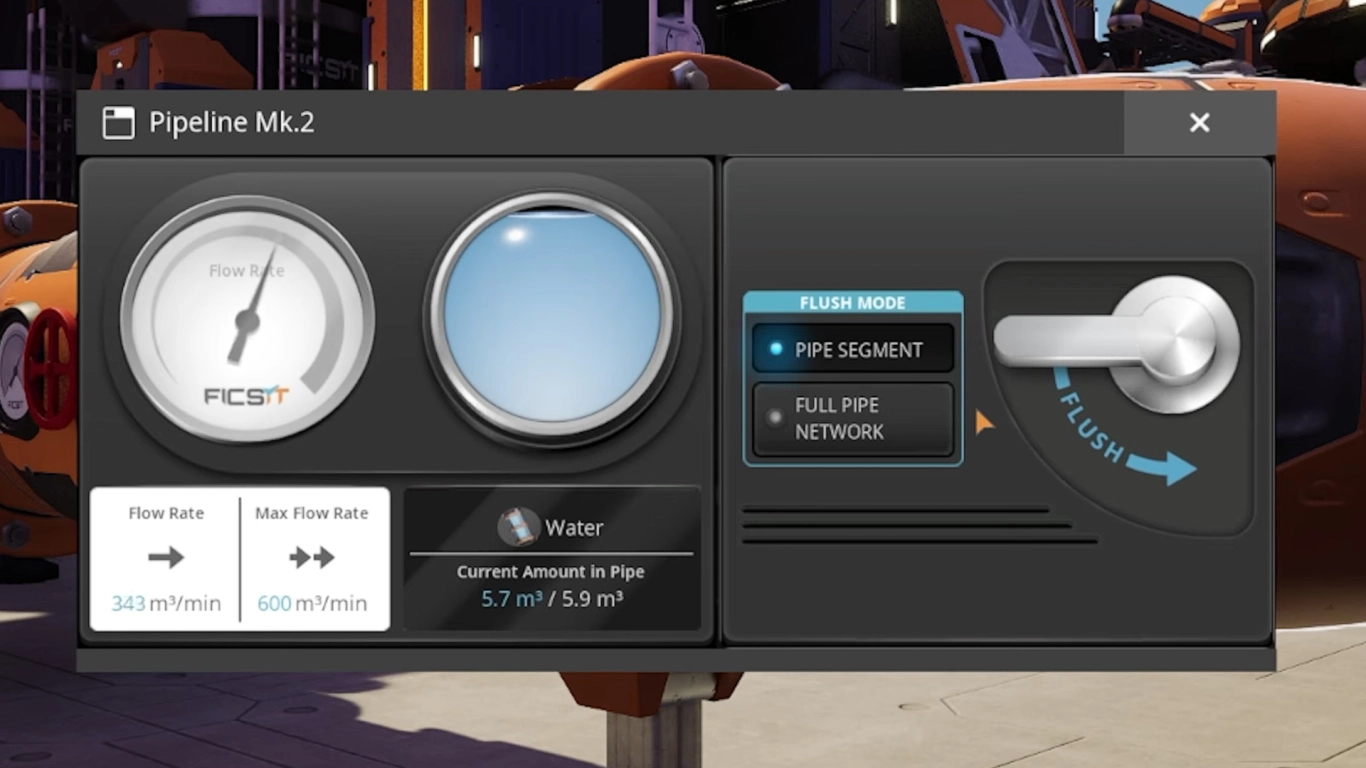
You unlock Mk. 1 Pipes with Tier 3 and Water extraction. From then on you can lay them and start moving product. They handle 300 m³ per minute and will carry you until Tier 6, where you unlock Mk. 2 Pipes. Those have double the throughput. In the AWESOME Shop you can also unlock cosmetic pipes that are solid-colored. We recommend color-coding your pipes to match the fluid so you can tell them apart. When you select a pipe, you can see its flow rate and utilization.
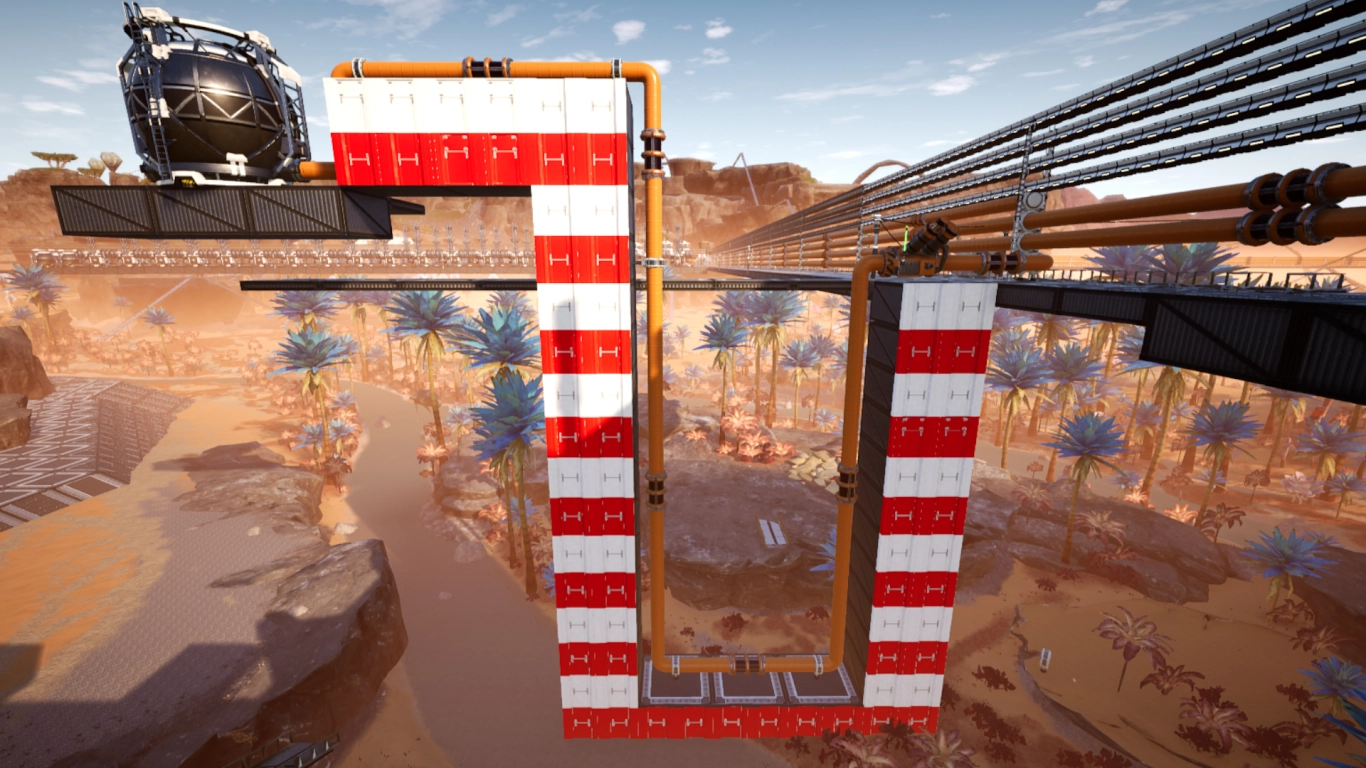
In general, fluids in Satisfactory are affected by gravity, while gases are not. Fluids cannot move uphill unaided and will prefer to flow downhill. Fluids also flow with limited pressure and prefer empty pipe segments.
Standard pipes and buildings with a fluid output can push fluids up about 10 meters before the pressure runs out. To move fluids higher, you need to install a Pump. The Mk. 1 Pump adds 20 meters of head lift, the Mk. 2 Pump adds 50 meters. Pumps do not make fluids flow faster. They are only for pressure/head lift.
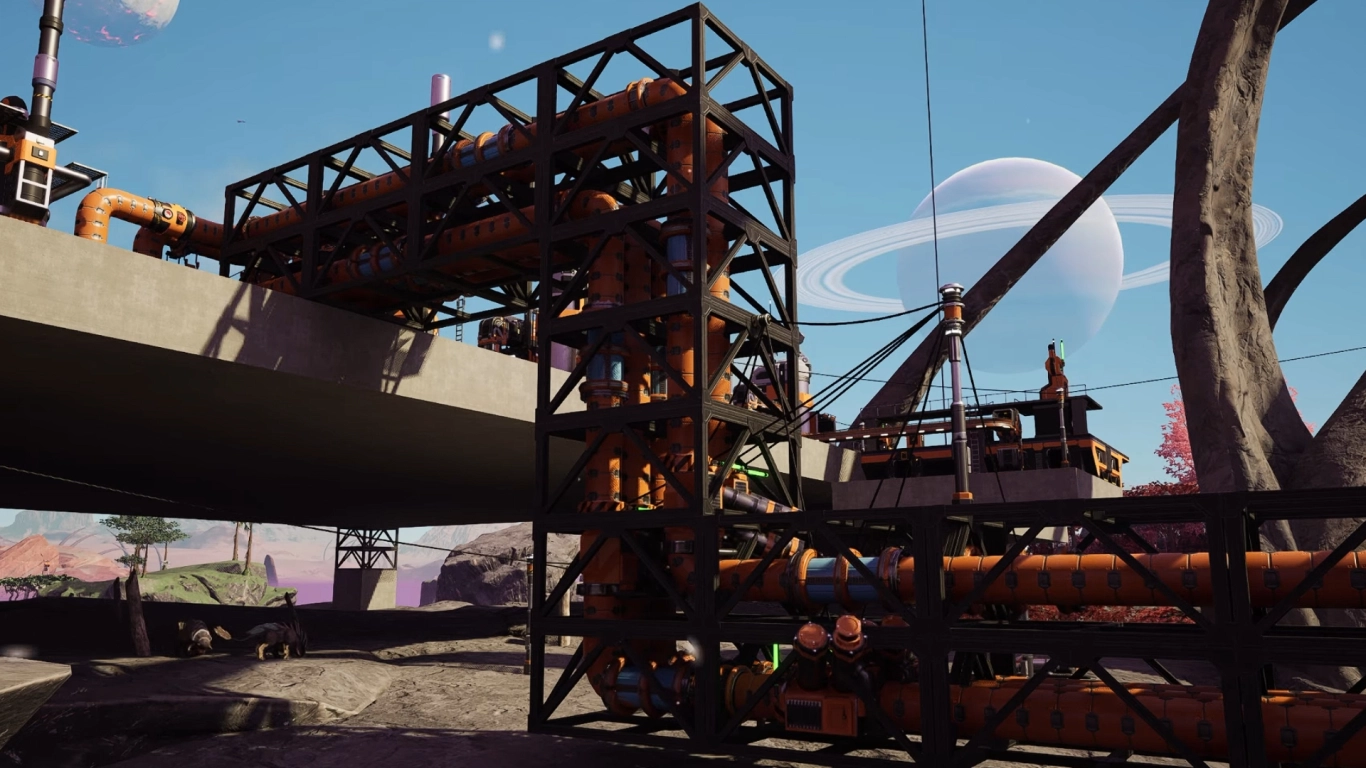
You can let gravity do the work. When fluids flow straight downhill, they build momentum and can later be pushed higher. How this behaves depends heavily on your layout. Often the best solution is to experiment and test how far the fluid actually flows. When in doubt, add one more pump to ensure full throughput.
Packaging fluids and gases: moving them by conveyor
With a few exceptions, you can package almost all fluids and gases and move them via conveyor belts. This is a good alternative if you produce enough Canisters or Tanks to feed the Packager. You unlock it at Tier 5 and can use it right away for oil production. The advantage is you don’t have to deal with pipes. You can also move packaged fluids by trains or drones and even sink them in the AWESOME Sink.
Buffers and valves: using tanks effectively
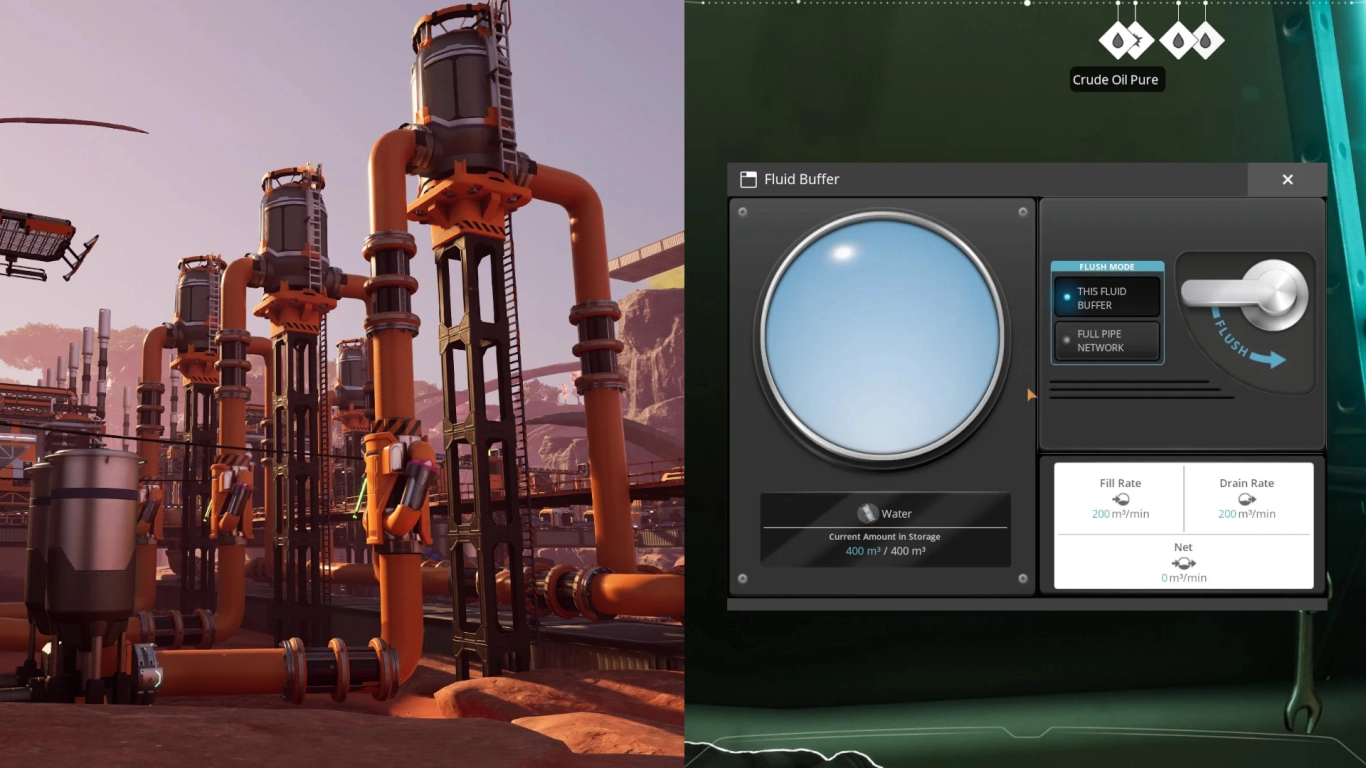
Just like regular items, you can buffer fluids so you never run out. There are small and large tanks holding 400 m³ and 2400 m³ respectively. Buffers are perfect for avoiding or reducing pipe oscillation/backflow. This happens because buildings don’t consume fluids constantly, which can create backflow. Fluids always move to where there’s space. Tanks can mitigate this.
Another solution is Valves, which you install on pipes. They limit flow rate and can help prevent back-and-forth sloshing. However, they don’t always behave exactly as you might hope. Again: try different approaches to move your fluids efficiently.
Conclusion: manage fluids and gases effectively
Transporting fluids and gases is its own science in Satisfactory. The basics are easy to grasp, but gravity, pressure, and oscillation can cause complications. We recommend testing different setups—you won’t lose resources doing so. If you don’t want to deal with pipes, pumps, or gravity, you can package fluids and gases and move them via conveyors.
If you want to dive deeper into fluids in Satisfactory, rent one of our servers for the game and experiment to your heart’s content. Once you understand the system, you can share these tips with your friends.
More interesting articles
Satisfactory Tier 8 Guide: Nuclear Power, Drones, and Mk.3 Miners
Satisfactory Tier 5 Guide: Oil, Plastic, Rubber, and Fuel
Satisfactory Tier 6 Guide: Trains, Computers, Monorail, and Pipeline Mk. 2
Satisfactory Trains Guide: Freight Cars, Signals & Train Stations