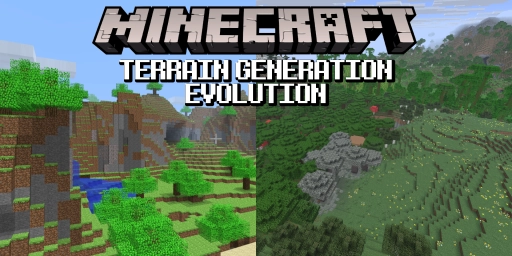
The worlds you can generate in Minecraft today look completely different from those a few years ago—let alone back in the early Alpha or Beta days. World creation based on a seed works very differently now and has taken many forms over the years, from the limited but highly creative Indev worlds to the towering mountain ranges of the Caves & Cliffs update. Let’s take a closer look! If you’re searching for great mods that affect this part of Minecraft, we’ve already put together a list for you (Minecraft World Generation: The Best Mods and Datapacks) . For example, the Modern Beta mod lets you re-experience many of these variants!
Indev: Limited Minecraft worlds and customizable island generators
- Versions: Indev
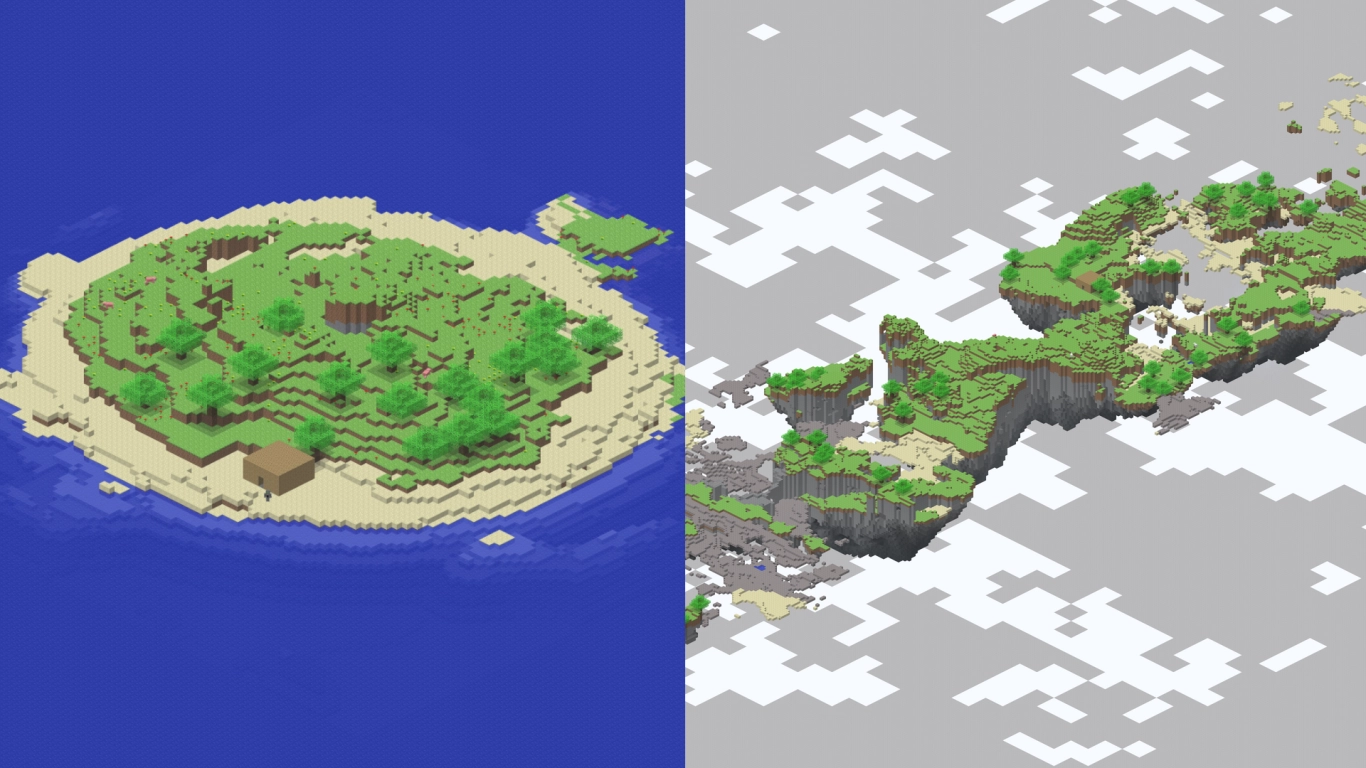
Minecraft did not start with infinite worlds—you began on a lonely island with nothing but the ocean around you. But those were just the default settings; there were also additional parameters you could define.
You could adjust the size and shape of the island, or even turn it into a chain of floating islands. These could be distributed vertically as well as horizontally, leading to some very cool designs. You could also choose between four themes: normal, hell, paradise, and woods. So the customization options for your small island were quite extensive!
Infdev: The first infinite Minecraft worlds and quirky structures
- Versions: Infdev
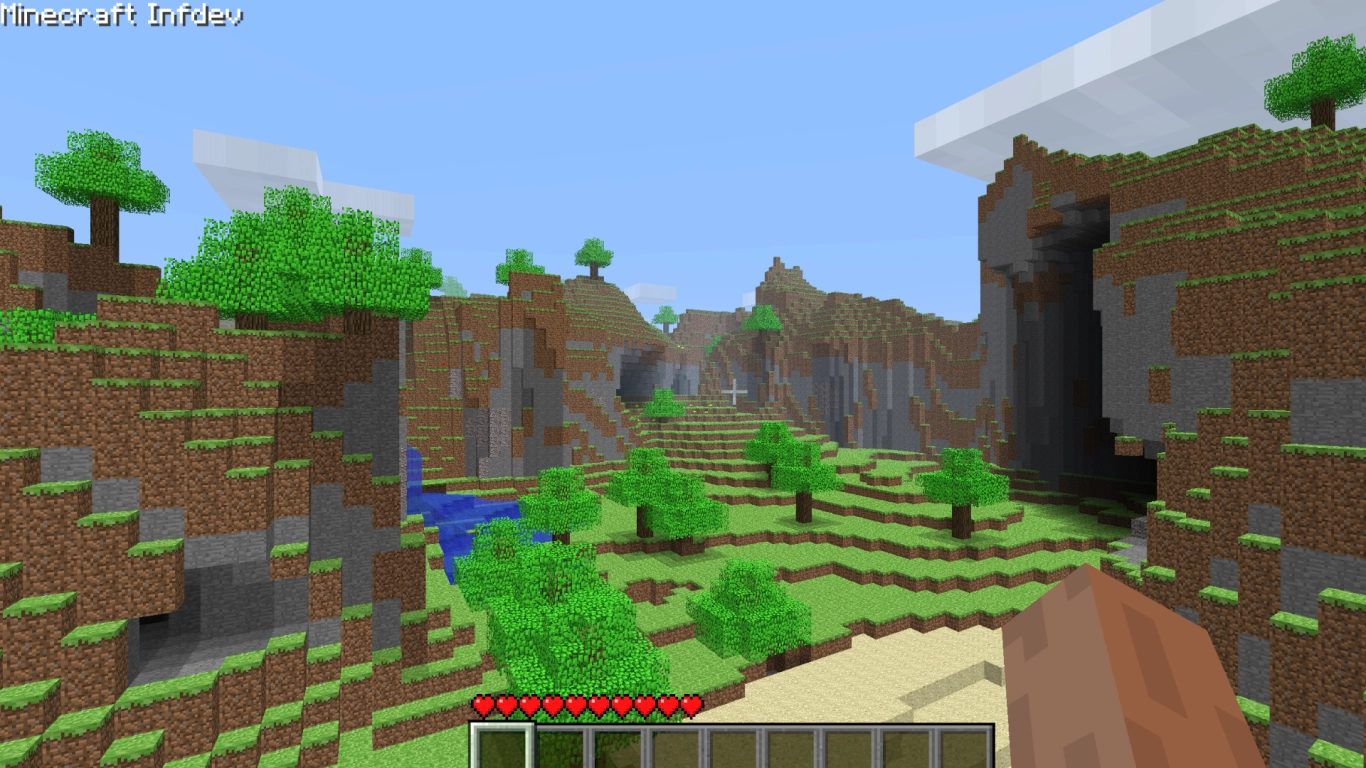
There were actually several variations of generation during this phase. Early on it was sparse and disjointed; later, the terrain began to resemble what we know from Alpha. In between, there were even massive cliffs and little more than giant trees. This period is also known for odd structures, such as obsidian walls and the giant brick pyramid. Maybe you can find them yourself!
Alpha: Neon-green grass and early terrain generation
- Versions: Alpha 1.0 to Alpha 1.1
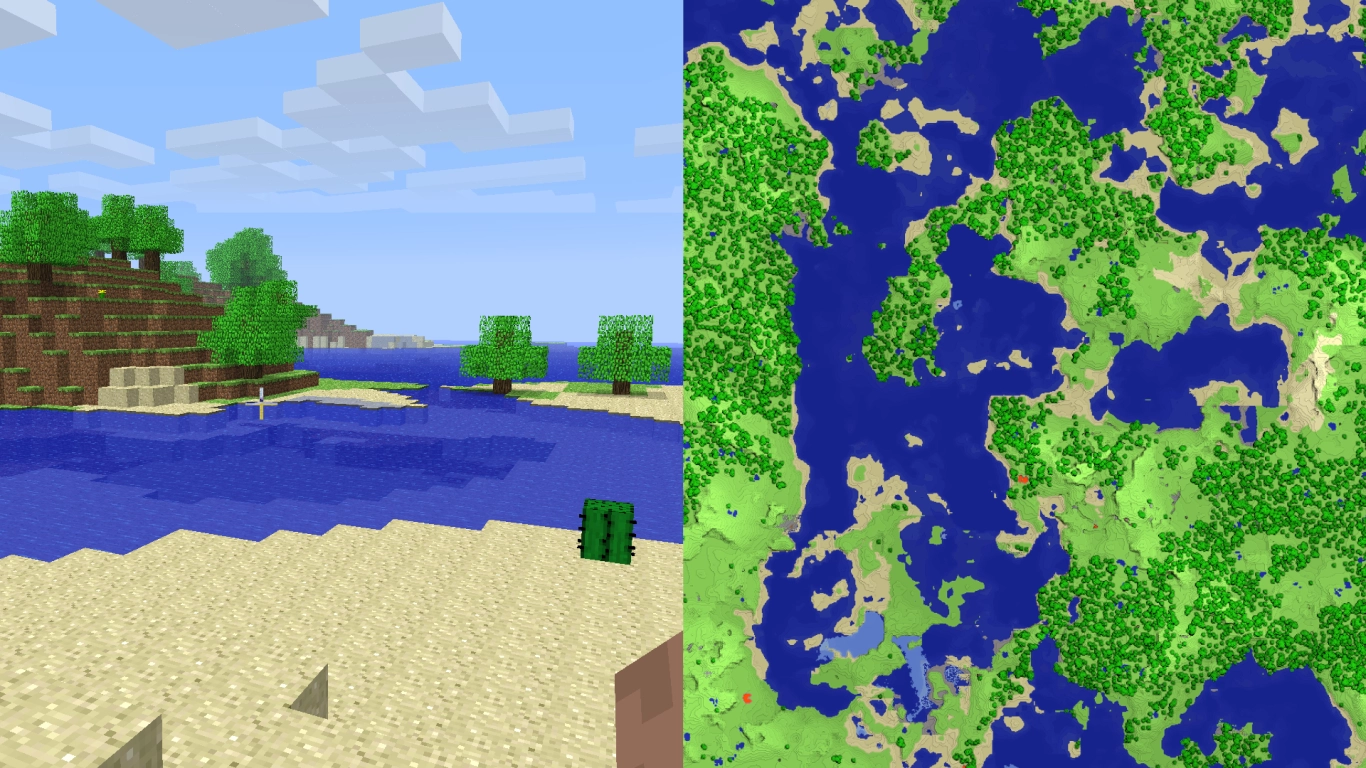
Next came the Alpha generation, most notable for its neon-green grass. The terrain didn’t have biomes yet and largely consisted of forests, open plains, and oddly shaped mountains. There was no tall grass yet, but you could find both red and yellow flowers. Cacti and sugar cane were also added. You had many open areas to build on and the familiar snake-like caves that led deep underground. Additionally, there was a 1-in-4 chance that a world would be a complete snow world.
Beta: First biomes in Minecraft and the 2010 Halloween Update
- Versions: Alpha 1.2 to Beta 1.7.3
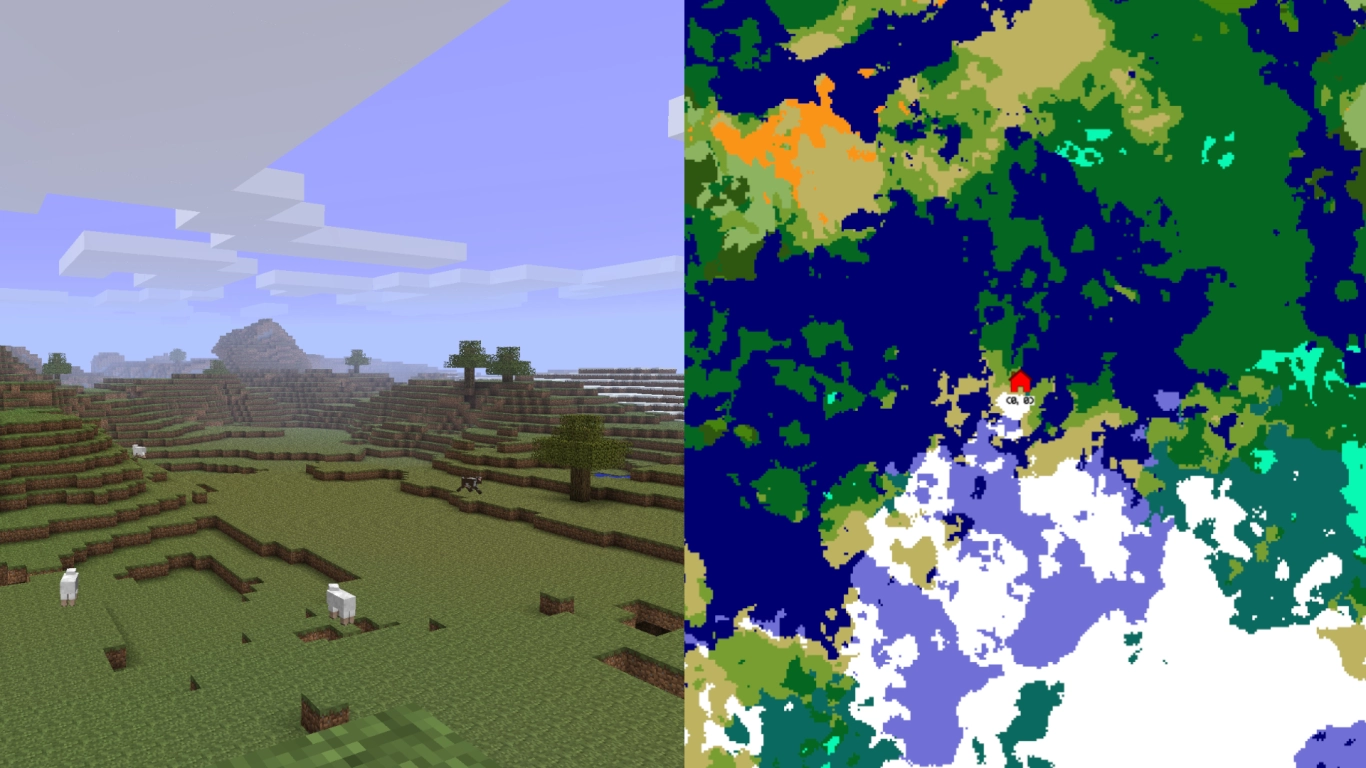
The big Halloween Update 2010 brought a major terrain overhaul. Biomes were introduced for the first time, albeit in a basic form. There were now separate snowy landscapes, swamps, deserts, and rainforests. Particularly striking were the still very rugged mountains, as well as the wide beaches and gravel beds. This update also introduced the Nether.
This period added notable features like birch and spruce trees. Tall grass began growing in mid-Beta and could be grown with bone meal. Lapis Lazuli and sandstone were also added. In addition, the color of grass and leaves now matched their biome, just as it does today.
Release 1.0 to 1.6.4: Vast oceans, new structures, and ravines
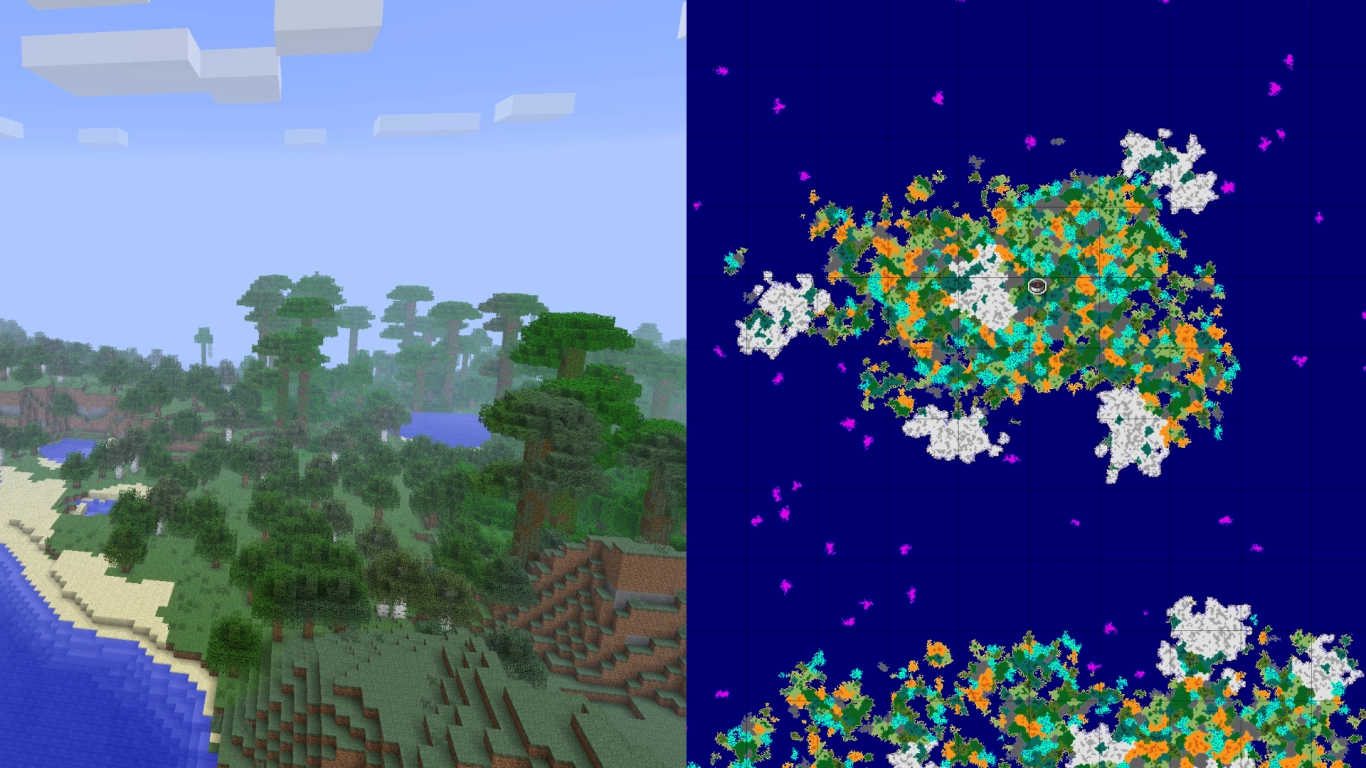
- Versions: Beta 1.8 to Release 1.6.4
With Minecraft’s full release at the end of 2011 came a new terrain generation system. It actually began in the late Beta and kept being adjusted. This brought lots of new features: ravines and mineshafts, as well as early structures like villages, desert temples, and later jungle temples. Biomes were also revamped to be more diverse and varied.
But the most defining characteristic of these worlds was their endlessly large oceans, sometimes stretching thousands of blocks. This created separate continents—a neat idea, though not everyone loved it.
Release 1.7 to 1.17: The Update that Changed the World with new biomes
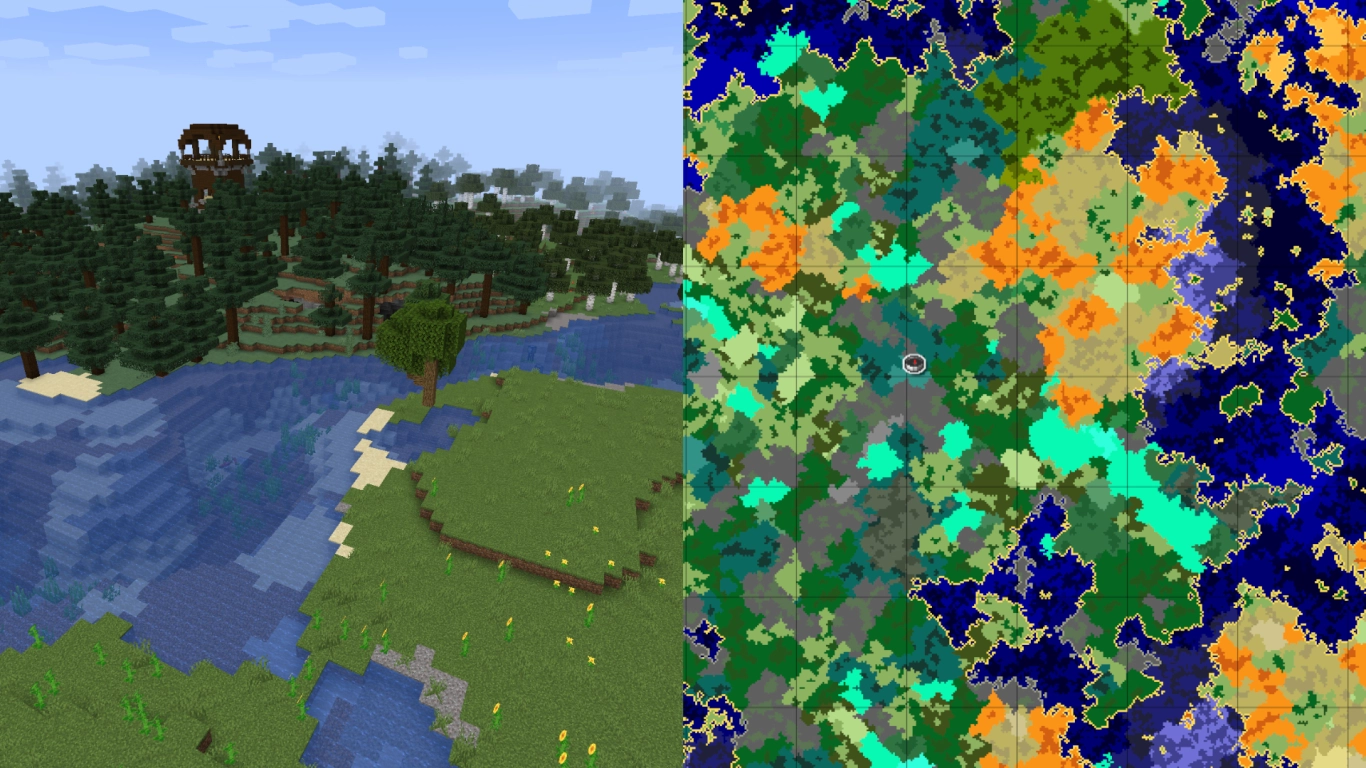
- Versions: Release 1.7 to Release 1.17
The Update that Changed the World lived up to its name: in late 2013, terrain saw another major overhaul. Many new biomes were added, including Badlands, Dark Forests, and Mega Taiga. Lots of flowers and other natural blocks were introduced as well. The huge oceans were gone, much to many players’ delight.
This generation lasted until 2021, making it the longest-running terrain variation. It was refined up to version 1.17. New structures appeared, such as Pillager Outposts, Woodland Mansions, and ocean monuments. The oceans themselves were fully overhauled in 1.13, but the overall world layout remained the same. With version 1.16, the Nether was overhauled for the first time since its Alpha 1.2 introduction.
Release 1.18 to present: Caves & Cliffs with high mountains and deep caves
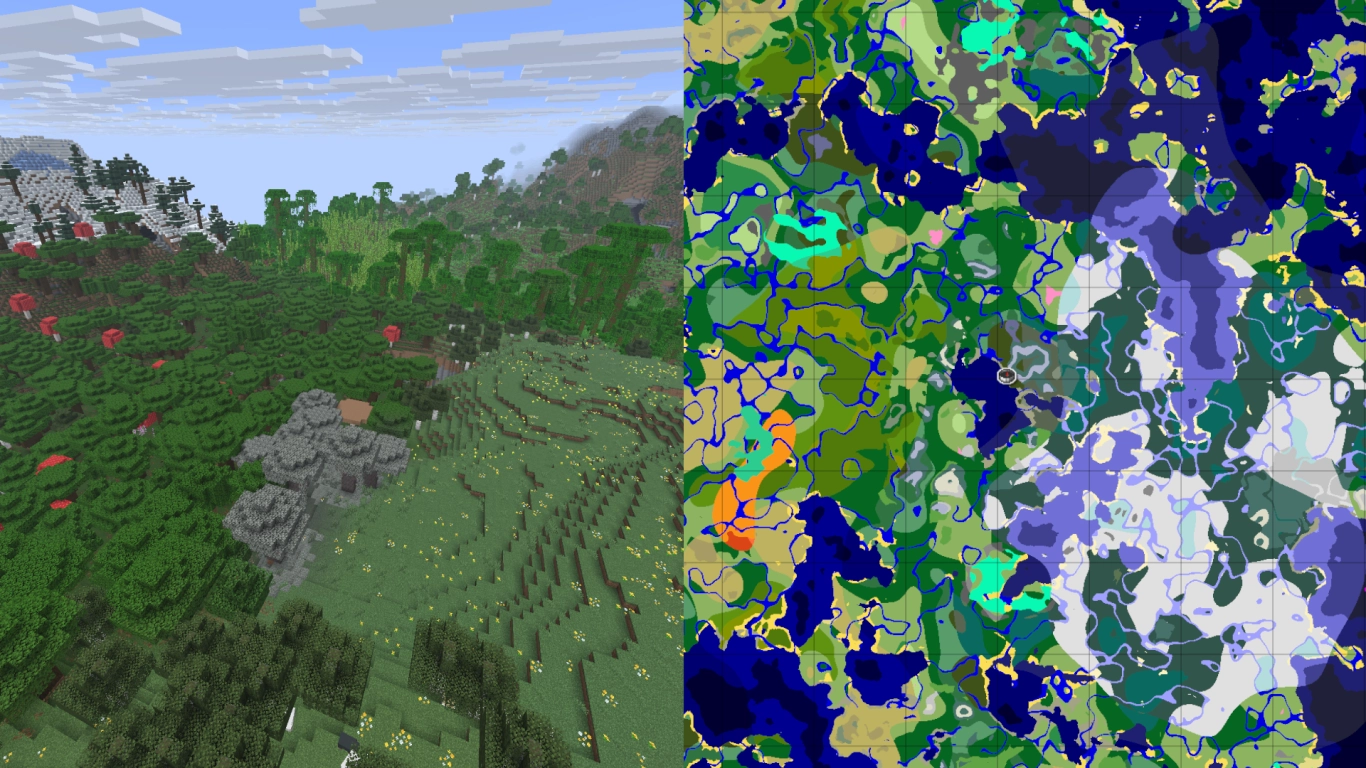
- Versions: Release 1.18 to present
After eight years, version 1.18 finally brought a new world generation. The world’s depth and height increased, and nearly every terrain feature was reworked. There are now vast caves with distinct biomes, towering snow-capped peaks, and varied landscapes with over 50 different biomes. Since then, there have been smaller additions like cherry groves, pale oak forests, and mangrove swamps.
Biomes now follow improved transitions and are no longer placed randomly side by side. Warm areas stay warm and cold areas stay cold, leading to more realism. So far, there’s no sign that terrain will be overhauled again anytime soon.
Conclusion: Overview of the evolution of Minecraft’s world generation
A look at the different versions of Minecraft’s terrain generation shows how the game has evolved over the years. From the neon-green grasslands of Alpha to the realistic biome distribution in the current version—a lot has changed. And thankfully, you can pick the version you like best right from the launcher.
If you want to explore Minecraft’s diverse worlds yourself, rent your own Minecraft server from us for you and your friends. You can choose different versions or play with mods that tailor terrain to your liking.