In Minecraft there’s plenty to discover not only on land but also underwater. After the Update Aquatic 1.13, the oceans were completely overhauled and have been refreshed with every update since. From varied biomes and intriguing ruins to new creatures, the seas are full of unique finds. A dip beneath the waves is absolutely worth it—just bring a Potion of Water Breathing so you don’t run out of air. Here’s what you can find and why an underwater adventure pays off.
Minecraft Ocean Biomes: Temperature, water color, and resources
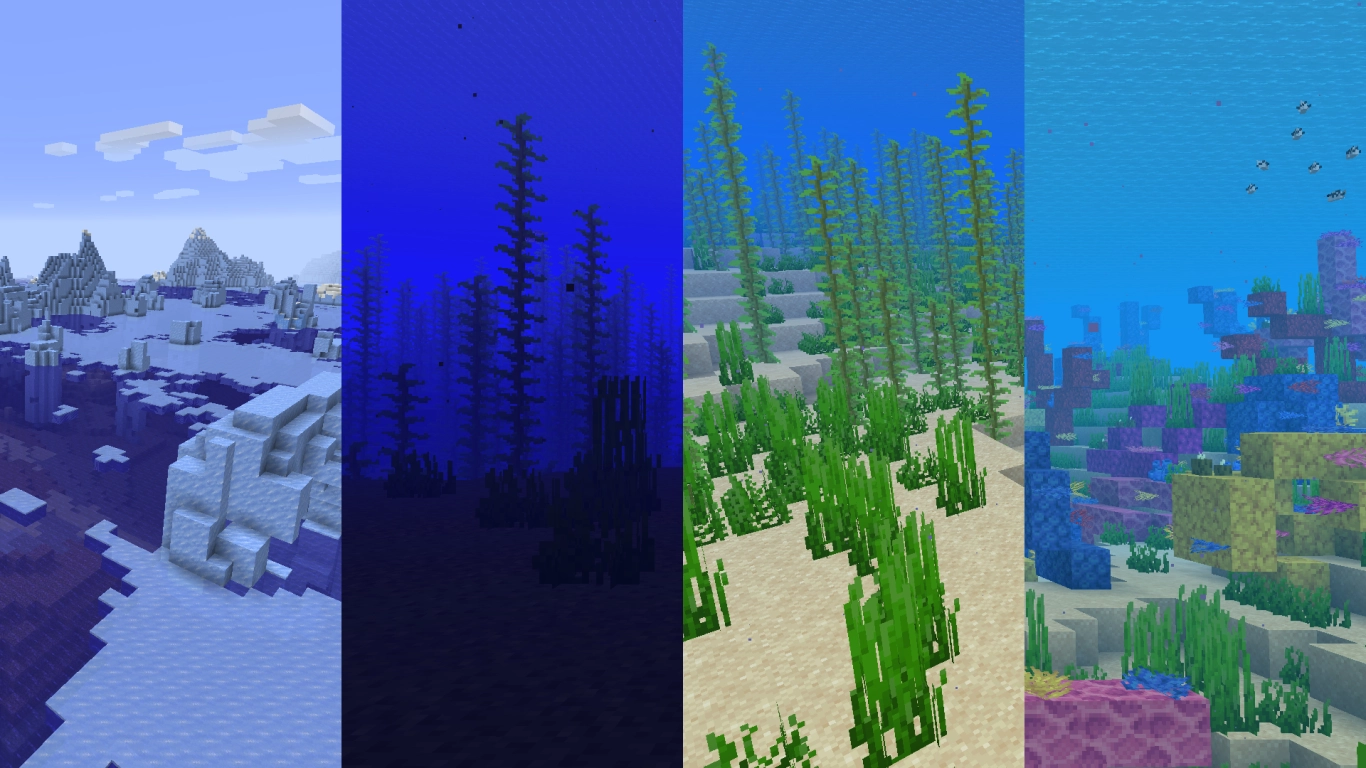
Oceans in Minecraft are divided into different biomes. They primarily differ by temperature, which you won’t feel directly as a player but can clearly see, for example in the water’s color. Certain blocks and plants also only generate in specific biomes.
All Minecraft ocean biomes:
Warm Ocean: One of the most beautiful underwater biomes thanks to its vibrant coral reefs. This is the only place to find these blocks and plants. The seafloor is sand with plenty of seagrass (but no kelp). Pufferfish and tropical fish thrive here. You’ll also find sea pickles.
Lukewarm Ocean: You’ll find sand and also clay, plus some kelp and seagrass. Alongside tropical fish, cod also appears here.
Ocean: The standard ocean is a mix of gravel, sand, clay, and dirt, with tall kelp and seagrass. Tropical fish disappear, but dolphins, squid, and the Nautilus spawn here.
Cold Ocean: The water turns deep blue and the floor is mostly gravel. Some creatures vanish, but cod and salmon are common. The Nautilus likes it here, too.
Frozen Ocean: Characterized by icebergs and floes, it’s easy to spot from the surface. There’s plenty of ice. Life exists here as well, including polar bears. In the water you’ll find salmon, Nautilus, and squid.
All variants (except warm oceans) also exist as Deep Ocean. These are about 30 blocks deeper, making them much more exciting to explore. The general look doesn’t change much, but there are more opportunities to uncover secrets. Several structures also generate here, which we’ll get to shortly.
Minecraft Ocean Mobs: Dolphins, fish, Nautilus, and squid
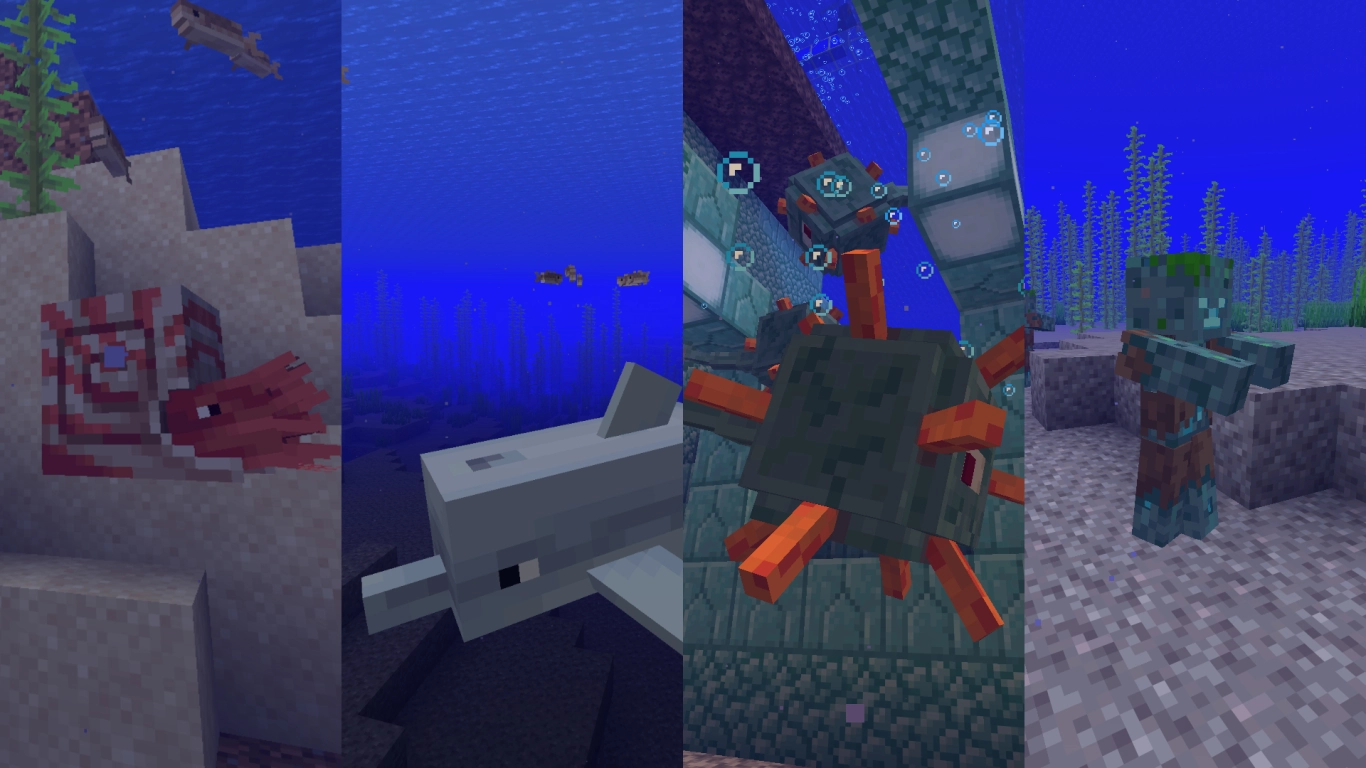
Minecraft’s oceans are alive, and many mobs now swim beneath the surface. Their mix varies with temperature. You’ll encounter exclusive animals and monsters here, making a sea trip worthwhile.
Peaceful ocean life in Minecraft:
Fish: There are currently four fish types: pufferfish, tropical fish, salmon, and cod. You’ll see them swimming and can also catch them with a fishing rod. They enhance the ocean’s ambience and are a good food source.
Dolphins: Dolphins are very helpful—they grant you a speed boost when you swim alongside them. You’ll find them in warmer oceans and you can even lead them with a leash. They’ll sometimes leap gracefully out of the water.
Squid (Glow Squid): Squid are common across Minecraft’s waters, spawning basically anywhere there’s water. They’re the only renewable source of ink sacs. Their glowing variant appears as well, but only in deep ocean or underwater caves.
Nautilus: The Nautilus is relatively new and one of the coolest aquatic creatures. You can tame it and ride it to breathe underwater. Read the full guide here: (Minecraft Nautilus Guide: Locations, Taming, Riding & Armor) . There’s also a zombie variant; it’s neutral rather than hostile.
Hostile monsters in the depths:
Drowned: Zombies that stay in water too long turn into Drowned. They also spawn near ocean ruins. They often carry a trident.
Guardians: Strange, mine-like underwater creatures. They inhabit ocean monuments along with the Elder Guardian. They attack you (and other sea life) with laser beams.
Minecraft Ocean Structures: Caves, shipwrecks, ruins, monuments
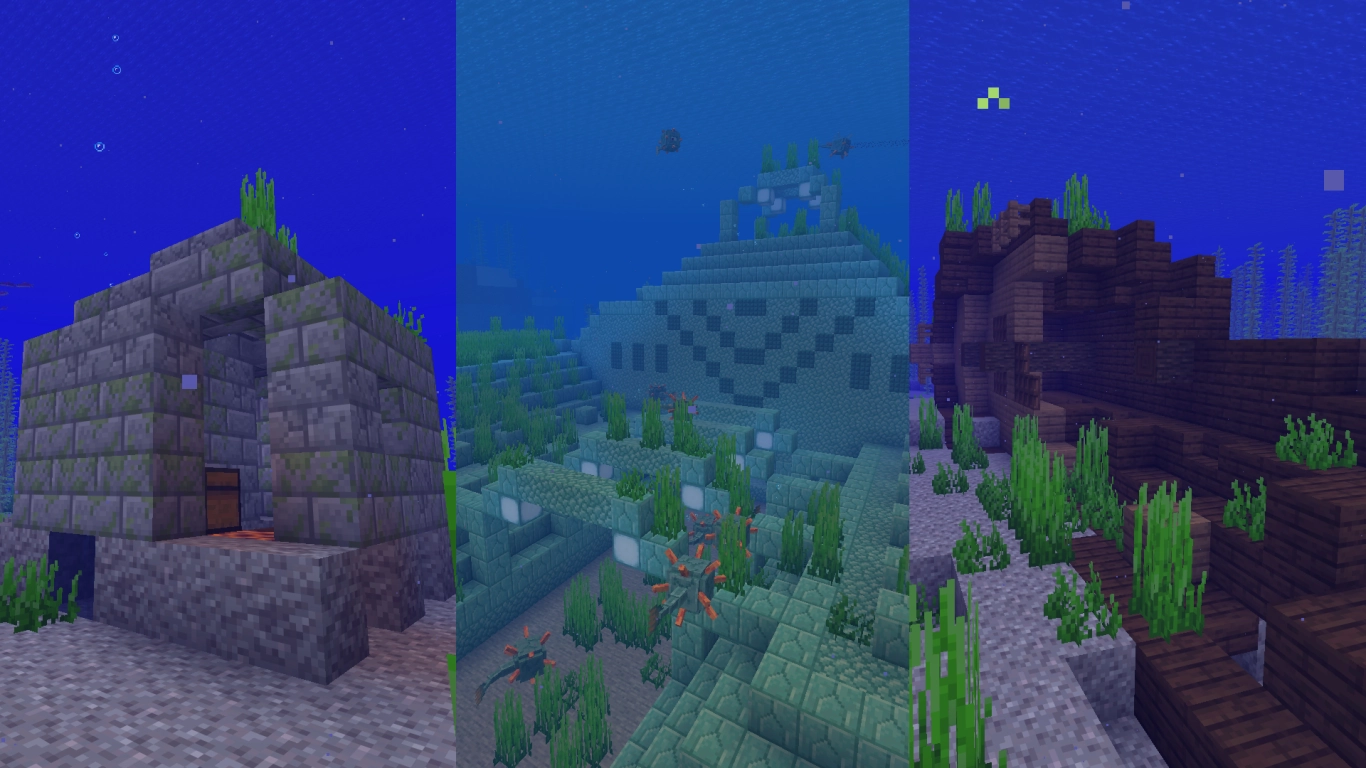
It’s not just the creatures that are interesting—the structures hide plenty of treasure. Brew a Potion of Water Breathing and dive deep to uncover their secrets. Or use a Nautilus to make exploration even better.
Caves and ravines: Not strictly a structure, but you’ll often encounter them underwater. They frequently lead into large cave systems you might otherwise miss.
Shipwrecks: Sunken ships are always exciting—they often contain rare loot. You can find treasure maps (for the Heart of the Sea), armor for your Nautilus, and rare gems. Wreck diving is a great pastime.
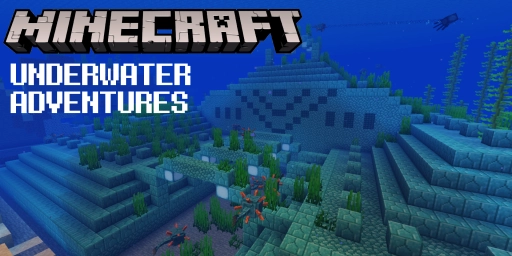
Ocean ruins: Common in both large and small variants. In warm oceans they’re made of sandstone; in colder waters they’re built from stone bricks. They’re important for archaeology—you’ll find pottery sherds and even unique Sniffer Eggs here.
Ocean monuments: These massive structures spawn only in deep ocean, recognizable by their prismarine blocks and Guardians. They’re among the largest builds in Minecraft and combine several elements. You’ll find rare sponges, treasures like gold blocks, and sea lanterns for your decorations. You can also convert a monument into an automatic farm—see our article: (Building a Minecraft Sea Lantern Farm: Step-by-Step Guide) .
Conclusion: Explore Minecraft’s oceans and find rare treasures
Minecraft’s seas hold many surprises that are absolutely worth an expedition. With the Nautilus, exploration is much easier—you’ll never run out of air and can fight underwater. From unique blocks like coral to ancient ruins, you’ll discover all kinds of fascinating things beneath the surface. Or take on a massive ocean monument and defeat the Elder Guardian.
Tame a Nautilus, rent a Minecraft server on our website and dive into the deep oceans to uncover rare treasure.
More interesting articles
Explore the Minecraft End: Elytra, Shulker Boxes, and More!
Minecraft Biomes: Exclusive Animals, Blocks, Items & Ores
How to Find and Successfully Raid a Woodland Mansion in Minecraft
Explore Minecraft's Lush Caves and Dripstone Caves with Tips and Tricks
The Ultimate Guide to Minecraft Bastion Remnants in the Nether