Minecraft gives you plenty of ways to gather items. Water plays a crucial role: beneath the surface you’ll find not only fish, but sometimes valuable items. Fishing is therefore one of the best activities you can do. It’s often overlooked, yet it’s both relaxing and rewarding. You could spend an entire in-game day doing it—and who knows what you’ll reel in. Today we’ll look at fishing in detail, how it works, and which items you can get.
Minecraft Fishing Basics: Mechanics, Water, and Fishing Rod
To fish, you need two things: water and a fishing rod. Water is easy to find in rivers, ponds, or lakes. Man‑made water sources work too. The fish you see in the water are not indicative of the loot you’ll catch—that’s determined separately.
Craft a rod from three diagonally placed sticks and two pieces of string hanging down from the tip. It’s a simple recipe, but string can be scarce early on, especially on Peaceful. You mainly get it from spiders, as loot in structures, or from cobwebs in mineshafts. Alternatively, you can get rods from a Fisherman villager for emeralds or find them in ocean ruins.
Minecraft fishing step by step:
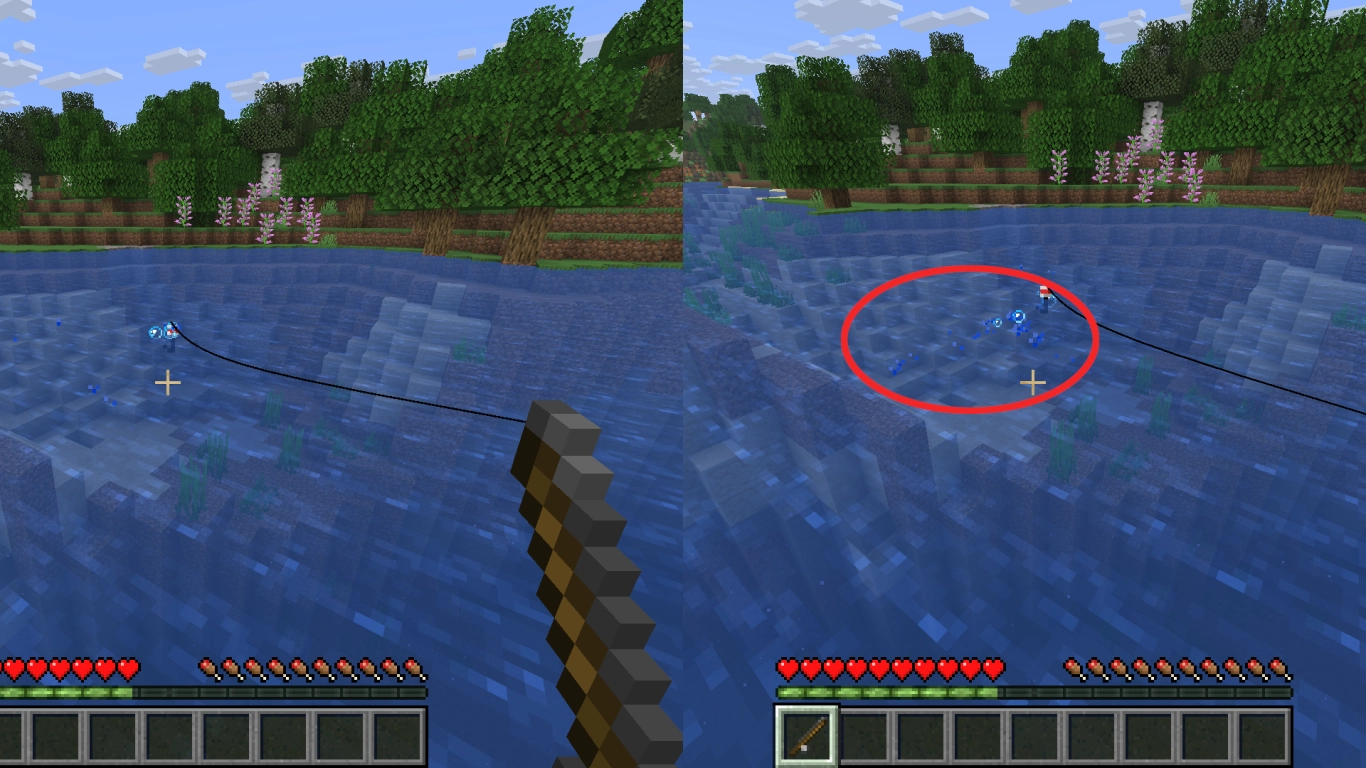
- Find a suitable body of water. Hold your fishing rod and cast the bobber into the water with right‑click. It lands roughly where your crosshair points.
- Now be patient. You’ll see splashes around the bobber. Watch for the trail of particles that moves toward the bobber.
- Right‑click again the moment the splashing reaches your bobber and pulls it underwater. You’ll also hear a splash.
- The rod reels in, along with the item you caught, which goes into your inventory. You also gain a small amount of experience points (XP), making fishing a solid source of levels.
There are a few hidden mechanics many players miss. Fishing is faster under direct sunlight or moonlight because fish bite sooner. Don’t fish in a cave or under a roof, or it can take roughly twice as long. Rain also helps and provides about a 20% boost to bite speed.
Minecraft Fishing Loot Table: Fish, Junk, and Rare Treasure
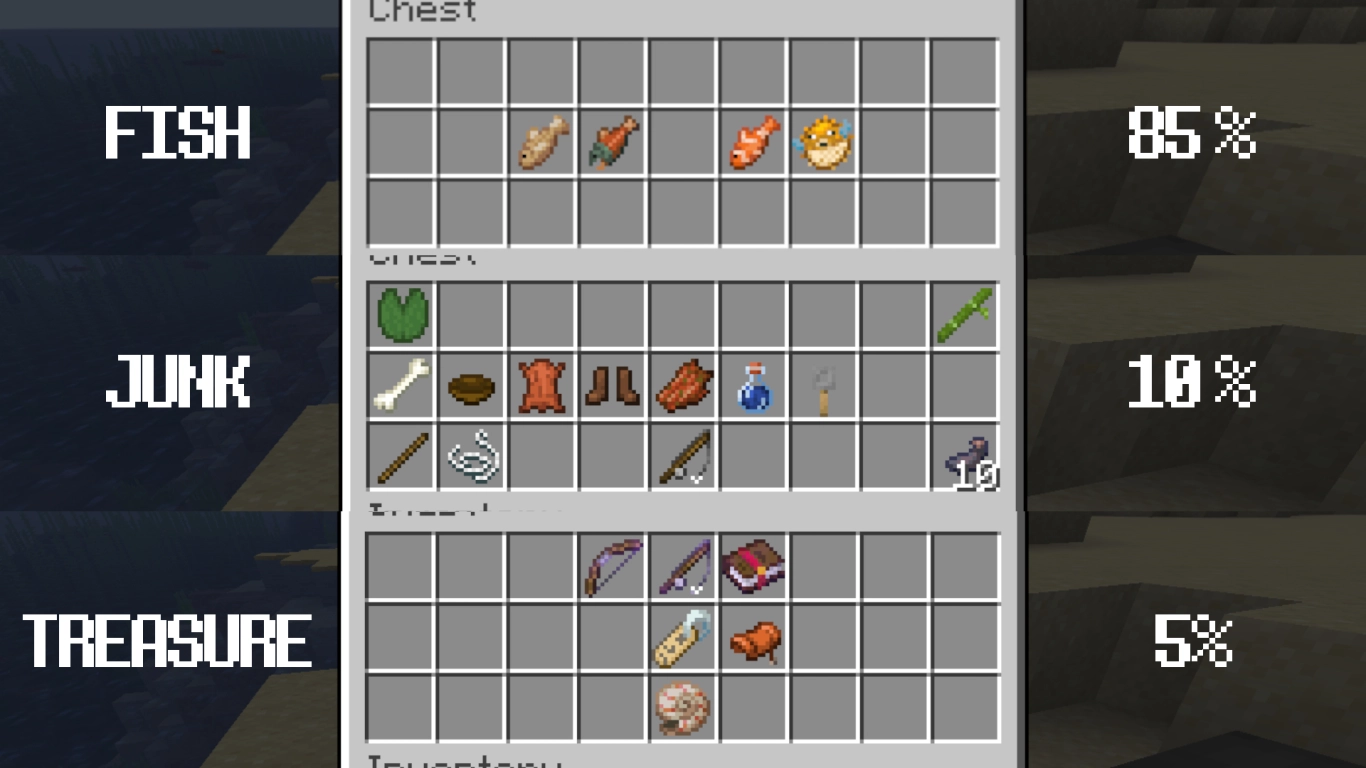
Fishing isn’t just fun—it can net you great items. In general, the loot table has three categories: fish, junk, and treasure. Depending on the water, biome, and enchantments, results can vary. The jungle biome in particular changes some distributions within the junk category. The listed percentages are within their respective category.
Fish are the most common. About 85% of your catches will be fish. The water biome does not affect which fish you can catch.
- Raw Cod (60%): The fish you’ll catch most often. Can be cooked for food. Useful to tame cats and lure dolphins.
- Raw Salmon (25%): Similar to cod, but a slightly better snack.
- Pufferfish (13%): Not for eating. Used to brew Potions of Water Breathing.
- Tropical Fish (2%): Used to breed axolotls, but only in a bucket.
You’ll usually want to avoid junk, but expect it 10% of the time. Some items are still useful. Bamboo appears only in jungle biomes, which shifts the percentages within the category.
- Lily Pad (17%)
- Bone (10%)
- Bowl (10%)
- Leather (10%)
- Leather Boots (10%): Unenchanted, often damaged.
- Rotten Flesh (10%)
- Water Bottle (10%)
- Tripwire Hook (10%)
- Stick (5%)
- String (5%)
- Fishing Rod (2%): Often heavily damaged.
- Ink Sac (1%): Typically 1 item.
Treasure is the most exciting. It’s available only if the bobber is in open water: a 5×4×5 volume of water around the bobber with air above it. With a normal rod and these conditions, about 5% of all catches are treasure. (Direct light isn’t required for treasure, but it does speed up bites.)
- Enchanted Bow (16.7%): Heavily damaged, but often with strong enchantments.
- Enchanted Fishing Rod (16.7%): Heavily damaged, but with useful enchantments.
- Enchanted Book (16.7%): Contains rare enchantments (comparable to a level‑30 enchanting table) and can include Mending.
- Name Tag (16.7%): Not craftable, obtainable via loot, fishing, or trading.
- Nautilus Shell (16.7%): Used to craft a Conduit together with a Heart of the Sea.
- Saddle (16.7%): Not craftable, obtainable via loot, fishing, or trading.
Minecraft Rod Enchantments: Luck of the Sea, Lure, Mending
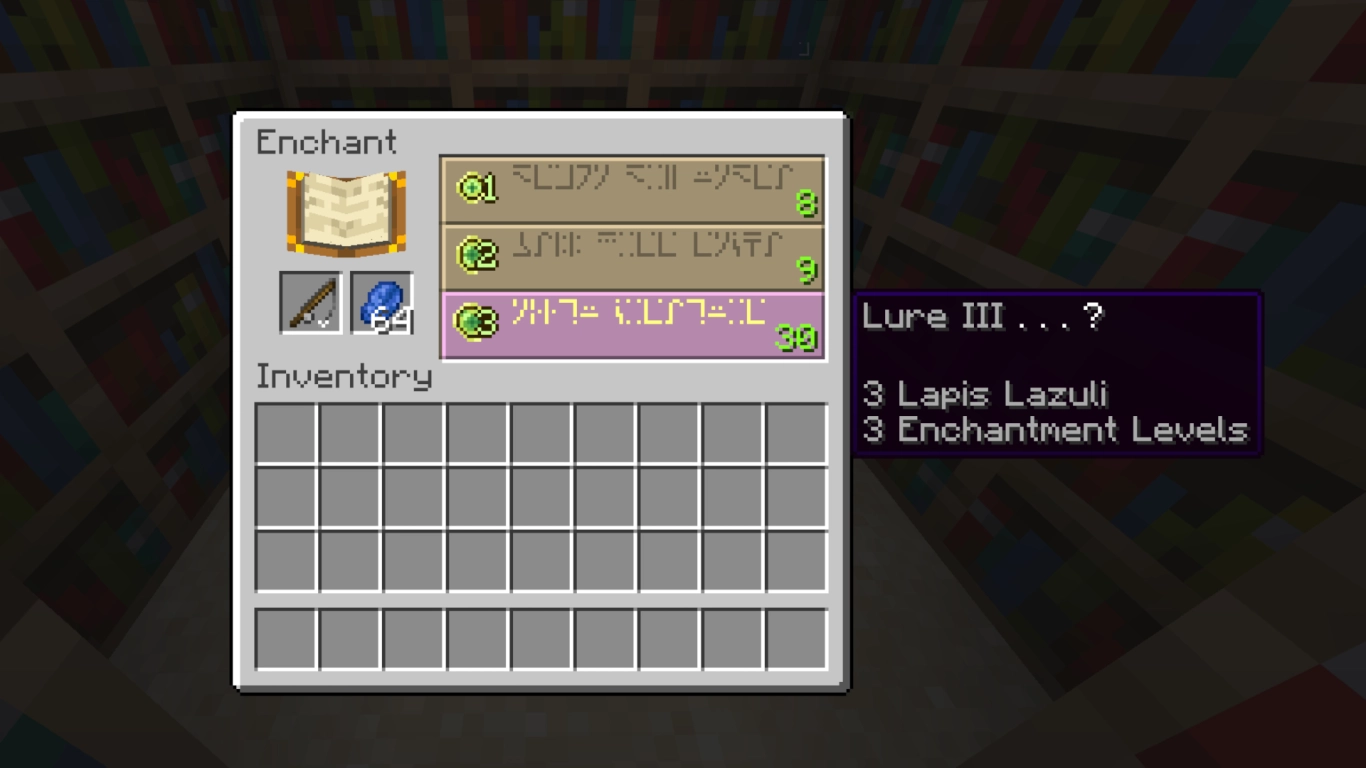
If fishing feels too slow, your rod breaks often, or you’re not seeing enough treasure, it’s time for enchantments. You may even have fished up an enchanted rod already.
- Luck of the Sea (levels 1–3): Increases treasure chance when open‑water conditions are met. About +2.1 percentage points treasure per level while junk drops by roughly 2%. Treasure rises from around 5% up to about 11.3%.
- Lure (levels 1–3): Shortens the wait for a bite by roughly 5 seconds per level.
- Unbreaking (levels 1–3): Reduces durability loss. At max level, average uses increase from about 64 to roughly 256.
- Mending: Repairs the rod with experience (XP), including the XP you gain from fishing. With enough XP, a rod lasts indefinitely.
Conclusion: Tips for More Treasure and Better Loot
Understanding the mechanics behind fishing in Minecraft helps you prepare optimally. Fish in an open‑water spot with sky exposure to maximize treasure chances and bite speed. Classic AFK farms may still work in part, but they won’t yield treasure. Regular fishing is fun—and with the right enchantments, you’ll pull up plenty of valuable items.
If you want to fish with friends, rent a Minecraft server from us. Cast your lines together and see who reels in the most—and the best—loot.